Safe Drop Solutions (SDS)
Safe Drop Solutions’ mission is to provide rural communities in Malawi with affordable and sustainable clean water through Ecofiltro water filters, improving health and livelihoods.
Clean Water Access CHALLENGE; Malawi

PROVEN INTERVENTION TO BE DISTRIBUTED
Ceramic Water Filters
Learn more about the Clean Water Access Challenge and why ceramic pot water filters can be used by households to clean otherwise unsafe water from almost any source.
DISTRIBUTION MODEL INNOVATION
Safe Drop Solutions’ mission is to provide rural communities in Malawi with affordable and sustainable clean water through Ecofiltro water filters, improving health and livelihoods.
SafeDrop Solutions will pilot in the lakeshore communities of Mangochi District, T/A Makanjira, distributing 400 Ecofiltro ceramic water filters to households and nursery schools for three months. Families pay a 25% upfront fee and affordable monthly installments, making clean water accessible without financial strain. Trained Health Surveillance Assistants (HSAs) will serve as trusted, community-based sales agents, ensuring proper use, tracking repayments, and providing ongoing education.
What sets SDS apart is its unique integration of HSAs and Village Development Committees (VDCs), combining health expertise with local trust to drive adoption, sustain repayments, and maximize impact. This community-centered model ensures both health outcomes and financial sustainability.
SafeDrop Solutions is led by Prince Thomas, a Water Engineering graduate managing technical operations; Chifundo Saini, an Environmental Health Specialist leading health education; and Lwitiko Fweta, an M&E Specialist driving data-driven decision-making. Together, they combine expertise in water systems, public health, and impact evaluation to deliver clean water solutions. Their shared commitment and local knowledge position them to scale sustainably and transform rural health outcomes.
PILOT AND SCALING GOALS
Directly reach 1,600 beneficiaries within three months.
Using four high-performing local HSAs, distribute 400 Ecofito water filters within three months, ensuring proper usage and follow-up to maximize impact on household water quality.
Raise an additional $10,700 USD from new donors or investors within three months to support the scaling of activities.
FOUNDING TEAM
Prince Thomas - Founder
Chifundo Saini - Founder
Congo Water Solution (CWS)
Congo Water Solution (CWS) is a social enterprise with the aim of increasing access to clean and safe water through affordable and reliable household water filters to underprivileged communities.
Clean Water Access CHALLENGE; Democratic Republic of the Congo
PROVEN INTERVENTION TO BE DISTRIBUTED
Ceramic Water Filters
Learn more about the Clean Water Access Challenge and why ceramic pot water filters can be used by households to clean otherwise unsafe water from almost any source.
DISTRIBUTION MODEL INNOVATION
Congo Water Solution (CWS) is a social enterprise with the aim of increasing access to clean and safe water through affordable and reliable household water filters to underprivileged communities.
Congo Water Solution will provide household filters to ensure underserved communities have access to clean and safe drinking water. CWS will commission 25 agents from the existing Village development groups, calling themselves AVEC, to distribute household filters on a Pay as You Use Model in Minova, DR Congo. Congo Water Solution will also expand distribution to other rural communities, optimizing the PAYU model based on customer feedback.
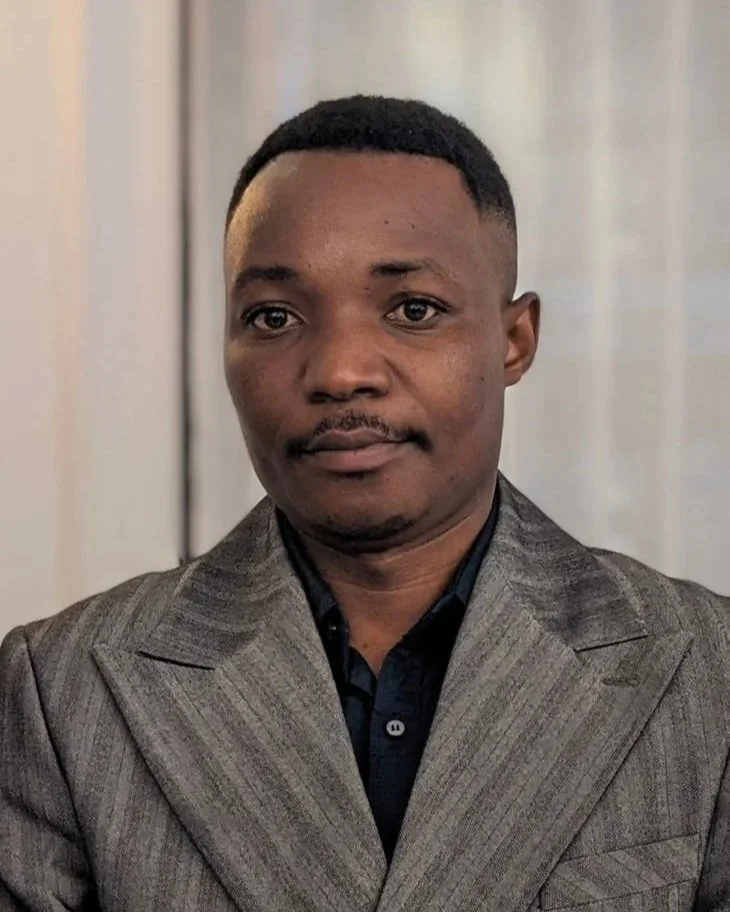
Congo Water Solution (CWS) was founded by Aristote Bashokwire Masimango, a dedicated WASH specialist with a strong commitment to tackling community issues. He serves as the CEO, leading the planning and implementation of the project.
PILOT AND SCALING GOALS
Directly reach 2000 beneficiaries within three months.
Distribute 300 water filters during the pilot.
Raise $50,000 in additional funding to support operations and scale.
FOUNDING TEAM
Aristote Bashokwire Masimango - CEO and Founder
Aqua Safe
Aqua Safe provides affordable ceramic water filters to low-income households in Malawi, ensuring safe drinking water and promoting lasting, healthy water practices.
Clean Water Access CHALLENGE; Malawi

PROVEN INTERVENTION TO BE DISTRIBUTED
Ceramic Water Filters
Learn more about the Clean Water Access Challenge and why ceramic pot water filters can be used by households to clean otherwise unsafe water from almost any source.
DISTRIBUTION MODEL INNOVATION
Aqua Safe provides affordable ceramic water filters to low-income households in Malawi, ensuring safe drinking water and promoting lasting, healthy water practices.
The venture will pilot in Lilongwe’s rural and semi-urban urban, using a network of commissioned agents to sell ceramic water filters and run awareness campaigns on the importance of using filters and consuming safe, treated water. They will target Village Savings and Loan groups and small community clusters, offering a pay-as-you-use model with five monthly instalments to ensure affordability. Central kiosks will serve as sales and repair hubs while providing additional services like phone charging to maintain sustainability. What sets them apart is the combination of sales, education, and follow-up support, driving lasting behavioural change.
Aqua Safe, founded in 2025 in Lilongwe, Malawi, is led by Francis Mwamlima as full-time Managing Director and Chifundo Chikabadwa as Finance Lead. The team is committed to increasing access to safe drinking water by selling affordable ceramic water filters. Francis brings WASH and project management expertise, while Chifundo ensures strong financial management to drive sustainability.
PILOT AND SCALING GOALS
Reach 3,200 low-income households with access to safe drinking water through ceramic water filters within 3 months.
Establish a distribution network of at least 20 active community-based agents trained to sell and promote ceramic water filters.
Secure an additional $25,000 USD in funding or investment commitments from new donors or investors within 3 months of launch.
FOUNDING TEAM
Francis Lusekero Mwamlima - Managing Director
Chifundo Chikabadwa - Accountant
Matka
Matka's mission is to provide affordable, sustainable, and culturally-tailored water filtration solutions to rural communities in Punjab, leveraging a community-based distribution model to improve health outcomes and empower women as key advocates for clean water access.
Clean Water Access CHALLENGE; PAKISTAN

PROVEN INTERVENTION TO BE DISTRIBUTED
Ceramic Water Filters
Learn more about the Clean Water Access Challenge and why ceramic pot water filters can be used by households to clean otherwise unsafe water from almost any source.
DISTRIBUTION MODEL INNOVATION
Matka's mission is to provide affordable, sustainable, and culturally-tailored water filtration solutions to rural communities in Punjab, leveraging a community-based distribution model to improve health outcomes and empower women as key advocates for clean water access.
Matka's distribution model is community-based, focusing on rural Punjab, where they have deep cultural knowledge and ties. The pilot will be launched in the rural areas of Punjab, targeting women as early adopters and local advocates.
What sets Matka apart is its ability to tap into existing trust networks by leveraging women in the community as both consumers and sales agents, driving organic growth through word-of-mouth and local connections. This grassroots approach enables them to reduce marketing costs while fostering genuine relationships for wider adoption.
Matka was founded by Dure Nayab and Qurat ul Ain, both of whom have strong ties to rural Punjab and a shared passion for improving water access and health outcomes. With backgrounds in community development and sustainable business models, they bring both local insight and entrepreneurial expertise to the project.
PILOT AND SCALING GOALS
Reach 4500 beneficiaries during the pilot.
Distribute 300 water filters during the pilot.
Raise an additional $25,000 during the pilot.
FOUNDING TEAM
Dure Nayab - CEO, Co-founder
Qurat Ul Ain - Co-founder
Safe Water Technologies
Safe Water Technologies will provide water filters to ensure that rural communities have access to clean and safe water.
Clean Water Access CHALLENGE; Malawi

PROVEN INTERVENTION TO BE DISTRIBUTED
Ceramic Water Filters
Learn more about the Clean Water Access Challenge and why ceramic pot water filters can be used by households to clean otherwise unsafe water from almost any source.
DISTRIBUTION MODEL INNOVATION
Safe Water Technologies will provide water filters to ensure that rural communities have access to clean and safe water.
Safe Water Technologies will distribute Ceramic Water Filters in Salima District, Malawi on a Pay as You Use Credit Model through 24 village agents that will be on commission.
Through this model, they will target Village Savings and Loans groups to be their customers to purchase the filters on credit.
PILOT AND SCALING GOALS
Reach 3000 beneficiaries during the pilot.
Distribute 600 water filters during the pilot.
Raise an additional $10000 during the pilot.
FOUNDING TEAM
Thokozani Chepuka - Co-Founder
Steve Lameck - Co-Founder
Vital Water Purifier
Vital Water Purifier is a social enterprise that distributes high-quality ceramic water filters to communities in rural Ethiopia.
Water filters CHALLENGE; ethiopia
PROVEN INTERVENTION TO BE DISTRIBUTED
Ceramic Water Filters.
Learn more about the Chlorine Challenge and other D-Prize Distribution Challenges.
DISTRIBUTION MODEL INNOVATION
Vital Water Purifier is a social enterprise that distributes high-quality ceramic water filters to communities in rural Ethiopia.
The distribution model devised is to transport the water filters using cargo motorbikes within the pilot location, Aleta Chuko Woreda. When a household buys a water filter, we deliver the unit from our local store to their home using cargo motorbikes. The team’s unique quality is that they have lived and seen the life of typical rural families.
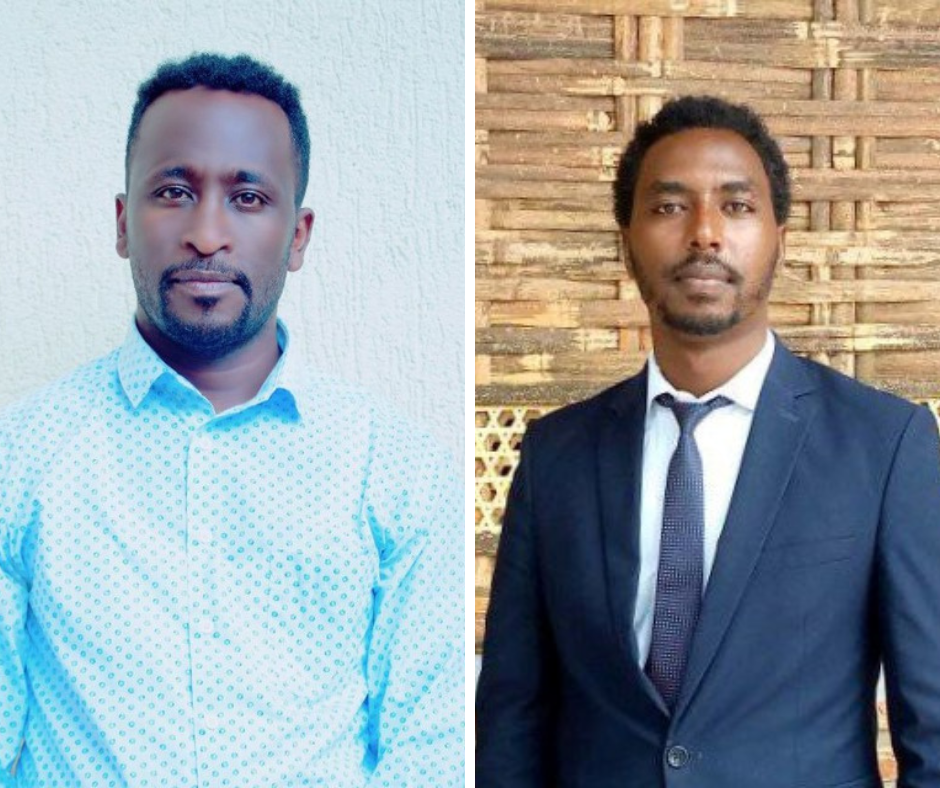
Vital water Purifier - Ethiopia is founded by Habteab Argaw, an aspiring social Entrepreneur. Habteab runs the startup as the project manager.
PILOT AND SCALING GOALS
Distribute 300 ceramic water filters during the pilot period
Raise an additional $3,000
FOUNDING TEAM
Habteab Argaw Bantora - Project Manager
Nahom Tesfaye Kebede - Co-Founder
Act 4 Sustainable Actions
Act 4 Sustainable Solutions is dedicated to improving clean water access in the Vallée de l'Ouémé region of Benin through the distribution of high-quality Ceramic pot water filters to make a significant impact on the community's well-being.
Water filters CHALLENGE; BENIN

PROVEN INTERVENTION TO BE DISTRIBUTED
Ceramic Water Filters.
Learn more about the Chlorine Challenge and other D-Prize Distribution Challenges.
DISTRIBUTION MODEL INNOVATION
Act 4 Sustainable Solutions is dedicated to improving clean water access in the Vallée de l'Ouémé region of Benin through the distribution of high-quality Ceramic pot water filters to make a significant impact on the community's well-being.
Their model is based on leveraging existing networks, including schools, social groups, village chiefs, and farming cooperatives to ensure an effective distribution process and encourage community engagement and sustainability. In terms of payment, the team will provide two affordable payment options to help the local community: (1) subsidized rates for households paying in full and (2) an upfront fee paired with installment payments corresponding to the crop cycle.
The Act 4 Sustainable Solutions team comprises Dossa Martin Boton, an environmental and water specialist, and Thierry Adje and David Montcho, a medical doctor and nurse respectively. Their expertise and passion drive the organization's mission to create lasting positive change in the community.
PILOT AND SCALING GOALS
Reach 600 individuals at the end of the three-month pilot
Distribute 100 Ceramic pots of water filters to householders during the three-month pilot
Fundraise an additional fund of $30,000 at the end of the three-month pilot
FOUNDING TEAM
Martin Boton - Executive Director
Thierry Adje - Project Manager
David Montcho - Supply Chain Manager
Water4Life
Water4Life increases access to clean and safe water through the promotion of chlorine dispensers to prevent waterborne diseases in the most vulnerable communities in Benin.
CHLORINE DISPENSER CHALLENGE; BENIN

PROVEN INTERVENTION TO BE DISTRIBUTED
Point-of-use chlorine dispensers
Learn more about the Chlorine Challenge and other D-Prize Distribution Challenges.
DISTRIBUTION MODEL INNOVATION
Water for Life (Water4Life) increases access to clean and safe water through the promotion of chlorine dispensers to prevent waterborne diseases in the most vulnerable communities in Benin.
The dispenser system consists of three components: (i) A dispenser hardware installed next to a communal water source; (ii) community education done by a local promoter; (iii) ongoing supply of chlorine refills. The Water4Life distribution model is innovative, unique, cost-effective and suitable for the local context. The venture plans to install 15 dispensers and reach 4,500 beneficiaries in the commune of Natitingou in Atacora department during the 3-month pilot, scaling to at least 540 dispensers and 194,355 beneficiaries (spread throughout all the departments of Northern Benin and three other departments in Southern Benin) in the next five years. The venture aims to reduce diarrhea rates by at least 40% among target communities over the next five years. In the next 10 year, Water4Life will reach all the departments of Benin and extend to other countries in West Africa such as Togo, Mali and Burkina-Faso.
Water4Life’s team is composed of highly motivated fellows who have successfully implemented several other community development projects in Benin and Uganda. The team is led by Melas Cayrol Adoko, an African Union Youth Volunteer who serves as the Executive Director and Co-founder. He is assisted by Younoussa Abossouka who is the Supply Chain Manager.
PILOT AND SCALING GOALS
Install 15 chlorine dispensers reaching 4,500 beneficiaries during the three-month pilot
Raise an additional $112,000 during the three-month pilot
Reach 22,000 beneficiaries by the end of year 1
FOUNDING TEAM
Melas Cayrol Adoko - Executive Director & Co-founder
Younoussa Abbosouka - Supply Chain Manager
Notre Voix
Notre Voix installs chlorine dispensers next to community water sources and promotes their use to increase access to safe water.
CHLORINE DISPENSER CHALLENGE; DEMOCRATIC REPUBLIC OF CONGO
PROVEN INTERVENTION TO BE DISTRIBUTED
Point-of-use chlorine dispensers
Learn more about the Chlorine Challenge and other D-Prize Distribution Challenges.
DISTRIBUTION MODEL INNOVATION
Notre Voix installs chlorine dispensers next to community water sources and promotes their use to increase access to safe water.
The pilot will launch in two health zones including Fizi and Kimbi-Lulenge in the Fizi territory. The Notre Voix model helps people treat their water using a safe, pre-measured dose of chlorine in order to prevent waterborne diseases such as childhood diarrhea. Target communities will be requested to appoint promoters to encourage use of the dispensers. Promoters' responsibilities will include educating the community, refilling the dispensers, and receiving the chlorine solution for refills from the Notre Voix programme manager.
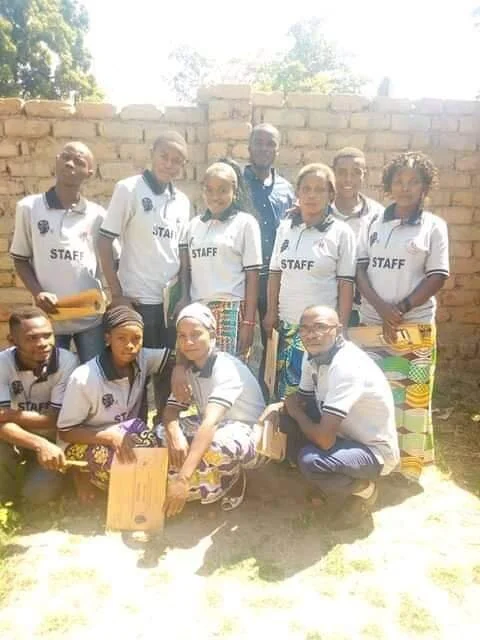
Notre Voix was founded by Makene Mtambala Charles, Yalala Jumaine, and Mauwa Mangala Lucie who fled eastern DRC during the 1996 civil war and met while living in Nyarugusu refugee camp in Tanzania. Their experiences made them passionate about humanitarian assistance and committed to helping those in need.
PILOT AND SCALING GOALS
Install 30 chlorine dispensers reaching 20,000 beneficiaries during the three-month pilot
Raise an additional $30,000 during the three-month pilot
Reach 80,000 beneficiaries by the end of year 1
Reach 160,000 beneficiaries by the end of year 2
FOUNDING TEAM
Makene Mtambla Charles - Executive Director
Yalala Jumaine - Programme Manager
Mauwa Mangala Lucie - HR & Finance Manager
Water for Development
Water for Development (Water4Dev) provides access to safe water to reduce the incidence of water-borne diseases.
CHLORINE DISPENSER CHALLENGE; BURUNDI
PROVEN INTERVENTION TO BE DISTRIBUTED
Point-of-use chlorine dispensers
Learn more about the Chlorine Challenge and other D-Prize Distribution Challenges.
DISTRIBUTION MODEL INNOVATION
Water for Development (Water4Dev) provides access to safe water to reduce the incidence of water-borne diseases.
The chlorine dispensers project consists of three main components; (i) A dispenser hardware installed next to a communal water source, (ii) an incessant community education by a local promoter to encourage take-up and (iii) the ongoing supply of chlorine refills. Our operating model will be tested in Cibitoke Province of Burundi for three months before a full scale countrywide.
The Chlorine Dispenser System is an innovative way of treating water with dilute chlorine at the points of water collection. This technology was developed in 2007 by Innovations for Poverty Action (IPA) and its affiliates and has been proven as the most cost-effective option of treating water that results in a reduction of child diarrhea by 20-40% at a cost of only USD 1.28 per person reached per year.
Installing a chlorine dispenser next to a water point offers maximum convenience to users of this free service, leading to a high adoption rate. What’s more, chlorinating water protects water from potential recontamination during collection and storage, and eliminates the need to boil water, saving time and effectively reduce the carbon footprint.
Water4Dev was started in 2020 by Olivier Nihimbazwe, a RUFORUM@MasterCard Foundation Scholar who serves as the Executive Director. Other founding members include Prosper Cishahayo and Willy Ndayishimiye. We believe that good health is a prerequisite to enhancing the human capital and hence, the economic growth of communities and the country at large.
PILOT AND SCALING GOALS
Install 25 chlorine dispensers reaching 5,000 beneficiaries during the three-month pilot
Raise an additional $75,000 during the three-month pilot
Reach 30,000 beneficiaries by the end of year 1
Reach 70,000 beneficiaries by the end of year 2
FOUNDING TEAM
Olivier Nihimbazwe - Executive Director and Project Coordinator
Prosper Cishahayo - Supply Chain Manager
Willy Ndayishimiye - M&E Manager
Sayari Green Alliance
Sayari Green Alliance gives rural populations access to safe water by distributing and promoting point-of-use chlorine dispensers.
CHLORINE DISPENSER CHALLENGE; UGANDA

PROVEN INTERVENTION TO BE DISTRIBUTED
Point-of-use chlorine dispensers
Learn more about the Chlorine Challenge and other D-Prize Distribution Challenges.
DISTRIBUTION MODEL INNOVATION
Sayari Green Alliance gives rural populations access to safe water by distributing and promoting point-of-use chlorine dispensers.
Sayari establishes a network of local area service providers who deliver chlorine and maintain the dispensers. The model involves three key components: Simple-to-use hardware installed at communal water collection points, community trainings, and a strong chlorine supply chain. The Sayari Green Alliance approach to chlorine dispenser distribution is intended to empower the local businesses to supply chlorine, repair dispensers as a way of community inclusion and service sustainability.
PILOT AND SCALING GOALS
Distribute 20 dispensers during 5,000 beneficiaries during the pilot phase
Raise $50,000 during the pilot phase
Reach 70,000 beneficiaries by the end of year 2
FOUNDING TEAM
Atwongyeire Dorcus - Co-founder
Ayera Sylvia - Co-founder
Kyomukama Evelyne - Administrator
Jibu Tanzania
Jibu Tanzania aims to tackle two major issues within East Africa and beyond: unemployment and lack of access to clean water. Their mission is to create affordable access to drinking water through franchised water production sites across Arusha.
CUSTOM CHALLENGE; TANZANIA

PROVEN INTERVENTION TO BE DISTRIBUTED
Improving access to clean water through distribution.
Learn more about the Custom Challenge and why we only fund ideas that focus on distributing proven poverty interventions.
DISTRIBUTION MODEL INNOVATION
Jibu Tanzania aims to tackle two major issues within East Africa and beyond: unemployment and lack of access to clean water. Their mission is to create affordable access to drinking water through franchised water production sites across Arusha. They will do this by having a water purification machine serving 50,000 people with an associated network of 10 local micro-resellers within an area of 2 kilometers around the production center.
A 2010 demographic and health survey states that 60% of Tanzanians do nothing to treat their water. Most households have no home filtration system and many drink unboiled water. Water is sourced from house taps and outdoor standpipes and has a high concentration of fluoride which, when consumed long-term, can lead to severe physical ailments. Chlorine or sand filters alone do not remove fluoride and other harmful micro-biological pathogens.
Jibu employs reverse osmosis as a water treatment method which allows for all harmful bacteria and parasites to be filtered out as well as 95% of floride. The water will be packaged, sold, and distributed in re-usable containers. Jibu partners with Healing Water International to access water filtration units as they do not manufacture their own. The secret to their prices is the efficiency of a decentralized, hyper-local business model because their focus is on underserved populations living in close proximity of each Jibu storefront.
PILOT AND SCALING GOALS
Serve 600 customers during the pilot
Serve 4,000 customers at the end of year 1
Sell 800 liters of water during the pilot
Sell 5,333 liters of water at the end of year 1
FOUNDING TEAM
Tayeb Noorbhai - Managing Director
Alex van Praag - Operations Manager
Bonaventure Bernard - Sales and Business Development
Giacomo - Marketing and Franchise Officer

CleanTap
Columbia SIPA students are piloting CleanTap, a venture which has repurposed the well proven "Tippy Tap" handwashing station found in rural areas, and is now
CUSTOM CHALLENGE; INDIA

PROVEN INTERVENTION TO BE DISTRIBUTED
"Tippy Tap" handwashing station.
Learn more about the Custom Challenge and why we only fund ideas that focus on distributing proven poverty interventions.
DISTRIBUTION MODEL INNOVATION
Street food is an integral part of Indian cities. Unofficial government estimates state that there are over a hundred million street food vendors in India. However, lack of infrastructure and awareness about food safety and handling among street food vendors makes it a significant contributor to food borne diseases. Through CleanTap, the organization aims to provide an easy, portable, DIY solution to the sanitation infrastructure challenge and combine it with an effective social marketing strategy to promote behavior change.
A Tippy Tap is an easy, portable, low-cost device that encourages hard washing and saves water. It can be made with scraps of readily available local material. The apparatus involves a container that holds water with a hole on tap where the water flows out from. The flow of water is controlled by a foot lever. Their design of the Tippy Tap for food carts focuses heavily on portability. On average, a tippy tap involves a $1 investment per person to promote hand washing. It has been successfully deployed as a standalone product in rural areas of India.
PILOT AND SCALING GOALS
- Launch pilot with 25 street food vendors
- Provide hand washing for 1500 customers in Mumbai
FOUNDING TEAM
Prerna Seth - Co-Founder
Molly Daniell - Co-Founder
Joel Putnam - Co-Founder
Kouzin Dlo
Kouzin Dlo sells chlorine for household water treatment through a network of direct sales agents in Haiti. It will increase access to affordable clean water and create economic
CUSTOM CHALLENGE; HAITI

PROVEN INTERVENTION TO BE DISTRIBUTED
Affordable water purification technology with chlorine.
Learn more about the Custom Challenge and why we only fund ideas that focus on distributing proven poverty interventions.
DISTRIBUTION MODEL INNOVATION
Kouzin Dlo is a social enterprise combating the spread of cholera by increasing access to affordable water purification technology in Haiti. The organization is building a network of clean water entrepreneurs across the country to provide clean water for Haitians by Haitians.
Kouzin Dlo entrepreneurs are trained in household water treatment, clean water and hygiene education, and marketing techniques. First, the entrepreneurs identify households in their communities to recruit as customers. They conduct door-to-door outreach to introduce potential customers to the benefits of chlorination, each them how to treat their own water supply, and sell chlorine. In addition, entrepreneurs will teach families about safe water storage and provide 5-gallon buckets with lids and taps for purchase. Entrepreneurs will return to families every two weeks to provide bottles of chlorine and answer any questions. Kouzin Dlo entrepreneurs can ear additional income by recruiting new entrepreneurs as the program grows and demand increases. The referring individual receives a percentage of the revenue of the chlorine purchased by the new agent from Kouzin Dlo.
PILOT AND SCALING GOALS
- Establish two hubs with 15-20 agents each during the pilot phase
- Expand to 6 communities during the pilot phase
- Reach 500 households within the pilot phase
- Build a nationwide network of 110 hubs within 3-5 years
FOUNDING TEAM
Jessica Laporte - Founder and Director
Asepsis
Asepsis will implement a highly integrated and sustainable system that resolves the problem of waste collection in urban slums. Using a lowcost and durable squat toilet, they
CUSTOM CHALLENGE; INDIA
PROVEN INTERVENTION TO BE DISTRIBUTED
Low cost and durable squat toilets.
Learn more about the Custom Challenge and why we only fund ideas that focus on distributing proven poverty interventions.
DISTRIBUTION MODEL INNOVATION
The sanitation crisis in India is one of massive proportions and the situation is particularly pronounced in Dharavi - one of the world's largest slums - right outside of Mumbai. With approximately one toilet for every 1,1440 people, it is not surprising that upwards of 4,000 cases of disease are reported every day.
The goal is to design a fifteen gallon cylindrical toilet - similar in shape and design to the Well WaterWheel, but with an airtight seal to repel odor and lined with a bio-plastic bag - to be distributed to Dharavi families. The toilet, once filled, will be taken to central collection site to be emptied, cleaned, and returned for continuous use. The waste will them be sold to a local sanitation company that turns it into compost. For every barrel returned, the family will receive 1/3 of the price the waste is sold for, providing an economic incentive for doing so. The other 2/3 of the profit will be used to maintain and expand our operations.
Community hubs that receive these toilets will be an essential forum for allowing partner NGOs a chance to distribute vaccines and health care to Dharavi residents. To determine the location for these sites, Asepsis will team up with the Development Planning Unit of University College London which has pinpointed certain "catalytic sites" within the slum. Using this as reference will ensure that our system is easily integrated into Dharavi.
PILOT AND SCALING GOALS
Prototyping toilet design and establishing network during the first 6 months
Create 1 community hub and distribute 100 toilets to pre-approved families during the pilot phase
Distribute 400 more toilets by the end of year 2
FOUNDING TEAM
Evan Young - Co-Founder
Mas Obuz - Co-Founder
Are you ready to be the next great social entrepreneur?