Mlimi Agro Hub
Mlimi Agro Hub distributes quality farm inputs, including fertilizer, seeds and post-harvest storage bags, to smallholder farmers in Malawi.
CUSTOM AGRICULTURE CHALLENGE; MALAWI

PROVEN INTERVENTION TO BE DISTRIBUTED
Quality seeds and other key inputs for rural farmers through a franchised agro dealer network and a youth agent network.
Learn more about the Custom Agriculture Challenge and why distributing proven agricultural interventions can greatly improve the livelihoods of smallholder farmers.
DISTRIBUTION MODEL INNOVATION
Mlimi Agro Hub distributes quality farm inputs, including fertilizer, seeds and post-harvest storage bags, to smallholder farmers and supports them with extension services on better agronomic practices through village savings groups, farmer cooperatives, and existing hardware stores.
Mlimi Agro Hub model has three main components that include, engaging owners of hardware stores nearer to smallholder farmers as sales agents, providing asset-based loan service to farmers belonging to Village Savings and Loan Associations (VSLA), and involving lead farmers in the dissemination of information to smallholder farmers on better agronomic practices. Our model addresses major reasons limiting smallholder farmers from accessing quality agricultural inputs and the reasons are limited access to agriculture loan, long distances to agro-dealer shops located in towns and lack of knowledge on better agronomic practices like fertilizer micro-dosing and correct plant spacing.
Mlimi Agro Hub was founded by Gilbert Banda, Wilson Nkhata, and Marko Chiumia. The team members have knowledge and experience in the agriculture sector in Malawi.
PILOT AND SCALING GOALS
Reach 100 smallholder farmers during the pilot period
Raise additional $10,000 by the end of the pilot period
Reach 2,500 farmers by the end of year 1
Reach 8,500 farmers by the end of year 2
FOUNDING TEAM
Gilbert Chikwama Banda - Managing Director
Wilson Nkhata - Sales & Operations Manager
Marko Chiumia - Business Development Manager
Govuka
Govuka's mission is to leverage existing youth education programming in Eswatini to deliver and rapidly scale the proven and cost-effective “Sugar Daddy Awareness” solution to reduce teenage pregnancy and HIV infection rates.
SUGAR DADDY AWARENESS CHALLENGE; ESWATINI

PROVEN INTERVENTION TO BE DISTRIBUTED
Sugar Daddy Awareness classes.
Learn more about the Sugar Daddy Awareness Challenge and how a simple, one-hour “sugar daddy awareness” training could help countless girls avoid pregnancy while still in school, which can lead to entrenched poverty, and build a better life.
DISTRIBUTION MODEL INNOVATION
Govuka's mission is to leverage existing youth education programming in Eswatini to deliver and rapidly scale a proven and cost-effective solution to reducing risky sex among adolescent girls -- which would in turn reduce teenage pregnancy and HIV infection rates.
Govuka will – in collaboration with the Swaziland Action Group Against Abuse (SWAGAA) – compile a locally relevant and proven 1-hour anti-sugar daddy module to be delivered by experienced youth facilitators. Unlike the existing programming, this module will highlight the higher HIV risk of intergenerational relationships to curb risky sex and teenage pregnancies among adolescent girls. This module will be delivered through existing Girls Empowerment Clubs. The Govuka team will pilot in 49 high schools spread across Eswatini’s 4 regions reaching about 2,000 girls directly. The pilot will be implemented according to the following steps: 1) Workshop the curriculum to ensure relevance to the Eswatini context, 2) Leverage existing Girls Empowerment Clubs to pilot supplementary module in schools, 3) Enlist and train expert facilitators involved in Girls Empowerment Clubs on the sugar-daddy module, and 4) Measure program outcomes.
Philile Shongwe is the Founder and Executive Director of Govuka. She will be working closely with Gcinaphi Ndlovu, Program Manager and Thandwa Maphalala, Communications Director during the pilot.
PILOT AND SCALING GOALS
Reach 2,000 students during the three-month pilot
Raise an additional $10,000 during the three-month pilot to begin scaling nationwide
Reach 120,000 students by the end of year 2
FOUNDING TEAM
Philile Shongwe - Founder
Briaze Health Initiative
Community Health Initiative distributes the self-injectable contraceptive Sayana Press through a network of private practitioners in Uganda.
SAYANA PRESS CHALLENGE; UGANDA

PROVEN INTERVENTION TO BE DISTRIBUTED
Sayana Press injectable contraceptive.
Learn more about the Sayana® Press Challenge and why training health providers to administer Sayana® Press can be particularly valuable for women who prefer injectable contraceptives but don’t have regular access.
DISTRIBUTION MODEL INNOVATION
Briaze Health Initiative utilizes a ‘Private Practitioner Model’ to increase access and utilization of Sayana Press among women in Mukono District. The distribution model is unique because it seeks to train private practitioners on how to teach women to self-inject Sayana Press at their comfort.
BHI intends to reach 500 women in 3 months and 100,000 women in 5 years. Women seeking Sayana Press at private practitioners will pay a modest service fee to keep private practitioners motivated to give women transparent information and education.
PILOT AND SCALING GOALS
Through 20 private practioners, train 500 women to self-inject 1000 doses Sayana Press
Raise an additional $25,000 during the pilot period
Reach 2,500 beneficiaries by the end of year 1
Reach 20,000 beneficiaries by the end of year 2
FOUNDING TEAM
Bridget Kyobutungi - Team Lead
Esther Nakyaze - Project Coordinator
Catherine Nakiganda - Business Development Manager
Action for Healthy Youth
Action For Healthy Youth distributes the proven education intervention “Sugar Daddy Awareness” to empower young people with knowledge and skills to reduce the risk of sexually transmitted diseases and teenage pregnancies.
SUGAR DADDY AWARENESS CHALLENGE; BURUNDI

PROVEN INTERVENTION TO BE DISTRIBUTED
Sugar Daddy Awareness classes.
Learn more about the Sugar Daddy Awareness Challenge and how a simple, one-hour “sugar daddy awareness” training could help countless girls avoid pregnancy while still in school, which can lead to entrenched poverty, and build a better life.
DISTRIBUTION MODEL INNOVATION
Action For Healthy Youth (ACHY) empowers young people with knowledge and skills to reduce the risk of sexually transmitted diseases and teenage pregnancies.
In Burundi, teenage pregnancy is one of the major causes of school dropout among adolescent girls. The rate of teenage pregnancy stands at up to 15% in some parts of the country. Due to poor birth outcomes of teen pregnancies, the maternal mortality among girls aged 15 to 24 is one of the highest in Burundi, representing almost the quarter (24.1%) of the overall maternal mortality. The UNFPA’s study revealed that the main authors of unintended pregnancies to teenage girls are generally older men, suggesting that young girls engage in unprotected cross-generational sexual relationships which possibly expose them to HIV infection since the prevalence of HIV/AIDS is relatively higher among older men in Burundi.
A proven solution to this challenge exists in form of “Sugar Daddy Awareness” classes. This is an educational intervention that provides teenagers with knowledge about the relative risk of dating older men. A randomized evaluation in Kenya found that this intervention was able to reduce the likelihood of pregnancy and HIV infection by 28 percent in the subsequent year. However, for this intervention to be successful, it has to be adapted to the local context. For instance, Young 1ove’s analysis indicated that younger generations in Botswana may become less fearful of exposure to HIV risk relative to the risk of getting pregnant.
During our pilot in Kayanza Province, trained young facilitators will visit grade 7, 8 and 9 young girls (normally aged around 15 years) in schools and deliver the core message that sexually partnering with older men is a risky behavior, both in terms of HIV infection and teenage pregnancies. The one-hour class will be composed of a standard 20-minute educational DVD translated into local language, followed by a short lecture and class discussion. Self-administered questionnaires will be issued before and after the training to evaluate the influence of the sugar daddy class on the young girls’ level of awareness.
Action for Healthy Youth (ACHY) is a non-profit organization founded by Ladouce Ingrid Iradukunda, a Pan African University Scholar and Dr Fernand Hakizamana, an assistant lecturer at the University of Great Lakes. They advocate for young people’s sexual and reproductive health and rights.
PILOT AND SCALING GOALS
Reach 3,000 students during the three-month pilot
Raise an additional $52,000 during the three-month pilot
Reach 24,000 students by the end of year 1
Reach 55,000 students by the end of year 2
FOUNDING TEAM
Ladouce Ingrid Iradukunda - Executive Director
Fernand Hakizimana - Training Manager
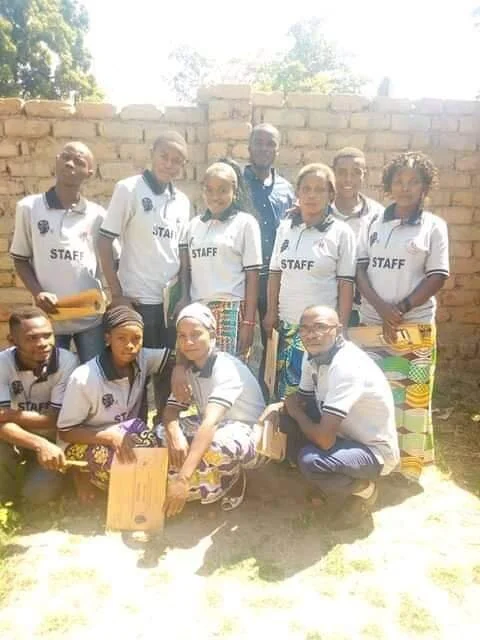
Notre Voix
Notre Voix installs chlorine dispensers next to community water sources and promotes their use to increase access to safe water.
CHLORINE DISPENSER CHALLENGE; DEMOCRATIC REPUBLIC OF CONGO
PROVEN INTERVENTION TO BE DISTRIBUTED
Point-of-use chlorine dispensers
Learn more about the Chlorine Challenge and other D-Prize Distribution Challenges.
DISTRIBUTION MODEL INNOVATION
Notre Voix installs chlorine dispensers next to community water sources and promotes their use to increase access to safe water.
The pilot will launch in two health zones including Fizi and Kimbi-Lulenge in the Fizi territory. The Notre Voix model helps people treat their water using a safe, pre-measured dose of chlorine in order to prevent waterborne diseases such as childhood diarrhea. Target communities will be requested to appoint promoters to encourage use of the dispensers. Promoters' responsibilities will include educating the community, refilling the dispensers, and receiving the chlorine solution for refills from the Notre Voix programme manager.
Notre Voix was founded by Makene Mtambala Charles, Yalala Jumaine, and Mauwa Mangala Lucie who fled eastern DRC during the 1996 civil war and met while living in Nyarugusu refugee camp in Tanzania. Their experiences made them passionate about humanitarian assistance and committed to helping those in need.
PILOT AND SCALING GOALS
Install 30 chlorine dispensers reaching 20,000 beneficiaries during the three-month pilot
Raise an additional $30,000 during the three-month pilot
Reach 80,000 beneficiaries by the end of year 1
Reach 160,000 beneficiaries by the end of year 2
FOUNDING TEAM
Makene Mtambla Charles - Executive Director
Yalala Jumaine - Programme Manager
Mauwa Mangala Lucie - HR & Finance Manager
Zasolar
Zasolar is a youth-led enterprise that enhances access to renewable energy technologies in underprivileged rural areas in Malawi by creating a distribution network reaching logistically-challenged areas with affordable solar technology.
SOLAR LAMP CHALLENGE; MALAWI

PROVEN INTERVENTION TO BE DISTRIBUTED
Solar lamps.
Learn more about the Solar Lamp Challenge and how these lamps create enormous benefits for developing world families.
DISTRIBUTION MODEL INNOVATION
Zasolar is a youth-led enterprise that enhances access to renewable energy technologies in underprivileged rural areas in Malawi by creating a distribution network reaching logistically-challenged areas with affordable solar technology.
Zasolar deploys trained sales technicians (empowering them with motorcycle transport), recruiting highly performing sales agents, setting up kiosks (with mobile money abilities) and undertaking mass community engagements cost-effectively. Zasolar is committed to finding cost-effective ways to deliver solar products to the last mile.
The Zasolar team is made up of vibrant individuals who are passionate about selling with an impact. Members bring industry experience covering the entire solar market supply chain. The founding team includes Fishani Msiska, Lusayo Salanga, Shawowene Mwasangwale and Jacob Nyasulu.
PILOT AND SCALING GOALS
Distribute 1,750 solar lamps during the pilot, reaching 8,750 beneficiaries
Raise an additional $10,000 during the pilot
Reach 50,000 beneficiaries by the end of year 2
FOUNDING TEAM
Fishani Msiska - Team Leader
Shawowene Mwasangwale - Sales & Marketing Assistant
Lusayo Salanga - Sales Technician
Jacob Nyasulu - Sales Technician
Water for Development
Water for Development (Water4Dev) provides access to safe water to reduce the incidence of water-borne diseases.
CHLORINE DISPENSER CHALLENGE; BURUNDI
PROVEN INTERVENTION TO BE DISTRIBUTED
Point-of-use chlorine dispensers
Learn more about the Chlorine Challenge and other D-Prize Distribution Challenges.
DISTRIBUTION MODEL INNOVATION
Water for Development (Water4Dev) provides access to safe water to reduce the incidence of water-borne diseases.
The chlorine dispensers project consists of three main components; (i) A dispenser hardware installed next to a communal water source, (ii) an incessant community education by a local promoter to encourage take-up and (iii) the ongoing supply of chlorine refills. Our operating model will be tested in Cibitoke Province of Burundi for three months before a full scale countrywide.
The Chlorine Dispenser System is an innovative way of treating water with dilute chlorine at the points of water collection. This technology was developed in 2007 by Innovations for Poverty Action (IPA) and its affiliates and has been proven as the most cost-effective option of treating water that results in a reduction of child diarrhea by 20-40% at a cost of only USD 1.28 per person reached per year.
Installing a chlorine dispenser next to a water point offers maximum convenience to users of this free service, leading to a high adoption rate. What’s more, chlorinating water protects water from potential recontamination during collection and storage, and eliminates the need to boil water, saving time and effectively reduce the carbon footprint.
Water4Dev was started in 2020 by Olivier Nihimbazwe, a RUFORUM@MasterCard Foundation Scholar who serves as the Executive Director. Other founding members include Prosper Cishahayo and Willy Ndayishimiye. We believe that good health is a prerequisite to enhancing the human capital and hence, the economic growth of communities and the country at large.
PILOT AND SCALING GOALS
Install 25 chlorine dispensers reaching 5,000 beneficiaries during the three-month pilot
Raise an additional $75,000 during the three-month pilot
Reach 30,000 beneficiaries by the end of year 1
Reach 70,000 beneficiaries by the end of year 2
FOUNDING TEAM
Olivier Nihimbazwe - Executive Director and Project Coordinator
Prosper Cishahayo - Supply Chain Manager
Willy Ndayishimiye - M&E Manager
Sayari Green Alliance
Sayari Green Alliance gives rural populations access to safe water by distributing and promoting point-of-use chlorine dispensers.
CHLORINE DISPENSER CHALLENGE; UGANDA

PROVEN INTERVENTION TO BE DISTRIBUTED
Point-of-use chlorine dispensers
Learn more about the Chlorine Challenge and other D-Prize Distribution Challenges.
DISTRIBUTION MODEL INNOVATION
Sayari Green Alliance gives rural populations access to safe water by distributing and promoting point-of-use chlorine dispensers.
Sayari establishes a network of local area service providers who deliver chlorine and maintain the dispensers. The model involves three key components: Simple-to-use hardware installed at communal water collection points, community trainings, and a strong chlorine supply chain. The Sayari Green Alliance approach to chlorine dispenser distribution is intended to empower the local businesses to supply chlorine, repair dispensers as a way of community inclusion and service sustainability.
PILOT AND SCALING GOALS
Distribute 20 dispensers during 5,000 beneficiaries during the pilot phase
Raise $50,000 during the pilot phase
Reach 70,000 beneficiaries by the end of year 2
FOUNDING TEAM
Atwongyeire Dorcus - Co-founder
Ayera Sylvia - Co-founder
Kyomukama Evelyne - Administrator
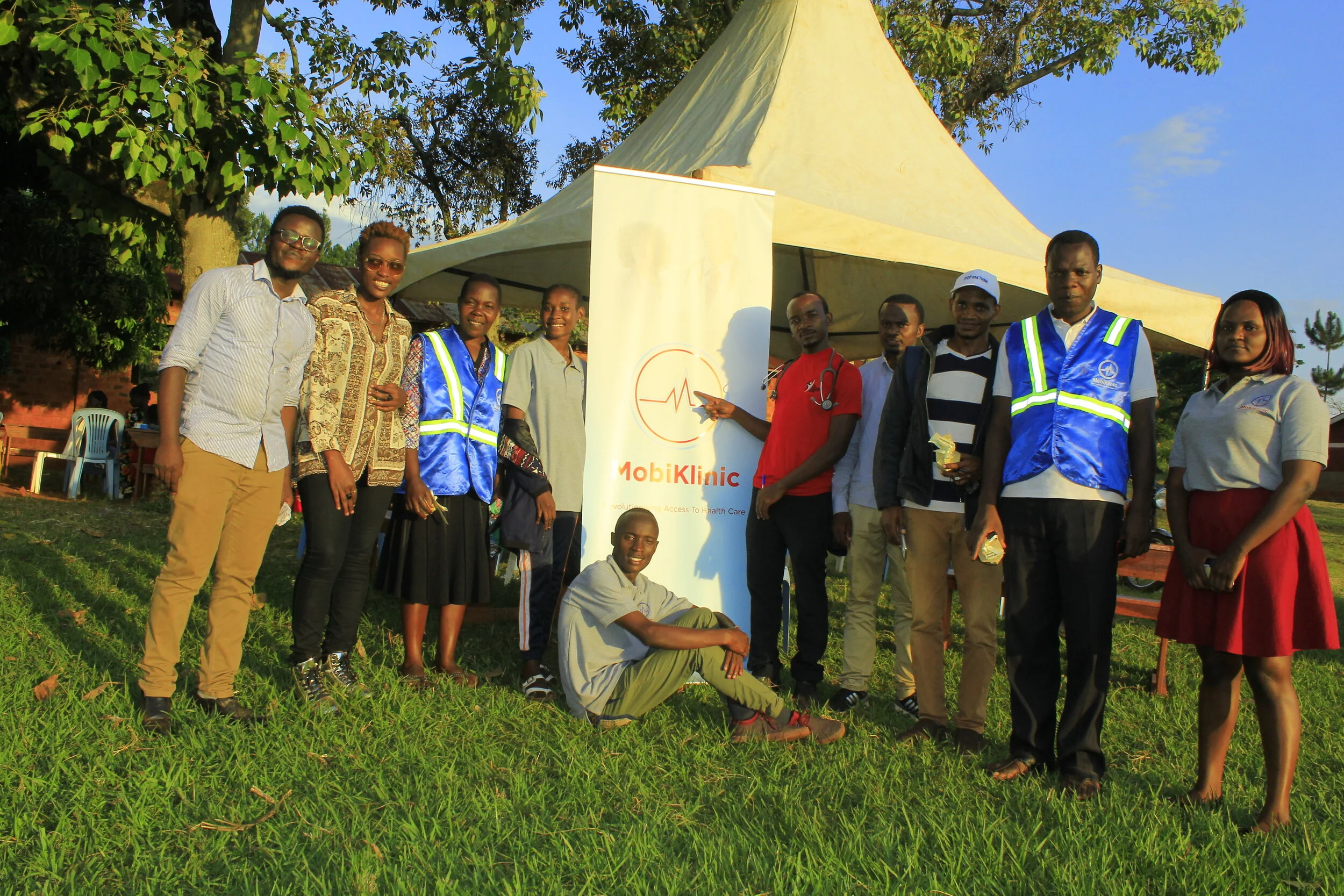
Mobiklinic
Mobiklinic distributes the self-injectable contraceptive Sayana Press to last mile areas of Uganda.
SAYANA PRESS CHALLENGE; UGANDA
PROVEN INTERVENTION TO BE DISTRIBUTED
Sayana Press injectable contraceptive.
Learn more about the Sayana® Press Challenge and why training health providers to administer Sayana® Press can be particularly valuable for women who prefer injectable contraceptives but don’t have regular access.
DISTRIBUTION MODEL INNOVATION
Mobiklinic distributes the self-injectable contraceptive Sayana Press to last mile areas of Uganda, beginning in Buikwe District, Eastern Uganda.
Mobiklinic trains and deploys Community Health Providers who will distribute Sayana Press and training to women. A custom digital platform allows Community Health Providers to send feedback and data to a central point, easing communication with the founding team.
Mobiklinic was started by Andrew Ddembe and Barbara Nabigambo. Andrew is a paralegal, innovator, social entrepreneur and health equity activist, and serves as the CEO of Mobiklinic. Barbara is an accountant and women’s health activist.
PILOT AND SCALING GOALS
Provide 1,000 women with access to Sayana Press and raise an additional $10,000 during the pilot
Reach 15,000 beneficiaries by the end of year 1
Reach 30,000 beneficiaries by the end of year 2
FOUNDING TEAM
Andrew Ddembe - Founder
Barbara Nabigambo - Co-Founder
HMP PLC
HMP PLC distributes is a new for-profit social business established with a primary aim of commercializing and distributing proven social impact products to rural and marginalized under-served households in Ethiopia.
SOLAR LAMP CHALLENGE; ETHIOPIA

PROVEN INTERVENTION TO BE DISTRIBUTED
Solar lamps.
Learn more about the Solar Lamp Challenge and how these lamps create enormous benefits for developing world families.
DISTRIBUTION MODEL INNOVATION
HMP PLC is a new for-profit social business established with a primary aim of commercializing and distributing proven social impact products to rural and marginalized under-served households in Ethiopia.
The HMP distribution model involves community-based youth and women resellers and institutional partnerships with MFI’s for access to finance. The team will also recruit farmers’ multi-service cooperatives to serve outlets for solar products and tap into already existing local dealer networks.
HMP PLC was started in 2020 by Michael Tariku and Helina Solomon. Michael & Helina will serve as the General Manager and Marketing Manager of Green Power.
PILOT AND SCALING GOALS
Distribute 600 solar lamps during the pilot, reaching 3,600 beneficiaries
Raise an additional $30,000 during the pilot
Reach 15,600 beneficiaries by the end of year 1
Reach 36,000 beneficiaries by the end of year 2
FOUNDING TEAM
Michael Tariku Tafere - General Manager
Helina Solomon Habtu - Marketing Manager
Fuga
Cherehani Agriculture leverages an organized network of veterinary doctors to distribute animal health and nutrition products.
CUSTOM AGRICULTURE CHALLENGE; KENYA

PROVEN INTERVENTION TO BE DISTRIBUTED
Livestock health and nutrition products.
Learn more about the Custom Agriculture Challenge and why distributing proven agricultural interventions can greatly improve the livelihoods of smallholder farmers.
DISTRIBUTION MODEL INNOVATION
Fuga (formerly Cherehani Agriculture) leverages an organized network of veterinary doctors to distribute animal health and nutrition products.
The veterinary extension officers use a downloadable application to onboard farmers within their area of work. They schedule visits and order medicine directly through the app. Fuga aggregates this demand to order and supply medicine from manufacturers directly to the extension officers who use them in farms. This model shortens the delivery time from manufacturer to farmer while lowering cost and increasing efficiency.
Fuga was founded in 2019 by Wesley Owiti, Nasreen Ali, Christine Mukiri and Robert Mboya.
PILOT AND SCALING GOALS
Reach 500 farmers by the end of the three-month pilot
Provide vaccination to over 2,000 cattle by the end of the three-month pilot
Raise additional $50,000 by the end of the three-month pilot
Reach 60,000 beneficiaries by the end of year 2
FOUNDING TEAM
Wesley Owiti - CEO
Christine Mukiri - CTO
Robert Mboya - COO
Nasreen Ali - CFO
Wezesha
Wezesha is a digital communication platform for the primary healthcare sector, which uses accessible technology to enhance two-way communication between patients, service providers and government institutions.
TRANSPARENCY CHALLENGE


PROVEN INTERVENTION TO BE DISTRIBUTED
A digital platform that enhances two-way communication in the healthcare sector between patients, service providers, and government institutions.
Learn more about the Transparency Challenge and how citizen reporting platforms can be used to hold government officials accountable and reduce corruption.
DISTRIBUTION MODEL INNOVATION
Wezesha is a digital communication platform for the primary healthcare sector, which uses accessible technology to enhance two-way communication between patients, service providers and government institutions. As a patient arrives at the clinic they are prompted to register on Wezesha through their mobile phone using USSD technology. After receiving services at the clinic, the patient will be prompted by Wezesha to respond to <5 questions relating to their experience. For example, a patient seeking antenatal care may be asked to rate the quality of the service provided by responding to specific questions about their interaction with the care provider.
Wezesha aggregates this digital data over time and across geographic areas to analyse how patient experience differs. Data is shared with partners in government and service providers, who can then make decisions on how to adjust service provision. This becomes a major lever for improving service quality and patient experience. Once this digital communication channel is established between Wezesha and patients, government and service providers can use this as an outbound channel to directly reach patients. For example, a patient with a chronic condition who needs to return to the facility regularly, can receive a digital prompt via SMS.
This solution is based on evidence provided from research which indicates that improving data, communication and strengthening systems of accountability within primary healthcare leads to enhanced citizen experience and healthcare outcomes.
PILOT AND SCALING GOALS
Partner with 3-5 primary healthcare facilities in the first three months
1,000 citizen engagements in the first three months
Operate within 100 primary healthcare facilities by end of year 2
500,000 citizen engagements by end of year 2
Expand into two additional countries and/or sectors by end of year 5
FOUNDING TEAM
Simon DeBere - Co-founder
Robert Smith - Co-founder
Society for Impact Health Initiative Limited
Society for Impact Health Initiative (SIHI) is a non-profit company working to meet the unmeet need for contraceptives for underserved populations by scaling up distribution of self-injectable contraceptives in rural Zambia.
SAYANA PRESS CHALLENGE; ZAMBIA

PROVEN INTERVENTION TO BE DISTRIBUTED
Sayana Press injectable contraceptive.
Learn more about the Sayana® Press Challenge and why training health providers to administer Sayana® Press can be particularly valuable for women who prefer injectable contraceptives but don’t have regular access.
DISTRIBUTION MODEL INNOVATION
Society for Impact Health Initiative (SIHI) is a non-profit company working to meet the unmeet need for contraceptives for underserved populations by scaling up distribution of self-injectable contraceptives in rural Zambia.
The SIHI model uses an evidence-based approach and targets trained community-based distributors in injectable contraceptives to distribute self-injecetable contraceptives and train women on self-injection within their community. The pilot will launch in Mpika district of Muchinga province in Zambia before scaling nationwide.
PILOT AND SCALING GOALS
Provide 1,920 women with access to Sayana Press during the pilot
Raise $80,000 during the pilot to support future scale
Reach 250,000 beneficiaries by the end of year 2
FOUNDING TEAM
Abraham Chingalika - Executive Director
Richard Chimfwembe - Program Director
Prayreen Chisanga - Monitoring, Evaluation & Knowledge Management Director
HERWO
HERWO will utilize a peer-led model to ensure last mile delivery of self-injectable contraceptives to underserved populations.
SAYANA PRESS CHALLENGE; UGANDA

PROVEN INTERVENTION TO BE DISTRIBUTED
Sayana Press injectable contraceptive.
Learn more about the Sayana® Press Challenge and why training health providers to administer Sayana® Press can be particularly valuable for women who prefer injectable contraceptives but don’t have regular access.
DISTRIBUTION MODEL INNOVATION
HERWO will utilize a peer-led model to ensure last mile delivery of Sayana Press, a self-injectable contraceptive, to adolescent girls and young women in fishing communities of Mukono district Uganda. The model is unique because it will adopt a peer-led, youth-friendly model to reach out to adolescent girls and young women in fishing communities who have the highest unmet need for modern contraception.
HERWO was started in January 2020 by Monica Bagaya, Diego Izizinga and Timothy Ssebuliba.
PILOT AND SCALING GOALS
Provide 1,000 women with access to Sayana Press during the pilot
Train 100 PPMVs on Sayana Press communications and distribution during the pilot
Reach 5,000 beneficiaries by the end of year 1
Reach 12,000 beneficiaries by the end of year 2
FOUNDING TEAM
Bagaya Monica - Team Lead
Diego Izizinga - Programme coordinator
Timothy Ssebuliba - Programmes manager
Suvita
Suvita increases uptake of immunization services to combat vaccine-preventable diseases.
IMMUNIZATION CHALLENGE; INDIA

PROVEN INTERVENTION TO BE DISTRIBUTED
Routine childhood immunizations.
Learn more about the Immunization Challenge and how increasing routine childhood immunization rates in low-coverage areas could prevent millions of childhood deaths.
DISTRIBUTION MODEL INNOVATION
Suvita increases uptake of immunization services to combat vaccine-preventable diseases.
Suvita identifies natural community influencers through peer nominations, and invites them to become immunization ambassadors who motivate and remind others in the community to bring their children for routine immunisations. The model complements this with customized SMS reminders direct to new parents, which follow their child's immunization schedule. These two evidence-based programmes have been shown to boost uptake of immunization in a randomised controlled trial in Haryana, India, by Nobel Laureates Abhijit Banerjee, Esther Duflo and colleagues - and the Suvita team is taking them to scale.
PILOT AND SCALING GOALS
Establish embassadors in 50 villages, covering 5,000 eligible children during the pilot
Raise $50,000 during the pilot
Reach 50,000 beneficiaries by the end of year 1
FOUNDING TEAM
Varsha Venugopal - Co-founder
Fiona Conlon - Co-founder
The Taimaka Project
The Taimaka Project’s mission to tackle food insecurity in Northeastern Nigeria began with the implementation of a post-harvest loans (PHL) program that delivered crop storage bags and a small loan to rural farmers to help them save their crops and sell when prices were up to 50% higher.
CUSTOM AGRICULTURE CHALLENGE; NIGERIA

PROVEN INTERVENTION TO BE DISTRIBUTED
Taimaka was awarded D-Prize pilot funding for the distribution of post-harvest credit and storage to help farmers save and avoid lean season poverty and hunger.
Learn more about the Custom Agriculture Challenge and why distributing proven agricultural interventions can greatly improve the livelihoods of smallholder farmers.
DISTRIBUTION MODEL INNOVATION
The Taimaka Project’s mission to tackle food insecurity in Northeastern Nigeria began with the implementation of a post-harvest loans (PHL) program that delivered crop storage bags and a small loan to rural farmers to help them save their crops and sell when prices were up to 50% higher.
After a large-scale RCT with UC-Berkeley and Stanford showed that PHLs was cost-effective but lower than the bar Taimaka sets for its own work, Taimaka made the hard decision to transition away from the PHLs program in favor of another way we had begun to tackle food insecurity in the same communities – treating children with malnutrition.
Taimaka currently runs a treatment program that 1) delivers life-saving treatment to children in Nigeria and 2) serves as an incubator for cost-effective innovations that can either improve the quality, decrease the costs, or simplify the delivery of malnutrition treatment so that the 45.4 million children who need it can get it (only 20-30% currently get treatment). Because malnutrition is the leading cause of childhood deaths globally, and because millions are already spent on treatment every year, even marginal improvements can yield high impact. A reduction in the cost of treatment by just 1% would free up over $3.4 million currently spent globally on treatment to treat an additional 50,000 children.
PILOT AND SCALING GOALS
Post-Harvest Loans Pilot:
Distributed PHLs to 1,000 smallholder farmers in Nigeria
Generated an additional $25,000 in post-harvest income for farmers
Malnutrition Scaling Goals:
Test 3-4 candidate innovations in annual portfolios
Push at least 1 innovation to scale to reach 20% of treated children by Year 5
Reduce the cost-per-life saved of malnutrition treatment by 10% by Year 5
FOUNDING TEAM
Justin Graham - Co-founder
Abubakar Umar - Co-founder
Muhammad Uba - Co-founder
Parth Ahya - Co-founder
Justin Graham is Taimaka’s Executive Director and an Oxford graduate with a background in evidence-based development and quantitative economics. Abubakar Umar is Taimaka’s Medical Director and a former pediatrician with the Nigerian government. Muhammad Uba and Parth Ahya now serve on the board.
CareNet
CareNet identifies fistula patients and coordinates their treatment in Uganda.
PATIENT IDENTIFICATION CHALLENGE; UGANDA

PROVEN INTERVENTION TO BE DISTRIBUTED
Using a mobile platform and community networks to identify obstetric fistula and transport patients to hospitals offering free services.
Learn more about the Patient Identification Challenge and why identifying individuals in need of medical treatment and finding ways to make that treatment accessible reduces poverty.
DISTRIBUTION MODEL INNOVATION
CareNet identifies fistula patients and coordinates their treatment in Uganda.
CareNet uses an intertwined model comprising a community-level multidisciplinary network of stakeholders supported by a mobile-based application and other digital technologies to: (a) increase awareness on fistula treatment, and (b) coordinate its delivery/distribution in rural communities in Uganda.
In this model, the community-level multidisciplinary network is an avenue for creating awareness on fistula repairs/treatment and identifying patients. The mobile-based application is an evidence-based mechanism for coordinating treatment of patients, and monitoring patterns of distribution and adoption of treatment services. The coordination of care and treatment involves organizing and providing financial or logistical support that fistula patients need so as to access free fistula repair services at specific health facilities in Uganda.
CareNet is founded by Agnes Nakakawa, Fiona Tulinayo, Ibrahim Mugerwa, Daniel Kasule, Linda Wandira, and Datsun Bazzeketa.
PILOT AND SCALING GOALS
Identify 100 fistula patients and connect them to treatment by the end of the pilot
Reach 640 fistula patients by the end of year 1
Reach 1,100 fistula patients by the end of year 2
FOUNDING TEAM
Agnes Nakakawa - Team Leader
Fiona Tulinayo - Manager, Strategic Information and Development
Ibrahim Mugerwa - Manager, Community Sensitization & Coordination of Treatment and Care
Daniel Kasule - Monitoring and Evaluation Specialist
Linda Wandira - Manager, Customer Relations, Operations & Finance
Datsun Bazzeketa - Software/App Developer
AgriSocius Lda
AgriSocius Lda is an agribusiness company with a mission to commercialize smallholder agriculture in Mozambique.
CUSTOM AGRICULTURE CHALLENGE; MOZAMBIQUE

PROVEN INTERVENTION TO BE DISTRIBUTED
Quality seeds and other key agricultural inputs
Learn more about the Custom Agriculture Challenge and why distributing proven agricultural interventions can greatly improve the livelihoods of smallholder farmers.
DISTRIBUTION MODEL INNOVATION
"AgriSocius, Lda is a social and inclusive agribusiness company whose mission is to unleash Economic potential of smallholder farmers. We provide smallholder farmers with relevant and affordable resources for increased farm productivity and income. We work in the best interest of smallholder farmers. Our vision is that of a decent life for every smallholder farmer Family in communities we work in. Our commitment to our vision and mission forces us to work in the best interest of smallholder farmers.
We strongly believe that high levels of poverty and hunger amongst smallholder farmers in rural areas is a direct result of 3 interlinked factors: 1) deficient and ineffective agricultural inputs distribution system, 2) unavailability and high cost of financial products and services and 3) Limited access to remunerative agricultural markets. The combination of these three factors not only limit adoption of new productivity enhancing technologies, such as agricultural inputs, but also lowers farm productivity, quality of produce and farm income. This is why we establish and operate Pro-Farmer Distribution Hubs, which provide all the resources smallholder farmers need in order to increase productivity, incomes and command a decent life"
AgriSocius Lda was founded in 2016 by Quisito Bastos Gimo and Varnila Gimo. The first fully owned Distribution Hub will be established in Barue District.
PILOT AND SCALING GOALS
Procure and distribute quality inputs to 2,500 farmers by the end of the pilot
Distribute at least 15,000 litres of pesticides to smallholder farmers during the pilot
Reach 5,000 farmers by the end of year 2
FOUNDING TEAM
Quisito Bastos Gimo - Co-founder
Varnila Gimo - Co-founder
Nukushare Agro Limited
Nukushare Agro Limited distributes improved seeds and other accompanying agro-inputs and services to smallholder farmers in Ghana.
QUALITY SEED CHALLENGE; GHANA

PROVEN INTERVENTION TO BE DISTRIBUTED
Quality seeds.
Learn more about the Quality Seed Challenge and why an evidence-based model that distributes high-quality seeds could reliably boost the standard of living for smallholder farmers.
DISTRIBUTION MODEL INNOVATION
Nukushare Agro Limited is an innovative agricultural technology company that is working to increase farmers’ access and use of improved seeds and other critically needed farm inputs.
The team leverages digital technologies like USSD short codes and mobile apps to enable farmers a timely access to quality improved seeds and other farm inputs, accurate agronomic data, and agricultural services. The Nukushare initiative is aimed at improving farmers’ productivity, resilience to changing climate, and post-harvest management. The team's use of technology sets it apart from competition with the unique ability to check the distribution of fake seeds.
Nukushare Agro was founded by Selorm Komla Darkey, Etsey Dzadza and Hope Adzakpa. The team boasts of a solid knowledge and practical experience in agribusiness management, financial management and technology development.
PILOT AND SCALING GOALS
Reach 300 farmers during the pilot
Distribute 4.6 metric tons of maize and 12.5 metric tons of rice seeds during the pilot
Reach 1,500 beneficiaries by the end of year 1
Reach 25,000 beneficiaries by the end of year 2
FOUNDING TEAM
Selorm Komla Darkey - Co-founder, Business Lead
Etsey Dzadza - Co-founder, Operations Lead
Hope Adzakpa - Co-founder, Tech Lead
SolarPoint Limited
SolarPoint distributes solar lamps through agricultural cooperatives and savings groups.
SOLAR LAMP CHALLENGE; ZAMBIA

PROVEN INTERVENTION TO BE DISTRIBUTED
Solar lamps.
Learn more about the Solar Lamp Challenge and how these lamps create enormous benefits for developing world families.
DISTRIBUTION MODEL INNOVATION
SolarPoint distributes solar lamps through agricultural cooperatives and savings groups.
The SolarPoint model reaches rural farmers through the point of contact for inputs and market linkages, farmer cooperatives and savings groups, and uses a crops-for-lights model to provide farmers with much needed energy access and market linkage for their produce.
SolarPoint was founded by Laurence Wamulume Beele and Michael Kwibisa Masupelo.
PILOT AND SCALING GOALS
Distribute 420 solar lamps during the pilot, reaching 2,100 beneficiaries
Raise an additional $25,000 during the pilot
Reach 10,000 beneficiaries by the end of year 1
Reach 30,000 beneficiaries by the end of year 2
FOUNDING TEAM
Wamulume Laurence Beele - Co-founder, Innovation Lead
Michael Kwibisa Masupelo - Co-founder, Commercial Lead
Are you ready to be the next great social entrepreneur?