Better Minds Education
Better Minds Education is dedicated to improving student learning outcomes throughout rural Africa through a scalable digital tutoring model.
FLIPPED CLASSROOM; KENYA

PROVEN INTERVENTION TO BE DISTRIBUTED
Flipped classroom.
Learn more about the Flipped Classroom Challenge and why new education models, like flipping the classroom or deskilling a class curriculum, offer a solution to the vast teacher shortages in the developing world.
DISTRIBUTION MODEL INNOVATION
Better Minds Education is dedicated to improving student learning outcomes throughout rural Africa through a scalable digital tutoring model.
Better Minds distributes proven digital tutoring content to high-need students in rural Africa. The pilot digital learning center in Kakamega, Kenya leverages low-cost tablets and self-paced learning software to teach students at their right level of learning through school-based partnerships and holiday learning camps.
Better Minds was founded in 2019 by Siler Bryan, with Grace Waweru as the first Digital Learning Center Manager.
PILOT AND SCALING GOALS
Provide tutoring to 500 students within 3 months
Launch partnerships with 6 schools and hold 1 holiday camp to reach 500 students in 3 months
Raise $50,000 from new donors within 3 months
Scale to serve 2,000 students by end of year 1 and 10,000 by year 2
FOUNDING TEAM
Siler Bryan - Director
Katswiri
Katswiri's mission is to distribute livestock and livestock services on loan to rural smallholder farmers in order to promote a better quality of life.
CUSTOM CHALLENGE; MALAWI

PROVEN INTERVENTION TO BE DISTRIBUTED
Livestock market bundle.
Learn more about the Custom Challenge and why we only fund ideas that focus on distributing proven poverty interventions.
DISTRIBUTION MODEL INNOVATION
Katswiri's mission is to distribute livestock and livestock services on loan to rural smallholder farmers in order to promote a better quality of life.
The Katswiri distribution model is based on three part approach, that includes financing through the provision of livestock and livestock services on loan, training of rural farmers in livestock production best practices, and marketing support.
Katswiri’s plan is to provide long term sustainable livestock services to farmers in need and drive evidence-based impact.
PILOT AND SCALING GOALS
Enroll 100 households in livestock program within first six months
Directly distribute 1,400 livestock units, offer a series of 3 agriculture production trainings and vaccinate 1,400 livestock units
Raise 20,000 USD in first six months and then scale operations in the next year pilot to reach 450 farmers with an estimated fundraising budget of 100,000 USD
FOUNDING TEAM
Sopani R. Neba - Founder and Team Lead
Judith Kamanga - Training and Livestock Extension Specialist
Graciano Ulemu Gawamadzi - Project Management and Evaluation Specialist
Haraka Home
Haraka Home is Africa’s “Costco on wheels,” saving East African consumers money by delivering bulk commodities such as LPG and food using a distributed fleet of delivery vehicles preloaded with fast moving consumer goods.
COOK STOVE CHALLENGE; KENYA

PROVEN INTERVENTION TO BE DISTRIBUTED
Liquid Petroleum Gas.
Learn more about the Cook Stove Challenge and how clean cook stoves reduce health and safety risks, lower fuel expenses, and help reduce poverty.
DISTRIBUTION MODEL INNOVATION
Haraka Home, based in Nairobi, Kenya, uses a distributed goods model of delivery that allows low prices and a superior consumer experience while still retaining healthy margins. Instead of receiving an order, loading a vehicle hours or days later with goods, and then traveling to the customer, Haraka’s delivery vehicles leave their warehouse every morning preloaded with products and continuously complete deliveries. This distribution strategy cuts delivery time, distance, and expense significantly.
PILOT AND SCALING GOALS
Complete 1,000 deliveries within first month of operations
Achieve delivery times of 45 minutes or less
Aiming for full net profitability
FOUNDING TEAM
Max Weiner - COO
Vytas Bradunas - CTO
Nutri You
Nutri You strives to create simplicity in agriculture by offering farmers affordable drip irrigation systems to help them grow.
CUSTOM AGRICULTURE CHALLENGE; KENYA

PROVEN INTERVENTION TO BE DISTRIBUTED
Drip irrigation systems.
Learn more about the Custom Challenge and why we only fund ideas that focus on distributing proven poverty interventions.
DISTRIBUTION MODEL INNOVATION
The Nutri You model seeks to provide smallholder farmers in Busia County, Kenya, with affordable access to a low-cost drip irrigation system through a bundled low-cost irrigation package. This system will allow farmers to irrigate their crops all year round, relieving them of their dependence on rain, thus enabling them to increase local food production. The project has adopted a pay-as-you-go (PAYGO) finance model that offers farmers a micro-leasing option to acquire the system upfront with just a 30% down payment. The farmers then get as two month grace period before continuing to make slow payments over the course of 6 months.
Nutri You strives to create simplicity in agriculture by offering farmers affordable yet practical products and services that simplify their lives and help them grow.
PILOT AND SCALING GOALS
Reach 300 farmers in first three months
2 agents to distribute 35 drip irrigation systems within first three months
FOUNDING TEAM
Ellen Savude - Project Manager
Laetitia Mukungu - Technical Lead
Haggai Pepela - Operations Lead
Mpumalanga Zwane - Communications Lead
Adolescent Health Champions
Adolescent Health Champions trains adolescent girls in India as health educators in their schools and communities.
CUSTOM CHALLENGE; INDIA

PROVEN INTERVENTION TO BE DISTRIBUTED
Improving health outcomes by distributing a health education program.
Learn more about the Custom Challenge and why we only fund ideas that focus on distributing proven poverty interventions.
DISTRIBUTION MODEL INNOVATION
Adolescent Health Champions cultivates a network of youth health educators (Champions) in Mumbai, India who lead the health education process in their schools and communities. We use an innovative, evidence-based peer education model that leverages the voices, talent, and leadership of adolescents themselves. Our approach provides adolescents with the knowledge, dialogue, support, and prevention strategies they need to navigate their health needs during this pivotal transition to adulthood.
PILOT AND SCALING GOALS
Educate 5,000 adolescents during pilot
Train 625 peer educators during pilot
FOUNDING TEAM
Ricky Sharma - Co-Founder
Priya Shankar - Co-Founder
CORD's Positive Escort Project
CORD’s Positive Escort Project aims to prevent mother-to-child transmission of HIV by training and engaging experienced women living with HIV to follow up and ensure 150 HIV+ pregnant women complete Antiretroviral Therapy.
PMTCT CHALLENGE; NIGERIA

PROVEN INTERVENTION TO BE DISTRIBUTED
Retention in care and adherence to anti-retroviral treatment for people living with HIV.
Learn more about the PMTCT Challenge and how increasing completion of antiretroviral therapy (ART) to prevent mother to child transmission (PMTCT) of HIV can decrease HIV rates and improve lives.
DISTRIBUTION MODEL INNOVATION
CORD’s Positive Escort Project aims to prevent mother-to-child transmission (PMTCT) of HIV by training and engaging experienced women living with HIV to follow up and ensure 150 HIV+ pregnant women complete Antiretroviral Therapy (ART).
HIV+ positive women who have experienced PMTCT services and maintain close links with the community will be trained and engaged as Positive Escorts to facilitate community-facility continuum of care for PMTCT activities. They will provide pre-test group education sessions, one-on-one and couples counseling, individualized education, psychosocial support, appointment reminders and follow-up services to ensure women adhere to treatment. They will also be role models whose support and presence will reassure the newly diagnosed that HIV related challenges can be successfully overcome.
PILOT AND SCALING GOALS
Reach 150 expectant mothers during the pilot phase
Train 50 HIV+ women to serve as Positive Escorts during the pilot phase
FOUNDING TEAM
Adebanjo Adetosoye Moses - Executive Director/Project Lead
Econome
Econome Ltd is a last mile distributor building a trusted one-stop shop for impactful energy products needed by rural households in Kenya.
SOLAR LAMP CHALLENGE; KENYA

PROVEN INTERVENTION TO BE DISTRIBUTED
Solar Lamps.
Learn more about the Solar Lamp Challenge and how these lamps create enormous benefits for developing world families.
DISTRIBUTION MODEL INNOVATION
Econome is a one-stop trusted distribution brand for a variety of affordable utility products such as clean energy and productive use appliances for low-income households across Kenya. Our vision is to make life better for African households, one product at a time.
The Econome model is based on building a trusted and cost-effective last mile distribution channel through sales of a range of quality, affordable and impactful energy products to rural households. We work with mainly women entrepreneurs by offering them a business opportunity to make good sales that can sustain their livelihoods. With a full basket of different products, the probability of one making sales in each household is higher than if it were only one product being sold by the same entrepreneur. The pilot location is in western Kenya counties of Kakamega, Bungoma and Busia where we aim to work with over 30 women entrepreneurs during this period.
PILOT AND SCALING GOALS
Directly reach 3,000 beneficiaries within three months
Distribute 600 products comprising of solar lights, cook stoves and water storage tanks within three months
Raise $20,000 from sales revenues and other sources within 3 months
FOUNDING TEAM
Linda Wamune - Managing Director
Martin Theuri - Business Advisor
Health Support Initiatives
Health Support Initiatives contributes to the reduction of morbidity, mortality and disability due to preventable diseases by incentivizing parents and caregivers to bring children to health facilities for immunizations.
IMMUNIZATION CHALLENGE; UGANDA

PROVEN INTERVENTION TO BE DISTRIBUTED
Routine childhood immunizations.
Learn more about the Immunization Challenge and how increasing routine childhood immunization rates in low-coverage areas could prevent millions of childhood deaths.
DISTRIBUTION MODEL INNOVATION
Health Support Initiatives contributes to the reduction of morbidity, mortality and disability due to preventable diseases by incentivizing parents and caregivers to bring children to health facilities for immunizations.
The model is centered on Conditional Cash Transfers that incentivize parents and caregivers to bring their children for immunization services at local health facilities. This project will be implemented in Mayuge District's fishing island communities, which have very low immunization rates. Immunization focal point persons will conduct outreach camps to identity children eligible for immunization.
PILOT AND SCALING GOALS
Immunize 500 children in first three months
Train 64 community health workers and 12 immunization focal point persons in first three months
POST-PILOT UPDATE
Measles is one of the leading causes of outbreaks among the vaccine preventable diseases. In Uganda, measles vaccine is the last vaccine to be received for completion of the immunization schedule at 9 months of age. In Uganda the coverage rate for fully immunized child is at 52%.
In the pilot, we sought to improve immunization completion rates in Mayuge District, which has one of the worst immunization indicator scores in Uganda and suffered chronic measles outbreaks. The project implemented a conditional cash transfer through a transport voucher scheme blended with dynamic community outreaches among hard-to-reach populations for the catchment population of Malongo Health center III, Mayuge district, Uganda. This facility was chosen because it has highest number of unimmunized children (2,068) and low measles coverage rates at 39%. The transport vouchers targeted children that had missed the measles vaccination while the outreaches were generalized.
During the three-month pilot, over 4,000 were reached with immunization services and 1,900 children completed their immunization schedule thus the total number of unimmunized children reduced by 94%. In addition, the annualized measles coverage increased by 18% within duration of three months.
FOUNDING TEAM
Pamela Bakkabulindi - Executive Director
Esther Anyimo - Program Coordinator
Julius Kirya - Monitoring and Evaluation Officer
Mary Etit - Finance Manager
Community Technology Worker Program
To transition families to LPG stoves from firewood and charcoal, the Community Technology Worker (CTW) Program trains local experts in Shirati, Tanzania to teach families how to use the gas stove, check in regularly, and provide any technical or maintenance support to the households.
COOK STOVE CHALLENGE; TANZANIA

PROVEN INTERVENTION TO BE DISTRIBUTED
Cook stoves.
Learn more about the Cook Stove Challenge and how clean cook stoves reduce health and safety risks, lower fuel expenses, and help reduce poverty.
DISTRIBUTION MODEL INNOVATION
To transition families to LPG stoves from firewood and charcoal, the Community Technology Worker (CTW) Program trains local experts in Shirati, Tanzania to teach families how to use the gas stove, check in regularly, and provide any technical or maintenance support to the households.
A Community Technology Worker teaches the family how to use the stove safely, leaves resources and their phone number in case there are issues, and revisits to check in. The Community Technology Worker thus provides a three-fold objective to help transition the family: to help with any technical issues, to remind the family to be saving up for the next cylinder, and to reinforce and encourage the adoption of gas.
The program buys the initial stove, pays the CTW, and empowers the families to refill on their own by changing their saving mechanisms around cooking fuel. The CTW model stands out as it relies on community-based empowerment to reach households. This intervention of CTW is about people in the community supporting their community. Every barrier the community faces, the CTWs address it, listen, and adapt.
PILOT AND SCALING GOALS
Reach 500 during Step-Wedge Cluster Randomized Controlled Trial with 1 LPG stove per family
Hire and onboard 15 Community Technology Workers
Track LPG adoption metrics through a yearlong study
FOUNDING TEAM
Annelise Gill-Wiehl - Co-Founder
Fred Chacha - Co-Founder
Nayome Aguttu- Co-Founder
Mary Frances - Co-Founder
Leaf Global Fintech
Leaf provides digital financial services to refugees so that they can store and transport assets across borders from a feature phone, avoiding cash.
CUSTOM CHALLENGE; RWANDA and DRC

PROVEN INTERVENTION TO BE DISTRIBUTED
Improving access to financial services for refugees through mobile phones.
Learn more about the Custom Challenge and why we only fund ideas that focus on distributing proven poverty interventions.
DISTRIBUTION MODEL INNOVATION
Leaf Global Fintech provides digital financial services to refugees so that they can store and transport assets across borders from a feature phone, avoiding cash.
Leaf stores and transports assets across borders from a mobile device—no smartphone required. Refugees and migrants can journey without cash, knowing accounts are safe and accessible globally. Digitizing the process drastically reduces exchange and transfer fees. Friends and family abroad can also contribute into the Leaf customer’s account in a convenient and affordable way. Leaf protects customers’ savings through blockchain technology without exposure to cryptocurrency. By allowing customers to retain more value and increasing accessible funds through contributions from abroad, Leaf gives customers a better start with financial security and lessens their dependence on host countries and foreign aid.
PILOT AND SCALING GOALS
Serve 10,000 customers during the pilot period
FOUNDING TEAM
Nat Robinson - Co-Founder and CEO
Tori Samples - Co-Founder and CFO
Green Action One
Green Action One aims to reduce climate change effects in Malawi and beyond by distributing solar lights and other clean energy options to under-saved and marginalized populations.
SOLAR LAMP CHALLENGE; MALAWI

PROVEN INTERVENTION TO BE DISTRIBUTED
Solar lamps.
Learn more about the Solar Lamp Challenge and how these lamps create enormous benefits for developing world families.
DISTRIBUTION MODEL INNOVATION
Green Action One aims to reduce climate change effects in Malawi and beyond by distributing solar lights and other clean energy options to under-saved and marginalized populations. Green Action One is distributing solar lights in Malawi targeting southern region districts where rural teachers, health officers have benefited in larger numbers.
The model is centered on a network of sales agent in the community. Green Action One one will procure solar products and sell through farmer cooperatives, teachers center, health clinics, and village savings groups, using pay-as-you-go for customer financing to help people enjoy the benefits of clean energy.
PILOT AND SCALING GOALS
Reach 4,000 customers during the pilot
Distribute 26,000 solar lamps by the end of year 1
FOUNDING TEAM
Enock Palapandu - Co-founder
Christopher Said - Co-founder
Ella Liwonde - Co-founder
Agri Eco Enterprise (AEE)
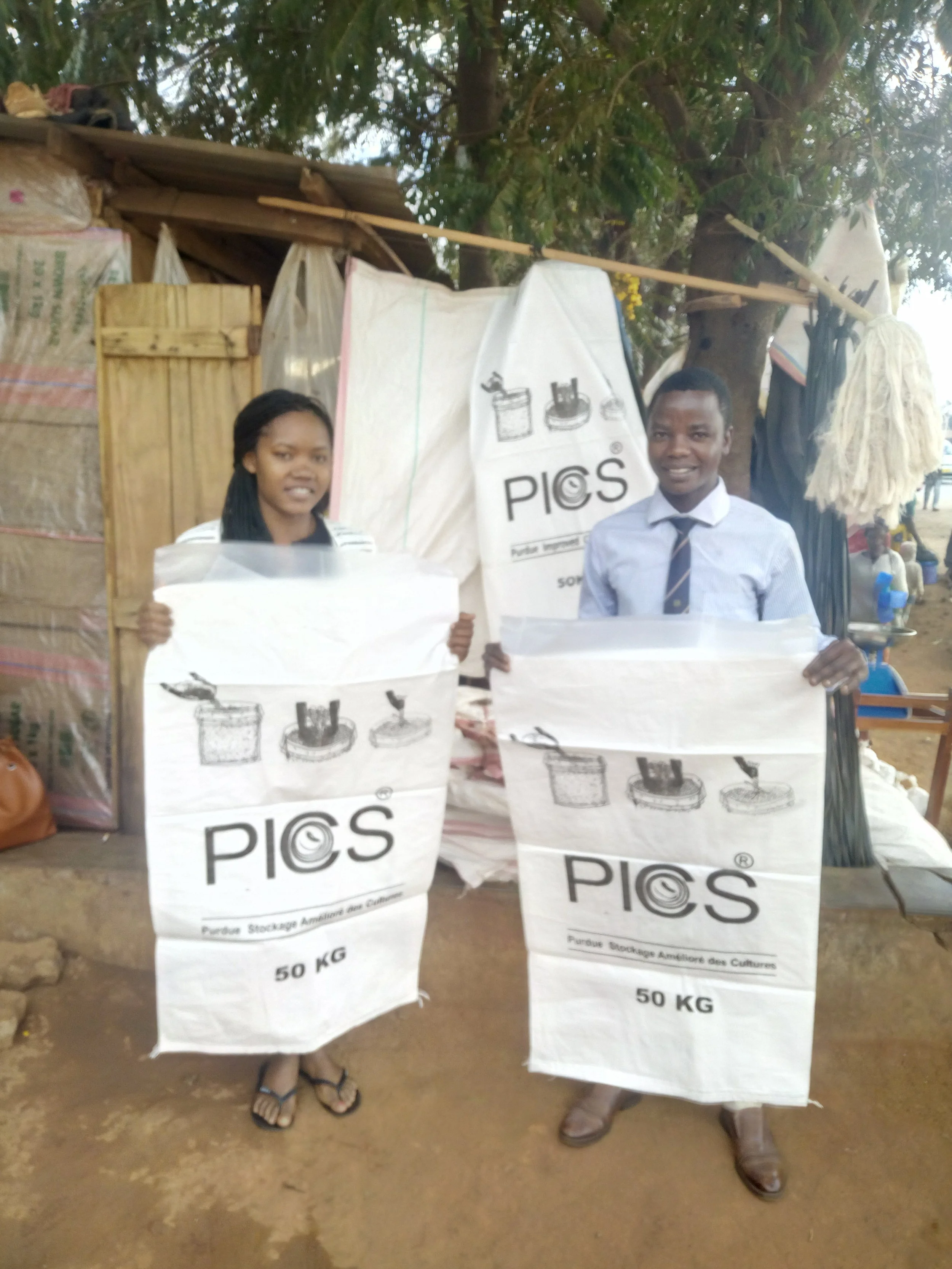
Agri Eco Enterprise (AEE) aims to boost the lives of the small holder farmers in Malawi by distributing Purdue Improved Crop Storage (PICS) bags to address post-harvest loss.
CUSTOM AGRICULTURE CHALLENGE; MALAWI
PROVEN INTERVENTION TO BE DISTRIBUTED
Purdue Improved Crop Storage (PICS) bags are a triple-layered plastic bag that serves as an air-tight storage method for harvested crops.
Learn more about the Custom Challenge and why we only fund ideas that focus on distributing proven poverty interventions.
DISTRIBUTION MODEL INNOVATION
Agri Eco Enterprise (AEE) aims to boost the lives of 100,000 Malawian smallholder farmers over the next few seasons through the distribution of Purdue Improved Crops Storage (PICS) bags in the districts of Dowa, Lilongwe, and Kasungu. Many enterprises focus on selling local bags, which are less effective.
AEE will recruit agents who will be distributing the PICS bags to smallholder farmers on commission basis. PICS will be supplied by poly pack Malawi Company which will be distributed to various agents in the targeted districts. The agents will be the shop owners who are already selling farm produces, seeds, pesticides, fertilizers and many others.
PILOT AND SCALING GOALS
Distribute 50,000 PICS bags in first three months
Reach 10,000 farmers with training and PICS bags in first three months
Reach 1 million farmers by Y5
FOUNDING TEAM
Ms. Joyce Sikwese - Executive Director
Mr. Sanderson Banda - Marketing Officer
The Now Exchange
The Now Exchange is bringing health access and choice to women in the Bangladeshi garment industry.
SAYANA PRESS CHALLENGE; BANGLADESH

PROVEN INTERVENTION TO BE DISTRIBUTED
Sayana Press injectable contraceptive.
Learn more about the Sayana® Press Challenge and why training health providers to administer Sayana® Press can be particularly valuable for women who prefer injectable contraceptives but don’t have regular access.
DISTRIBUTION MODEL INNOVATION
The Now Exchange (TNE) will provide women's health services (starting with free injectable contraceptive access) and strengthen health systems (training clinic staff) within garment factory clinics in Gazipur, Bangladesh. By doing so, TNE aims to use and improve pre-existing health clinics as a channel to reach garment workers - 80% of whom are women - with free services that override existing barriers to health access and choice. TNE will reinforce and share knowledge around various family planning options by a) training on-site health clinic workers and b) distributing information directly to factory workers to enhance their decision-making power.
PILOT AND SCALING GOALS
Give 1000 women access to Sayana Press in Y1
Scale to at least one more factory in Y2
FOUNDING TEAM
Farah Momen - Co-Founder & CEO
Giulia Bova - Co-Founder & Chief of Health Access
Civis
Civis encourages and empowers accountability and active citizenship in the development of laws and policies in India.
TRANSPARENCY CHALLENGE; INDIA

PROVEN INTERVENTION TO BE DISTRIBUTED
A mobile platform that enables citizens to understand legislation and share their feedback on laws and policy decisions in local languages while providing an avenue for the government to understand citizens’ priorities and gather feedback on policies in real time.
Learn more about the Transparency Challenge and how citizen reporting platforms can be used to hold government officials accountable and reduce corruption.
DISTRIBUTION MODEL INNOVATION
At Civis we are building a scalable, multi sided platform, to ensure that the process of public consultations can be effectively used by citizens and governments alike, to co-create laws together. We do this by:
Aggregating all open Consultations seeking feedback.
Simplifying them in accessible language.
Reaching out to individuals and gathering inputs on these laws.
Analysing and sharing citizen’s feedback with the Government - thereby building Government capacity to run effective Consultations, and gather actionable insights.
PILOT AND SCALING GOALS
10,000 users by the end of pilot phase
100,000 users by the end of year 1
1,000,000 users by the end of year 2
FOUNDING TEAM
Antaraa Vasudev - Founder
MASIH
MASIH aims to educate Indonesian rural communities on the benefits of shifting away from open wood burning and provide affordable financing options to purchase clean cook stoves that can reduce the impact of wood burning or that utilizes alternative fuel options.
COOK STOVE CHALLENGE; INDONESIA

PROVEN INTERVENTION TO BE DISTRIBUTED
Improved cook stoves.
Learn more about the Cook Stove Challenge and how clean cook stoves reduce health and safety risks, lower fuel expenses, and help reduce poverty.
DISTRIBUTION MODEL INNOVATION
MASIH will distribute clean cook stoves and provide affordable financing options to help rural Indonesian communities shift away from open wood burning. The team offers two payment options: (1) a small upfront fee paired with installment payments corresponding to crop cycle, or (2) subsidized rates for households paying in full.
Additionally, MASIH will hold workshops in the pilot region to increase knowledge of the negative health impacts of open wood burning and demand for alternatives. In areas where alternative cooking fuel options are still scarce, MASIH will find local suppliers to ensure that supply will not be a bottleneck. They will work with local leaders for community monitoring and maintenance of products.
PILOT AND SCALING GOALS
Distribute 500 cook stoves by end of pilot
Distribute 1,200 cook stoves by end of year 1
Distribute 2,500 cook stoves by end of year 2
FOUNDING TEAM
Tika Diagnestya - Co-Founder
Hillary Buntara - Co-Founder
Lubuto Energy Services
Lubuto Energy brings affordable, reliable solar lighting to families in poor communities who are not connected to national electricity grids and are using harmful fumes for lighting.
SOLAR LAMP CHALLENGE; ZAMBIA

PROVEN INTERVENTION TO BE DISTRIBUTED
Solar Lamps.
Learn more about the Solar Lamp Challenge and how these lamps create enormous benefits for developing world families.
DISTRIBUTION MODEL INNOVATION
Lubuto Energy Services reaches communities through existing local leadership, mobilizing community members through Chiefs/Headmen, Parent Teacher Associations and farming cooperatives. The pilot will be located in Samfya Town covering three rural villages with five distribution outlets. These outlets will use local solar scouts to sensitize the community and then offer solar products with mobile charging capabilities with both pay-as-you-go and rent-to-own options.
The Lubuto team with provide distributors and solar scouts with ongoing skills trainings including inventory and business management skills to help them grow their distribution networks.
PILOT AND SCALING GOALS
Reach 8,484 people and establish 5 distribution outlets during the pilot phase
Reach 33,936 people and establish 100 distribution outlets by the end of Y1
Reach 228,000 people and establish 200 distribution outlets by the end of Y2
FOUNDING TEAM
Kasonde Chomba - Founder
Lengwe Kasonde - Co-Founder
Edwin Nyirongo - Co-Founder
Sauti Ya Mama
Sauti ya Mama is a high impact social enterprise that aims to prevent mother-to-child transmission (PMCTC) of HIV by ensuring ART adherence by HIV-positive expectant mothers.
PMTCT CHALLENGE; KENYA

PROVEN INTERVENTION TO BE DISTRIBUTED
Retention in care and adherence to anti-retroviral treatment for people living with HIV.
Learn more about the PMTCT Challenge and how increasing completion of antiretroviral therapy (ART) to prevent mother to child transmission (PMTCT) of HIV can decrease HIV rates and improve lives.
DISTRIBUTION MODEL INNOVATION
Sauti ya Mama (Voice of Mothers) is a high impact social enterprise that aims to prevent mother-to-child transmission (PMCTC) of HIV by ensuring antiretroviral therapy (ART) adherence by HIV-positive expectant mothers and their infants. We strive to ensure as many infants are born free of HIV scourge and continue adhering to ART medication in the next 2 months to ensure the infants are free of HIV completely.
The pilot will take place in Mathare in Nairobi, Kenya. Community Health Volunteers will enroll, advise, and track expectant mothers. SMS reminders will be sent to ensure adherence to the ART regimen. The Sauti ya Mama model will work to create an impact on expectant mothers in low income settings to ensure they live long and productive lives.
PILOT AND SCALING GOALS
Reach 150 expectant mothers during the pilot phase
Reach 1,000 expectant mothers by the end of year 1
Reach 2,000 expectant mothers by the end of year 2
FOUNDING TEAM
Mustafah Otieno - Executive Director
Robert Oliech - Chief Community Health Worker
Empower Energy
Empower Energy identifies village-level entrepreneurs and provides them with a solar-powered charging station which gives rural customers access to LED lights and mobile phone charging.
SOLAR LAMP CHALLENGE; INDIA

PROVEN INTERVENTION TO BE DISTRIBUTED
Solar Lamps.
Learn more about the Solar Lamp Challenge and how these lamps create enormous benefits for developing world families.
DISTRIBUTION MODEL INNOVATION
Empower is building a rural distribution platform in India to ensure that products and technologies with the potential to improve lives actually reach rural consumers, at scale. Their customers live in remote, rural villages. In most cases they live in poverty and are engaged in subsistence agriculture or seasonal casual labor.
The innovative Empower solution relies on a digital approach to provide rural villagers with access to products that can improve their productivity and quality of life. Their team finds smartphone users in rural villages and equips them to distribute products and services to their communities.
Their vision is to establish a wide-reaching network of digital agents across rural and remote India to meet the product needs of India’s 800 million rural consumers.
PILOT AND SCALING GOALS
Reach 2,500 people and establish 10 franchisees during the pilot phase
Reach 5,000 people and establish 100 franchisees by the end of year 1
Reach 1,000,000 people and establish 2,000 franchisees by the end of year 2
FOUNDING TEAM
Ronit Kanwar - Chief Executive Officer
Gideon Laux - Chief Operating Officer
James Dickson - Head of Data & Impact
Men's Behavior Change Toward VMMC
The team will collaborate with local health centers to provide VMMC services and improve access to the procedure in hard to reach areas of Rwanda.
VMMC CHALLENGE; RWANDA

PROVEN INTERVENTION TO BE DISTRIBUTED
Voluntary Medical Male Circumcision (VMMC).
Learn more about the VMMC Challenge and why scaling up voluntary medical male circumcision can substantially reduce the rate of HIV acquisition for men, and also reduce the risk of transmission of high-risk human papillomavirus (HPV) to the men’s partners.
DISTRIBUTION MODEL INNOVATION
In rural areas, many Rwandans don’t have access to Voluntary Medical Male Circumcision. Other barriers to the service are cultural norms and a lack of information about VMMC. What’s more, there are often insufficient medical clinics and trained health professionals available to perform the procedure.
The 3 month pilot will highlight the high risk of HIV transmission in uncircumcised men in remote areas of Rutsiro district through grassroots mobilization campaigns for VMMC awareness. Their team will collaborate with local health centers to provide VMMC services and improve access to the procedure in hard to reach areas. Through performances by local artists, the project team will conduct 20 mobilization campaigns (4 campaigns per sector, covering 5 rural sectors, reaching at least 8000 people) about VMMC for HIV prevention.
PILOT AND SCALING GOALS
Reach 800 men with the service during the pilot phase
Reach 12,000 men with the service by the end of year 2
FOUNDING TEAM
Jean Pierre Imanishimwe - Founding Member
Fidele Murava - Founding Member
Janviere Mugoragoze - Founding Member
Oninku Health Foundation
The Oninku Health Foundation is a new venture that seeks to address the occurrence of postpartum hemorrhage in rural communities of Ghana through training of traditional birth attendants.
MATERNAL HEALTH CHALLENGE; GHANA

PROVEN INTERVENTION TO BE DISTRIBUTED
Misoprostol.
Learn more about the Maternal Health Challenge and how the distribution of Misoprostol, a $3 drug that can prevent maternal deaths from postpartum hemorrhage, could save thousands of lives.
DISTRIBUTION MODEL INNOVATION
The Oninku Health Foundation (OHF) is a new venture that seeks to address the occurrence of postpartum hemorrhage (PPH) in rural communities of Ghana through training of traditional birth attendants (TBAs). The venture will utilize multiple approaches in distributing and creating awareness about Misoprostol to curb PPH. Due to Ghana’s regulations in the handling of Misoprostol, the venture will leverage the existence of district health facilities to serve as a distributing unit for women. The drug supply will be integrated with antenatal care visits (ANC).
OHF will subsequently raise awareness about the drug through community education activities on maternal health. With technical support from the Ghana Health Service (GHS), OHF will train TBAs on how to administer Misoprostol, and also empower them to have a full set of tools with the proprietary community health box.
PILOT AND SCALING GOALS
Train 120 Traditional Birth Attendants during the pilot phase
Reach 1,200 women during the pilot phase
Train 5,000 Traditional Birth Attendants by the end of year 2
Reach 50,000 women by the end of year 2
FOUNDING TEAM
Samuel Oninku - Founding Member
Godwin King - Founding Member
Emmanuel Tetteh - Founding Member
Abigail Antwi - Founding Member
Are you ready to be the next great social entrepreneur?