WETECH Clean Lights Malawi
Waste and Energy Technologies (WETECH) limited proposes to distribute solar lamps through an innovative, sustainable, and scalable model that will help all Malawians access clean lighting.
SOLAR LAMP CHALLENGE; MALAWI

PROVEN INTERVENTION TO BE DISTRIBUTED
Solar Lamps.
Learn more about the Solar Lamp Challenge and how these lamps create enormous benefits for developing world families.
DISTRIBUTION MODEL INNOVATION
Waste and Energy Technologies (WETECH) limited proposes to distribute solar lamps through an innovative, sustainable, and scalable model that will help all Malawians access clean lighting and phone charging technologies. It is a direct response to the growing challenges by Malawians especially those on the base of the pyramid and those living in off grid communities. Out of the estimated population of 17 million in Malawi, only 10% are connected to an epileptic electricity grid. Out of the 10%, only 1% of the connected are in rural areas.
WETECH will be offering a unique solution that will be introduced to the market through targeted advertising, value added strategies and direct sales. The organization will form partnerships with companies looking to make large orders of solar lamps. WETECH envisages achieving direct sales through personal sales calls and direct visits to villages and customer premises.
PILOT AND SCALING GOALS
2,100 solar lamps sold through the 3 distribution routes during the pilot phase
Distribute 9,000 solar lamps by the end of year 1
FOUNDING TEAM
Edgar Bayani - Chief Executive Officer
Joan Nyirenda - Marketing Officer
Laurent Tito - Technical Services and Logistics
Mariane Chao Mwale - Finance Consultant
Local Links Limited
Local Links promotes renewable energy products through community-based rural financial services structures, known as savings groups. These groups form Local Links target market in rural Uganda and are a platform for the business model.
SOLAR LAMP CHALLENGE; UGANDA

PROVEN INTERVENTION TO BE DISTRIBUTED
Solar Lamps.
Learn more about the Solar Lamp Challenge and how these lamps create enormous benefits for developing world families.
DISTRIBUTION MODEL INNOVATION
Local Links promotes renewable energy products through community-based rural financial services structures, known as savings groups. These groups form Local Links target market in rural Uganda and are a platform for the business model.
There are more than 2,000 Village Agents that support these rural financial groups in Uganda. They provide an excellent opportunity for social entrepreneurship at the last mile. These are Local Links Solar Corps, Local Links’ last mile field salesforce for social products. By working with about 200 Solar Corps during this pilot, Local Links is able to make at least 1,000 sales of solar lanterns and/or solar home systems per month – at least 12,000 units a year, at optimal level. There are more than 125,000 homes served by groups that Local Links Solar Corps are working with; an immense market.
PILOT AND SCALING GOALS
Recruit and train 200 solar corps during the pilot phase
Distribute 1,000 lamps per month during the pilot phase
FOUNDING TEAM
Anthony Oundo Mang’eni - Fonder and Chief Executive Officer
Betty Among Bennadine - Business Development Officer
Ruth Omongole - Area Team Lead, Teso Zone
Integrated Farming and Extension Network (IFEN)
A mobile-accessible platform containing pre-developed video and audio content meant to teach farmers in Ghana the most relevant practices to increase farm yields and incomes.
CUSTOM AGRICULTURE CHALLENGE; GHANA

PROVEN INTERVENTION TO BE DISTRIBUTED
A mobile-accessible platform containing pre-developed video and audio content meant to teach farmers the most relevant practices to increase farm yields and incomes.
Learn more about the Custom Agriculture Challenge and why distributing proven agricultural interventions can greatly improve the livelihoods of smallholder farmers.
DISTRIBUTION MODEL INNOVATION
The ratio of farmers to extension agents in Ghana is estimated to be 5000:1; as opposed to the World Bank-recommended ratio of 500:1. Simply put, there aren’t enough agents to distribute extension services to the large number of farmers in need of the service. Mainly because training of new extension agents takes about 2/3 years of school training and another year of field mentoring, which comes with significant costs for both trainees and the government.
IFEN will be a mobile-accessible platform containing pre-developed video and audio content meant to teach farmers the most relevant practices to increase farm yields and incomes. Instead of relying on public extension officers to visit communities to deliver extension services, IFEN’s distribution model proposes the use of community-based members relying on the IFEN platform (accessible offline) to facilitate the same service to farmers within their respective communities.
PILOT AND SCALING GOALS
Facilitate iimproved access to reliable extension for 2,500 beneficiaries by the end of year 1
Provide technical training on use of smartphones and new technologies for 350 farmers by the end of year 1
FOUNDING TEAM
Xorla Adzoyi - Project Lead
Yuan-Ting Meng - Project Associate
Mohammed Shaibu - Field & Data Application Manager
NA Energy Solutions Limited
NA Energy Solutions Limited is a social enterprise in Ghana with the aim of distributing energy saving cook stoves.
COOK STOVE CHALLENGE; GHANA

PROVEN INTERVENTION TO BE DISTRIBUTED
Cook stoves.
Learn more about the Cook Stove Challenge and how clean cook stoves reduce health and safety risks, lower fuel expenses, and help reduce poverty.
DISTRIBUTION MODEL INNOVATION
NA Energy Solutions Limited is a social enterprise in Ghana with the aim of distributing energy saving cook stoves to households. NA Energy will focus on slum communities within Accra and Kumasi for the pilot phase. NA Energy Solutions Limited will operate a dual model for distributing the stoves- the first being the sales team led distribution. The second distribution model will be cook stoves campaigns at the community level. The impacts of the intervention are multidimensional- economic, health and also climate resilience. A repertoire of researches has established that cooking with improved cook stoves reduces household spending on charcoal by 50%. NA Energy Solutions will operate a performance based model, and sales agents will be paid based on the number of stoves they are able to sell. Each agent will be entitled to 20% earnings on the total cost of cook stoves sold.
A key determinant for the adoption of the stoves is the knowledge of its associated benefits. Their team acknowledges the entrenched mind-sets of most consumers who are unaware of the cost savings and the health benefits of cook stoves. They will conduct a “one woman one stove” campaign at two levels: the household level and the community level. At the household level, the agents will be responsible for going to homes to market the stoves. Their activities will be complemented with technologies such as mobile money. At the community level, the team will blend entertainment and health education to enhance consumer adoption. The team will organize a cooking competition, and also use projected screens to provide information on the benefits of using clean cook stoves. Organizing cooking competitions will serve as powerful tool to rally women who are the main targets for the venture’s product and services.
PILOT AND SCALING GOALS
Distribute 520 cook stoves during the pilot phase
Distribute 5,000 stoves by the end of year 1
Sell 25,000 stoves by the end of year 2
Reach 1,000 women during the pilot phase
Reach 10,000 women by the end of year 1
Reach 50,000 women by the end of year 2
FOUNDING TEAM
Ato Kwamina Addo - Founder and Team Lead
Raymond Owusu Achiaw - Founder
Emmanuel Osei-Owusu: - Founder
ElleSolaire
ElleSolarie is the first women-led, pay-as-you-go clean energy distribution network in West Africa.
SOLAR LAMP CHALLENGE; SENEGAL

PROVEN INTERVENTION TO BE DISTRIBUTED
Solar Lamps.
Learn more about the Solar Lamp Challenge and how these lamps create enormous benefits for developing world families.
DISTRIBUTION MODEL INNOVATION
ElleSolarie is the first women-led, pay-as-you-go clean energy distribution network in West Africa.
In Senegal, six million people live without electricity. 58% of the population is rural and the women in these communities suffer the most from energy poverty and the implicit time poverty. They rise with the sun, often completing up to 17 hours of domestic tasks each day, leaving very little opportunity for endeavors that could improve lives, including their own. What’s more, their sources of energy are often pollutant, dangerous, and costly.
Women entrepreneurs from rural communities in Senegal are being recruited and trained by ElleSolarie. They become business women in their own right, distributing much needed, cutting-edge clean energy solutions on affordable pricing plans to remote last mile communities.
ElleSolaire is about women helping women to help themselves with economic opportunity, while growing in confidence, dignity, and choice. It is also about helping their families and communities to tap into a life-changing energy source that is safe, clean, and plentiful: sunlight. Customers get to reduce costs, health risks, environmental damage, and time given to domestic tasks. Solar energy is a key source of poverty alleviation that also increases opportunity through communication, business and studies.
IMPACT TO-DATE:
55 women and youths trained
545 women benefiting economically
2,005 households connected to clean energy source
35,000 people benefiting from clean, safe light in their home and Health Clinic
18 off-grid Health Clinics electrified
2021-2025 SCALE-UP PLANS
350 women trained as clean energy managers
8,250 women benefiting economically
40,000+ households connected to clean energy source
335,000 people benefiting from clean, safe energy source in their home and/or Health Clinic
FOUNDING TEAM
Kelly Nwachuku Lavelle - Founder, Executive Director
UP Scaling PICS Bags Technology
Their team will establish relationships with rural based farm input traders (agro dealers) and associations as outlets in Malawi so that farmers can easily access PICS bags instead of relying on central shops.
CUSTOM CHALLENGE; MALAWI
PROVEN INTERVENTION TO BE DISTRIBUTED
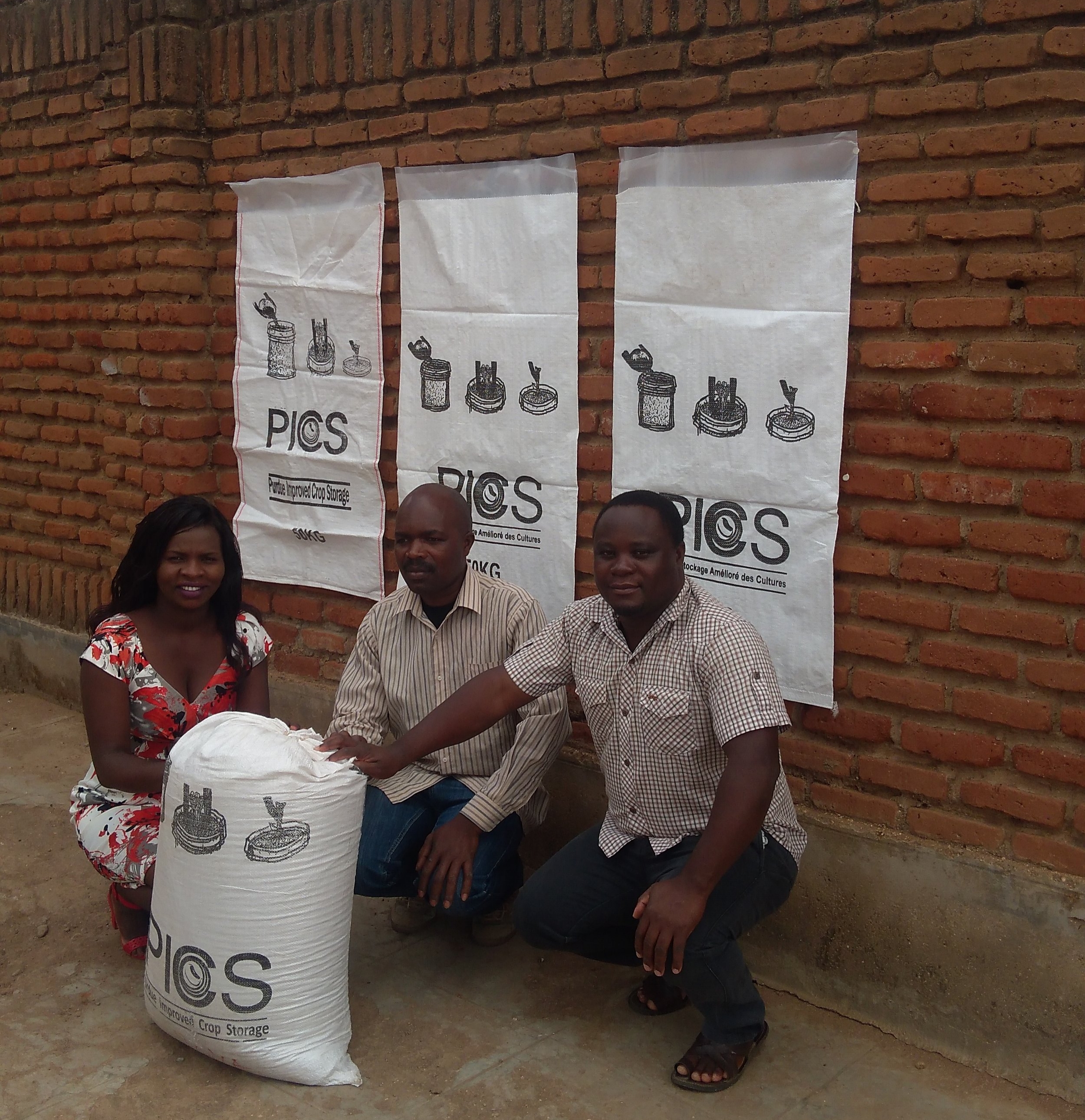
PICS post-harvest storage bags.
Learn more about the Custom Challenge and why we only fund ideas that focus on distributing proven poverty interventions.
DISTRIBUTION MODEL INNOVATION
Despite PICS bag Technology being very effective with up to 100% post-harvest loss reduction, the distribution chain in Malawi has been poor with limited players. There are 3 major barriers to accessing the technology: the distance from the production factory, limited players in the distribution chain, and generally a lack of knowledge amongst the farmers and agriculture extension workers on the availability of the technology and how it works.
The UP Scaling PICS Bags Technology team will establish relationships with rural based farm input traders (agro dealers) and associations as outlets so that farmers can easily access PICS bags instead of relying on central shops. That means the team will have selling points in rural trading centers. 5 selling points will be established. At each selling point, they will have a qualified extension worker responsible for on the spot demonstrations for farmers and agro dealers when they buy PICS bags. These will also be extension agents with designated impact areas where they will be working with farmers in demonstrating use and increasing awareness on the cost effectiveness of the bag. Agro dealers will be provided with training and awareness materials to increase valid sources of information. Each agro dealer through agriculture extension agents will have 10 anchor farmers to pilot and demonstrate effectiveness of PICS bags.
By the end of the pilot year, the team will sell 100,000 PICS bags and reach at least 20000 smallholder farmers, reducing post-harvest losses and contributing to poverty reduction through increased food and income.
As the organization scales, it will begin to distribute other impactful products including other high-quality seed and solar lamps.
PILOT AND SCALING GOALS
Sell 100,000 PICS bags by the end of year 1
Reach 20,000 smallholder farmers with information by the end of year 1
Reach over 100,000 grain growers and consumers by the end of year 5
FOUNDING TEAM
Kondwani Khonje - Manager
Prisca Gondwe - Accountant
Mukuru Clean Stoves
Mukuru Clean Stoves will partner with local women groups to educate the community on the impacts of household air pollution and sell cook stoves in the most popular local markets in Kenya.
COOK STOVE CHALLENGE; KENYA

PROVEN INTERVENTION TO BE DISTRIBUTED
Cook stoves.
Learn more about the Cook Stove Challenge and how clean cook stoves reduce health and safety risks, lower fuel expenses, and help reduce poverty.
DISTRIBUTION MODEL INNOVATION
The main barriers limiting the adoption of clean cook stoves in Kibera slums are: Unaffordability; People living at the base of the economic pyramid earn an average of $40 to $100 monthly income and spend a third of their income on fuel. Low income households have to prioritize purchases and are therefore not able to afford modern cook stoves without staggered payment plans. Inaccessibility; Due to poor infrastructure most low income household cannot access clean cook stoves which are mostly sold outside the slum areas. Kibera slum is also notorious for hostility and businesses shy away from setting up shop. Lack of knowledge on the impacts of pollution; Low income households are ignorant of the health, social and environmental hazards of traditional and inefficient cook stoves.
Mukuru Clean Stoves will partner with local women groups to educate the community on the impacts of household air pollution through marketing campaigns run for three months in the most popular local markets in Kibera.
82% of micro enterprises in Kibera slums are women owned. Mukuru Clean Stoves will be working with them as ambassadors and retailers of our clean cook stoves. The small business owners will earn a 10% commission per cook stove sold. To make the products more affordable and increase adoption rates, the team will introduce a convenient, staggered payment plan to be implemented through mobile wallets.
PILOT AND SCALING GOALS
Reach 530 people by the end of the pilot phase
Reach 12,000 people by the end of year 1
Reach 18,000 people by the end of year 2
FOUNDING TEAM
Charlot Magayi - Project Manager
Diannah Omaribah - Operations Manager
Mary Oula - Project Administrator
Angela Oruko - Field Officer
Sharon Adhiambo - Sales Representative
Josephine Kemunto - Field Officer
Con-Com
Con-Com will utilize the network of home based care workers (HBCs) who currently work on HIV treatment to help ensure that more women living in rural areas of Tanzania are screened for cervical cancer.
PATIENT IDENTIFICATION CHALLENGE; TANZANIA

PROVEN INTERVENTION TO BE DISTRIBUTED
Cervical cancer screenings.
Learn more about the Patient Identification Challenge and why identifying individuals in need of treatment suffering from health conditions such as obstetric fistula, cervical cancer, clubfoot, and cataracts which can be corrected with cost-effective interventions, could save lives.
DISTRIBUTION MODEL INNOVATION
Con-Com will utilize the network of home based care workers (HBCs) who currently work on HIV treatment to help ensure that more women living in rural areas are screened for cervical cancer. HBCs will alert women to screening services, including on days when the cervical cancer team travels on outreach to villages, and refer patients to screening services. HBCs will also distribute stipends covering transportation fees for women to enure they can reach screening services. Finally, HBCs will help overcome gender barriers by having a male HBC explain the value of screening to men to encourage husbands to support wives when they are screened.
Con-Com will implement their intervention at Shirati Hospital, a district hospital serving over 250,000 people, and located five hours from the nearest referral hospital in Mwanza, Tanzania. Poverty and distance mean that women often do not hear about the screening services available at Shirati Hospital or cannot afford the cost of transport. Con-Com will focus on providing awareness of the benefits and screening and treatment, a stipend to pay for transport to screening services, and assistance in convincing their husband's to allow patients to receive treatment. Additionally, patients are in need of checkups post procedure if they start presenting symptoms. HBCs working with Con-Com will also take on this role.
PILOT AND SCALING GOALS
120 women screened during the pilot
3 women referred to the referral hospital for treatment during the pilot
360 women screened by the end of year 1
600 women screened by the end of year 2
60 women referred to the referral hospital for treatment by the end of year 2
FOUNDING TEAM
Luke Maillie - Founder
Safe Passage Initiative
The Safe Passage team will train 100 Traditional Birth Attendants (TBAs) during the initial pilot phase in Nigeria, on the practical use of Misoprostol during child delivery.
MATERNAL HEALTH CHALLENGE; NIGERIA

PROVEN INTERVENTION TO BE DISTRIBUTED
Misoprostol tablets.
Learn more about the Maternal Health Challenge and how the distribution of Misoprostol, a $3 drug that can prevent maternal deaths from postpartum hemorrhage, could save thousands of lives.
DISTRIBUTION MODEL INNOVATION
The mission of Safe Passage is to improve the quality of life and the life expectancy of women of child bearing age and pregnant women in particular by significantly lowering the incidence of Postpartum hemorrhage (PPH). The organization will work to curtail the rate of maternal mortality in Nigeria through the increased distribution of Misoprostol.
The Safe Passage team will train 100 Traditional Birth Attendants (TBAs) in the initial pilot phase, on the practical use of Misoprostol during child delivery. The Pilot will run in 3 communities, one in each of the 3 geopolitical zones of Nigeria's Imo state: Umuguma, Orlu, and Okigwe.
The model is unique as TBAs will be reaching and training other TBAs in the use of Misoprostol, encouraging acceptability, accessibility and increased impact. This strategy will have a multiplier effect as scaling progresses. The Safe Passage management team includes well respected and experienced TBAs which will improve their ability to train larger numbers and in turn, safe more lives.
PILOT AND SCALING GOALS
- Train 100 Traditional Birth Attendants during the pilot
- Distribute 600 Misoprostol tablets during the pilot
- Train 2,500 Traditional Birth Attendants by the end of year 1
- Distribute 7,500 Misoprostol tablets by the end of year 1
FOUNDING TEAM
Dr. Patrick Nwachi - Team Lead
Dr Precious Eteike - Assistant Team Lead
Maryann Anugwara - Head Traditional Birth Attendant
Lights For Everyone
Lights For Everyone will launch their pilot program in the district of Lawra, Ghana where almost 90% of the population lives in rural areas. In this region, only 30% of the population is estimated to have access to electricity.
SOLAR LAMP CHALLENGE; GHANA

PROVEN INTERVENTION TO BE DISTRIBUTED
Solar lamps.
Learn more about the Solar Lamp Challenge and how these lamps create enormous benefits for developing world families.
DISTRIBUTION MODEL INNOVATION
Lights For Everyone will launch their pilot program in the district of Lawra, Ghana where almost 90% of the population lives in rural areas. In this region, only 30% of the population is estimated to have access to electricity. Lights For Everyone will purchase solar lamps and other inventory from Greenlight Planet in South Africa. The inventory will be transported to Lawra and once it has arrived, Lights For Everyone sales agents will pick up their weekly inventory of lamps with bike carts. Each sales agent will be work in a different area of the district, based on their background. When all of their lamps have been sold, they will pick up more inventory with bike carts from the main storage facility. All sales agents will engage in after-sales services by following up with clients to gather feedback and resolve doubts.
During the pilot, Lights For Everyone will maximize profits by working with a minimum number of sales agents. This will be an important step in validating the model before scaling. During the first three weeks of the pilot, the initial sales team will undergo training and the Lights For Everyone team will craft and implement a marketing campaign via radio advertisements, the sales agents themselves, and through a referral system.
PILOT AND SCALING GOALS
- Hire and train 5 sales agents during the pilot
- Distribute 16,800 solar lamps by the end of year 1
- Hire and train 35 sales agents by the end of year 1
- Distribute 28,800 lamps by the end of year 2
- Hire and train 50 sales agents by the end of year 2
FOUNDING TEAM
Ana Jerolamon - Executive Director
JLF EI
JLF EI distributes high-quality solar lamps and phone chargers from the German manufacturer, Little Sun. The products are specifically designed to resist intensive usage in rural Sub-Saharan Africa such as heat (up to 80°C), heavy tropical rains, drops, dust, and UV.
SOLAR LAMP CHALLENGE; SENEGAL


PROVEN INTERVENTION TO BE DISTRIBUTED
Solar Lamps.
Learn more about the Solar Lamp Challenge and how these lamps create enormous benefits for developing world families.
DISTRIBUTION MODEL INNOVATION
JLF EI distributes high-quality solar lamps and phone chargers from the German manufacturer, Little Sun. The products are specifically designed to resist intensive usage in rural Sub-Saharan Africa such as heat (up to 80°C), heavy tropical rains, drops, dust, and UV. One of the key barriers to development for people in rural Senegal is the lack of last-mile distribution for high-quality products. Left with no choice and little information on alternatives, they rely on expensive and polluting energy sources like kerosene and batteries. Lifting this barrier requires building last-mile distribution channels and closing the gap between national distributors and local customers through innovative partnerships. In the long-term, JLF EI sees their solar lamps and chargers as only the first two steps on the "energy ladder": with increasing savings on energy, clients will be able to afford larger energy systems, more lighting sources, and power other large electronic devices like refrigerators.
JLF EI will set up a micro-entrepreneur network distribution model, relying on sales agents who are deeply rooted in their communities. The venture will also make use of partnerships to make products more affordable to families in rural areas. JLF EI has been selected by Little Sun as a distributor, and this relationship allows the venture access to solar products on credit at no interest rate. This allows JLF EI to pass credit on to their own, carefully selected sales agents, or micro-entrepreneurs, who then get the products into the market. To reach the target market of off-grid communities across Senegal, JLF EI will target agricultural networks such as village savings and loans associations, farmers' associations, and other networks that exist in rural areas. These networks reach deeply into the customer base and will allow JLF EI to pass on promotional messaging at a lower operational cost.
PILOT AND SCALING GOALS
- Distribute around 500 solar lamps during the pilot
- Reach around 3,000 people during the pilot
- Distribute around 2,000 solar lamps by the end of year 1
FOUNDING TEAM
Joan Le Fur - Head of JLF EI
Fatoumata Ndiaye - Business Developer at JLF EI
Samuel Dansette - Africa Sales and Business Development Manager at Little Sun GmbH
Power in Her Hand Initiative
In collaboration with the Federal and State Ministries of Health in Nigeria, Power in Her Hand Initiative will train community health extension workers to create demand for Sayana Press as well as counsel patients on using the injectable contraceptive.
SAYANA PRESS CHALLENGE; NIGERIA

PROVEN INTERVENTION TO BE DISTRIBUTED
Sayana Press injectable contraceptive.
Learn more about the Sayana® Press Challenge and why training health providers to administer Sayana® Press can be particularly valuable for women who prefer injectable contraceptives but don’t have regular access.
DISTRIBUTION MODEL INNOVATION
The proportion of women who die in pregnancy or during birth remains high in Nigeria. Some of the factors contributing to the problem and frequent births and limited access to desired methods of contraception, most notably in rural areas. Despite strong evidence that spacing births contributes to a reduction of maternal and child mortality, only 10% of the 40 million women of reproductive age are using modern contraceptive methods in Nigeria. The unmet need for family planning remains high.
To change this narrative and increase women's access to contraceptive services in Nigeria, Power in Her Hand Initiative will pilot the training of Community Health Extension Workers (CHEWs) to introduce and distribute an innovative and easy-to-use injectable contraceptive, Sayana Press, in rural areas of Sokoto in Northern Nigeria. To reach even more girls and women in need of these services, Power in Her Hand Initiative will consider the training of community-based distributors in door-to-door distribution, proprietary and patent medical vendors, or clients themselves to achieve scale.
PILOT AND SCALING GOALS
- Distribute Sayana Press to 500 women during the pilot
- Train 100 community health workers during the pilot
- Distribute Sayana Press to 25,000 women by the end of year 2
- Train 5,000 community health workers by the end of year 2
FOUNDING TEAM
Mu'azu Muhammad - Team Leader
Impact Light Solar Trading
Impact Light Solar Trading will distribute solar lamps in urban and semi-urban areas of Malawi, beginning with a pilot in Ndirande Township in the city of Blantyre.
SOLAR LAMP CHALLENGE; MALAWI

PROVEN INTERVENTION TO BE DISTRIBUTED
Solar lamps.
Learn more about the Solar Lamp Challenge and how these lamps create enormous benefits for developing world families.
DISTRIBUTION MODEL INNOVATION
Impact Light Solar Trading will distribute solar lamps in urban and semi-urban areas of Malawi, beginning with a pilot in Ndirande Township in the city of Blantyre. Their motivation comes from the observation that solar lamp distribution in Malawi often targets rural areas, yet urban and semi-urban residents in Malawi experience massive blackouts, sometimes lasting as long as 25 hours at a stretch.
Their approach for the distribution of the solar lamps is centered on creating awareness of and demand for the products while ensure that solar lamps are available at an affordable price. Solar lamps will be retailed directly by Impact Light Solar, Village Savings and Loans groups, and sales agents identified by Impact Light Solar. By selling through Village Savings and Loans groups, the venture will be able to reach a majority of women and easily implement a pay-as-you-go purchasing model.
PILOT AND SCALING GOALS
Distribute 500 solar lamps during the pilot
Distribute 1,500 solar lamps at the end of year 1
Reach 15,000 people at the end of year 1
Distribute 3,500 solar lamps by the end of year 2
Reach 30,000 people by the end of year 2
FOUNDING TEAM
Precious Chaponda - Trading Manager
Edward Governor - Communications and Marketing Manager
Amakhosi Humphrey Jere - Business Development Advisor
Community Health Movement Uganda
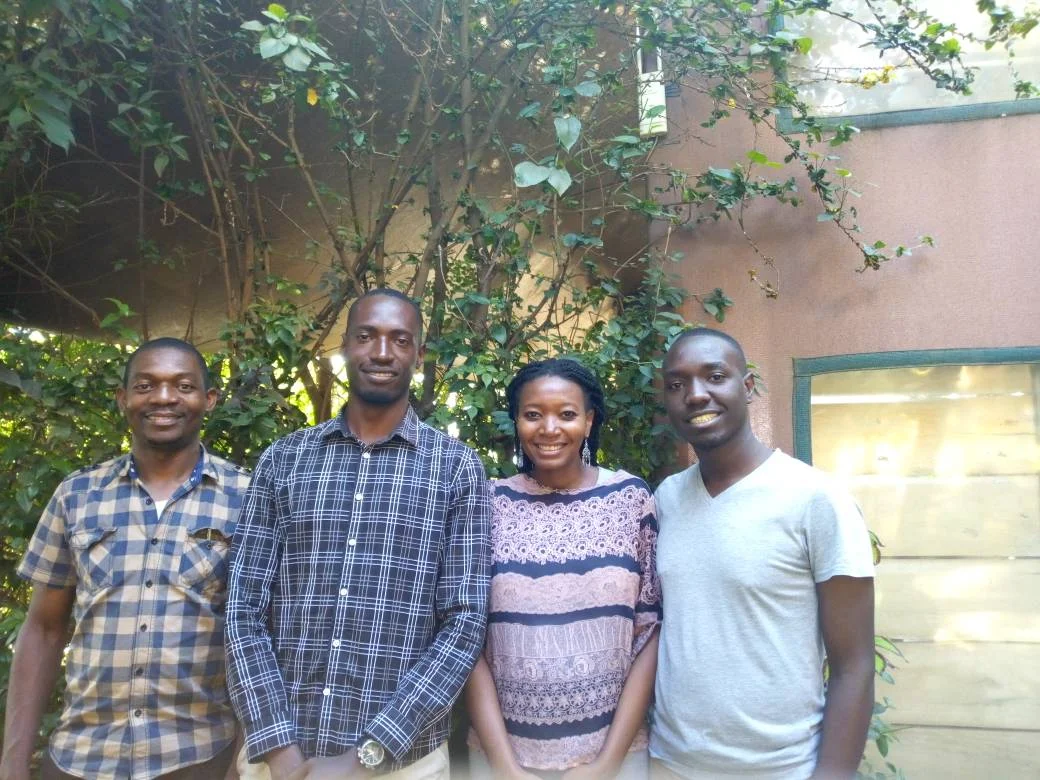
Community Health Movement Uganda will take a two-pronged approach. First, they will raise awareness about VMMC in rural communities with local populations and among front line health workers who can refer patients to health facilities. Next, they will train both front line health workers and health workers in health facilities to support VMMC uptake.
VMMC CHALLENGE; UGANDA
PROVEN INTERVENTION TO BE DISTRIBUTED
Voluntary Medical Male Circumcision.
Learn more about the VMMC Challenge and why scaling up voluntary medical male circumcision can substantially reduce the rate of HIV acquisition for men, and also reduce the risk of transmission of high-risk human papillomavirus (HPV) to the men’s partners.
DISTRIBUTION MODEL INNOVATION
Uganda remains a priority country for VMMC with low circumcision prevalence. Between 2011 and 2015, the percentage of circumcised men aged 15 - 49 years increased from 26% to 43%. However, in the northern districts of Uganda, the prevalence remains at 14%. The HIV rate in the same region is 7.2%.
The lower numbers of men accessing VMMC services is attributed to the weak links between newly identified clients and facilities, inadequate staff and capacities resulting in missed opportunities, and inadequate counseling. There is a need to further create demand for VMMC services to reach the target communities.
Community Health Movement Uganda will take a two-pronged approach. First, they will raise awareness about VMMC in rural communities with local populations and among front line health workers who can refer patients to health facilities. Next, they will train both front line health workers and health workers in health facilities to support VMMC uptake. The project will employ the approach of utilizing female health promoters who are well-respected within their communities to create demand for VMMC services with tailored messaging.
In the pilot phase, Community Health Movement reached 200 men with VMMC services. Leveraging on the key lessons learned Community Health Movemement has been able to scale up VMMC interventions in 10 health facilities out of the 25 facilities in the intervention districts.
PILOT AND SCALING GOALS
Increase access to VMMC services to 200 men during the pilot
Train 40 health workers to administer VMMC services
Reach 10,000 men with VMMC services by the end of year 2
FOUNDING TEAM
Ronald Tibiita - Executive Director
Richard Kagimu - Project Manager
James Kaggwa - Monitoring and Evaluation Officer
Tracy Kobukindo - Finance Officer
True Care Support Group
The True Care Support Group will tackle the problem of non-completion of ART by providing a support network that offers peer counseling, training, encouragement, and emotional support to women living with HIV, with a focus on pregnant women living with HIV.
PMTCT CHALLENGE; NIGERIA


PROVEN INTERVENTION TO BE DISTRIBUTED
Peer support groups to increase the completion of Antiretroviral Therapy (ART) in pregnant women.
Learn more about the PMTCT Challenge and how increasing completion of antiretroviral therapy (ART) to prevent mother to child transmission (PMTCT) of HIV can decrease HIV rates and improve lives.
DISTRIBUTION MODEL INNOVATION
The True Care Support Group will tackle the problem of non-completion of ART by providing a support network that offers peer counseling, training, encouragement, and emotional support to women living with HIV, with a focus on pregnant women living with HIV.
True Care Support Group will operate as both an online and offline network of women living with HIV. Counselors are women who have completed their ART regimen. Upon receiving referrals from hospitals, counselors invite women to join their groups. Counselors receive incentives to help the women in their group, who are divided into pairs for extra support, complete their own ART regimens through in-person meetings, social media conversations, and SMS reminders. Graduates of the group will have the option to become counselors themselves.
PILOT AND SCALING GOALS
- Enroll 200 pregnant women living with HIV into support groups during the pilot
- Enroll 5,000 women living with HIV by the end of year 2
FOUNDING TEAM
Esther Bamidele - Co-Founder
Olugbenga Akinpeloye - Co-Founder
PHK Trading
PICS bags are potentially the next revolutionary product for safe grain storage for millions of farmers in Ethiopia. The inner lines of the bags greatly hinder the movement of oxygen across the wall of the bag, killing insects. The tough outer woven bag enables to bag to be easily handled. PHK Trading will increase sales and distribution of PICS bags by adoping a youth reseller model.
CUSTOM CHALLENGE; ETHIOPIA

PROVEN INTERVENTION TO BE DISTRIBUTED
Purdue Improved Crop Storage (PICS) bags are a triple-layered plastic bag that serves as an air-tight storage method for harvested crops.
Learn more about the Custom Challenge and why we only fund ideas that focus on distributing proven poverty interventions.
DISTRIBUTION MODEL INNOVATION
Ethiopia produces over 300 million quintals (1 quintal = 100kg) of grain per annum. Post-harvest loss in Ethiopia is estimated at about 22-30%, equivalent to approximately USD $230 million. The most notable causes of this post-harvest loss are attacks from weevils, rodents, and moisture or growth of mold. Farmers use different traditional and modern technologies to control insects. The most popular traditional method is the use of underground pits which can lead to mold growth.
PICS bags are potentially the next revolutionary product for safe grain storage for millions of farmers in Ethiopia. The inner lining of the bags greatly hinders the movement of oxygen across the wall of the bag, killing insects. The overall efficacy of the bags in protecting grain or seed from infestation is reported to be over 99%.
PHK Trading will increase sales and distribution of PICS bags by adoping a youth reseller model. Local youth with close relationships to local shop owners will be a key component of the supply chain. As sales agents, these youth resellers will take PICS bags from local vendors on credit, travel to markets in a particular community in order to bring the bags closer to smallholder farmers, sell the bags, and take home a $.19 margin per bag sold.
The youth resellers will be chosen carefully on recommendations from local elders and will be tested to assess their entrepreneurial spirit. They will also receive training and professional development. PHK trading will hold demonstrations of the PICS bags in targeted villages with clusters of farmers to increase awareness of the product.
PICS technology has been introduced to more than 50,000 villages across Sub-Saharan Africa. The bags are manufactured and sold in 28 countries in Africa and Asia. To date, more than 12 million PICS bags have been sold with the scale up funded by Bill and Melinda Gates Foundation and executed by Purdue University. PHK Trading is authorized by Purdue University to commercialize PICS bags. Over a period of two years, farmers will see a 123% return on investment.
PILOT AND SCALING GOALS
Recruit 60 youth resellers by the end of year 1
Distribute 45,000 bags by the end of year 1
FOUNDING TEAM
Yared Sertse - Project Leader
Yemisrach Getachew - Project Coordinator
Michael Tariku - Project Coordinator
Strong Girl Network
The Strong Girl Network is piloting a proven intervention to combat cross-generational
sexual relationship in Nigeria with a goal to reach 57,600 girls in 3 months and 500,000 girls in two years.
SUGAR DADDY AWARENESS CHALLENGE; NIGERIA

PROVEN INTERVENTION TO BE DISTRIBUTED
Sugar Daddy Awareness classes.
Learn more about the Sugar Daddy Awareness Challenge and how a simple, one-hour “sugar daddy awareness” training could help countless girls avoid pregnancy while still in school, which can lead to entrenched poverty, and build a better life.
DISTRIBUTION MODEL INNOVATION
The Strong Girl Network is piloting a proven intervention to combat cross-generational
sexual relationship in Nigeria with a goal to reach 57,600 girls in 3 months and 500,000 girls in two years. The team will deliver this evidence-based intervention by teaching anti sugar daddy awareness classes across schools providing young girls with critical information on the relative risk of sugar daddies. Strong Girl Network has successfully secured approval from the Oyo State Ministry of Education to introduce our Sugar Daddy classes in 285 state-controlled public schools.
Strong Girl Network will be testing the impact of teaching Sugar Daddy Awareness to 200 students in one hall, at one time. This approach presents its own risks but will be thoroughly monitored by the team to ensure its efficacy before it is scaled up.
PILOT AND SCALING GOALS
- Reach 57,600 students during the pilot
- Reach 500,000 students by the end of year 2
FOUNDING TEAM
Aderoju Okunsamni - Team Lead
Macduff Nnodim - Project Coordinator
Bernard Magaji - Research and Data Analysis Lead
Chisom Olukoya Olufemi - Project Coordinator
Adeoye Adejare - Curriculum Development and Training
Chubi Agro
Chubi Agro will work on scaling up the distribution of high quality maize seeds by scaling up production of quality seeds in order to meet the anticipated growth in demand for improved seeds.
QUALITY SEED CHALLENGE; NIGERIA
![20180611_162227[1].jpg](https://images.squarespace-cdn.com/content/v1/58cdcd1f197aea52163b1b51/1528933206437-ACVUMLBANJ2F4LS9IH95/20180611_162227%5B1%5D.jpg)

PROVEN INTERVENTION TO BE DISTRIBUTED
Quality seeds.
Learn more about the Quality Seed Challenge and why an evidence-based model that distributes high-quality seeds could reliably boost the standard of living for smallholder farmers.
DISTRIBUTION MODEL INNOVATION
One proven strategy to combat low farm yields is through the use of improved seed varieties. These seeds which have higher yields and are locally adapted, have improved resistance to diseases and pests, mature earlier, and have a higher fertilizer response.
Chubi Agro will work on scaling up the distribution of high quality maize seeds by scaling up production of quality seeds in order to meet the anticipated growth in demand for improved seeds, increasing the number of distribution outlets by liaising with existing retail shops in rural communities to enhance the reach to smallholder farmers, continuing to expand an outgrower scheme in which quality seeds are distributed to farmers within the network as a loan to be repaid at the end of the harvest season, and conducting sensitization programs to increase awareness of the benefits of improved seeds as well as organize visits to demonstration farms.
PILOT AND SCALING GOALS
- Distribute 7,500kg of seeds during the pilot
- Reach 200 farmers during the pilot
- Distribute 75,000kg of seeds at the end of year 2
- Reach 3,000 farmers by the end of year 2
- Work with 100 distribution agents by the end of year 2
FOUNDING TEAM
James Ogwu - Managing Director
Bemsibom Toh - Strategy Director
Adesola Ajayi - Business Development Director
Setieye Solar Services
Seteiye Solar Services is committed to replacing kerosene lamps with solar-powered LED lanterns. They will introduce an everyday consumer product, integrating this technology in the lives of with those who need it in 136 villages in the Essien Udim local government area of Akwa Ibom state, Nigeria.
SOLAR LAMP CHALLENGE; NIGERIA
PROVEN INTERVENTION TO BE DISTRIBUTED
Solar Lamps.
Learn more about the Solar Lamp Challenge and how these lamps create enormous benefits for developing world families.
DISTRIBUTION MODEL INNOVATION
Seteiye Solar Services is committed to replacing kerosene lamps with solar-powered LED lanterns. They will introduce an everyday consumer product, integrating this technology in the lives of with those who need it in 136 villages in the Essien Udim local government area of Akwa Ibom state, Nigeria.
Their model establishes Village Solar Groups (VSGs), village-run self-help micro-enterprises as the nucleus of the project. These will distribute solar-powered LED lanters at prices comparable to or less than the cost of powering a kerosene lamp in rural villages.
Leveraging the vast network and influence of community based organizations as well as traditional and religious institutions, Seteiye Solar Services set up a multi-stakeholder approach to deliver solar products and education across various target groups and enlighten consumers on the key features of solar lighting products. The team will also engage in massive market activation through road shows and product presentations in churches and village hall meetings.
PILOT AND SCALING GOALS
Reach 34 villages during the pilot
Distribute 340 solar lanterns during the pilot
Reach 1360 beneficiaries during the pilot
Distribute 4,080 lamps at the end of year 1
Distribute 5,440 lamps by the end of year 2
Reach 22,000 direct beneficiaries by the end of year 2
FOUNDING TEAM
Idopise Essien - Founder
Patsogolo Ndi Ulimi
To address the problem of soil fertility, Patsogolo ndi Ulimi project will increase the yields of smallholder farmers by over 70% and promote a green environment through the promotion of fertilizer microdosing.
FERTILIZER CHALLENGE; MALAWI

PROVEN INTERVENTION TO BE DISTRIBUTED
Fertilizer and microdosing technique.
Learn more about the Fertilizer Challenge and why increasing the effective use of fertilizer has the potential to unlock significant crop yield for smallholder farmers in sub-Saharan Africa.
DISTRIBUTION MODEL INNOVATION
Land degradation in the Southern Africa region has substantial environmental, social and economic costs. The majority of Malawians live in rural areas and depend on agriculture for their livelihoods. National surveys estimate that crop production accounts for 74 percent of all rural incomes. Unless nutrients are replaced, soils become depleted, causing the yields and crop quality to decline (ICRISAT 2009). However, farmers are often unable to invest in soil nutrients because they are increasingly costly and often inaccessible. Knowledge among smallholder farmers about what inputs to use and how to apply them effectively is limited. Malawian farmers uses a small amount of fertilizer which is applied to only a portion of their land, perpetuating the significant soil nutrient deficiencies leading to low yields.
To address the problem of soil fertility, Patsogolo ndi Ulimi project will increase the yields of smallholder farmers by over 70% and promote a green environment through the promotion of fertilizer microdosing. This is a highly efficient technique that minimizes the application of and over – reliance on chemical fertilizer. It involves the application of small quantities of fertilizer onto or close to the seed.
The project will use an innovative education method of lead farmers approach to distribute the technology to reach farmers. Lead farmers are progressive farmers (community volunteers) in the community that pilot different innovations on their farms while teaching other farmers in the process. One lead farmer has an average of 20 farmers that learn from his farm.
PILOT AND SCALING GOALS
- Recruit 100 lead farmers by the end of year 1
- Reach 2,000 farmers with fertilizer microdosing training by the end of year 1
- Recruit 500 lead farmers by the end of year 5
- Reach 10,000 farmers by the end of year 5
FOUNDING TEAM
Madalitso Chidumu - Team Lead and Founder
Hope Mpata - Extension Delivery Service Lead
Chimwemwe Mkandawire - Finace Lead
Are you ready to be the next great social entrepreneur?