ChildVax
ChildVax aims to increase childhood immunization coverage in Uganda.
CHILD IMMUNIZATION CHALLENGE; UGANDA

PROVEN INTERVENTION TO BE DISTRIBUTED
Routine childhood immunizations
Learn more about the Immunization Challenge and how Increasing routine childhood immunization rates in low-coverage areas could prevent millions of childhood deaths.
DISTRIBUTION MODEL INNOVATION
ChildVax aims to increase childhood immunization coverage in Uganda.
ChildVax shall increase childhood vaccination coverage in Bukwo district by creating a network of Village Health Teams (VHTs) and providing transport refunds to financially disadvantaged caregivers. ChildVax shall conduct a thorough needs assessment in Bukwo district to identify areas with the lowest vaccination coverage rates and the primary reasons for this, recruit and select dedicated individuals from local communities to serve as VHT members and train them.
VHTs should work closely with the local community to identify caregivers who are financially disadvantaged and unable to afford transportation costs for vaccination visits. ChildVax shall develop a reminder system that sends text messages or makes phone calls to all caregivers a few days before their child's vaccination appointment.
Once the program proves successful in Bukwo district, the team will develop a plan to expand it to neighboring regions with low vaccination coverage, seek partnerships with governmental and non-governmental organizations to scale the program to a national level.
ChildVax was founded in 2022 by a dedicated team consisting of Yeko Olive, a seasoned nurse specializing in childhood immunization, Dr. Ivan Chemos, with vast experience in managing immunization projects, and Chepkwurui Abigail, an experienced financial manager.
PILOT AND SCALING GOALS
Reach 500 beneficiaries/ children in the 3 month pilot period.
Send 5000 reminder text messages to care givers for immunization.
Raise additional funding of $50000 by the end of 3 months.
FOUNDING TEAM
Olive Yeko - Program Manager
Dr. Ivan Chemos - Technical Advisor
Abigail Chepkwurui - Operations Manager
Ziimba
Ziimba's mission is to empower marginalized farmers to earn substantial income through sustainable agroforestry.
CUSTOM AGRICULTURE CHALLENGE; Uganda

PROVEN INTERVENTION TO BE DISTRIBUTED
Quality inputs, technical training, field monitoring, and direct linkages to markets
Learn more about the Custom Agriculture Challenge and why distributing proven agricultural interventions can greatly improve the livelihoods of smallholder farmers.
DISTRIBUTION MODEL INNOVATION
Ziimba's mission is to empower marginalized farmers to earn substantial income through sustainable agroforestry.
Ziimba’s program is a hyper-scalable, smallholder-based agroforestry initiative that aims to create viable livelihoods for ultra-poor dry-land farmers in Kyankwanzi District, located in Uganda's cattle corridor, where the pilot is set to launch.
Ziimba is employing an end-to-end support model of distributing quality inputs, technical training, ongoing field monitoring, and direct linkages to preferred markets for farmers’ high-value tree outputs.
Their model stands out for its dual approach of helping farmers earn a living wage in the short-term with high-value cash crops interplanted in woodlots, and providing a transformative, secondary source of income in the long-term with rapid-growing trees suitable for dry-land cultivation and high-value commercial utility.
By forging strategic partnerships that empower marginalized farmers via their proven intervention, they will convert their underutilized and deteriorating landholdings into sustainable tree farms, thereby elevating their livelihoods, eradicating deforestation, and stifling surging demand in the region's wood-scarce markets.
Juliet Namwanje is the Founder of Ziimba and serves as the organization's Executive Director alongside key team members including Gerald Katende, a knowledgeable advisory board member who brings extensive knowledge of the pilot district's climate, poverty-driven challenges, and forest management; Simon Zziwa, the Director of Field Operations, with a strong background as a Senior Agriculture Officer and Agronomist; John Kibuuka, the Field Manager with vast experience in community-centric reforestation from the National Forestry Authority (NFA); and Maureen Nakacwa, the Field Facilitator, known for her administrative coordination and efforts in workplace gender equality.
Each member brings specialized knowledge and experience, allowing Ziimba to address the multifaceted challenges of the agroforestry initiative effectively. United by a shared vision, the team is deeply committed to spreading Ziimba’s proven agroforestry intervention to marginalized populations across Sub-Saharan Africa, starting in Uganda, to address the continent’s growing wood supply deficit.
PILOT AND SCALING GOALS
Directly reach 180+ beneficiaries during the pilot.
Establish 40 operational woodlots with 9,600+ trees planted.
Fundraise an additional $50,000 USD from new donors or investors within three months.
FOUNDING TEAM
Juliet Namwanje - Founder and Executive Director
Gerald Katende - Board Member
Simon Zziwa - Director of Field Operations
John Kibuuka - Field Manager
Maureen Nakacwa - Field Facilitator
AgriNov
AgriNov seeks to improve yield and income of smallholder farmers through timely access to quality inputs, knowledge and market facilitation.
Quality inputs CHALLENGE; Uganda

PROVEN INTERVENTION TO BE DISTRIBUTED
Quality agricultural inputs.
Learn more about the Improved Farm Practices Challenge and why increasing the effective use of fertilizer has the potential to unlock significant crop yield for smallholder farmers in sub-Saharan Africa.
DISTRIBUTION MODEL INNOVATION
AgriNov seeks to improve yield and income of smallholder farmers through timely access to quality inputs, knowledge and market facilitation.
AgriNov uses a proven market-based model that stands on the following; financing for quality seeds and fertilizers, timely distribution of inputs to the last-mile farmers, agricultural trainings, and market facilitation to enable farmers maximize profits. Working with field officers, we target smallholder maize farmers that are in hard to reach areas (remote areas), and then provide such farmers with timely access to quality inputs, knowledge, and market facilitation. They mobilize farmers into groups, and then inputs are delivered to them on credit, and the loan is repaid at the end of the growing season.
The company was started in 2021 by Johnson Tumwesige and Emmanuel Dusabimana. Johnson serves as AgriNov’s full time managing director whilst Emmanuel serves as a full time sales and operations lead.
PILOT AND SCALING GOALS
Reach 100 farmers by the end of the pilot period
Distribute two interventions (improved maize varieties and fertilizers)
Fundraise an additional $15,000 USD from philanthropic organizations
FOUNDING TEAM
Johnson Tumwesige - Managing Director
Emmanuel Dusabimana - Sales and Operations Lead
Women Self-Inject Initiative
Women Self Inject Initiative (WSII) seeks to increase access to modern contraceptives particularly self injectables (Sayana press) among women in low resource settings.
SAYANA PRESS CHALLENGE; UGANDA

PROVEN INTERVENTION TO BE DISTRIBUTED
Sayana Press injectable contraceptive.
Learn more about the Sayana® Press Challenge and why training health providers to administer Sayana® Press can be particularly valuable for women who prefer injectable contraceptives but don’t have regular access.
DISTRIBUTION MODEL INNOVATION
Women Self Inject Initiative (WSII) seeks to increase access to modern contraceptives particularly self injectables (Sayana press) among women in low resource settings. WSII’s mission is “Empowering women to take control of their reproductive health needs"
The distribution model is based on private health workers who own drug shops to supply Sayana Press to women. We shall identify and train 30 private health workers (PHW) Masaka district, southern Uganda on family planning counseling and how to train women on self-injection using standard tools developed by PATH. In turn, the PHW will instruct and demonstrate self-injection technique to the women who take Sayana Press as method of choice. We believe that this model eliminates the need for women to return to a clinic every three months for re-injection and improves privacy for the users of the method.
Their team consists of 4 co-founders. Three graduate midwives, Robert Isoke, Hamiidah Nakyanzi, and Usaama Ssewankambo as well as their mentor Felister Apili who have expertise and prior experience working on sexual reproductive health and maternal child health initiatives in various parts of Uganda.
PILOT AND SCALING GOALS
Distribute Sayana Press to at least 500 women by the end of the pilot.\
30 private health workers recruited to distribute Sayana Press and trained on how to instruct and train women on self-injection with Sayana Press by the end of the pilot
Raise an additional $40000 by the end of the pilot
FOUNDING TEAM
Robert Isoke - Team Leader
Nakyanzi Hamiidah - Public Relations Officer
Ssewankambo Usaama - Quality Assurance Officer
Apili Felister - Technical Lead
Madaraja Foundation
The Madaraja Foundation aims to improve the health and well-being of Ugandan women and girls by increasing access to quality sexual and reproductive health information and care.
SAYANA PRESS CHALLENGE; UGANDA

PROVEN INTERVENTION TO BE DISTRIBUTED
Sayana Press injectable contraceptive.
Learn more about the Sayana® Press Challenge and why training health providers to administer Sayana® Press can be particularly valuable for women who prefer injectable contraceptives but don’t have regular access.
DISTRIBUTION MODEL INNOVATION
Madaraja Foundation aims to improve the health and well-being of Ugandan women and girls by increasing access to quality sexual and reproductive health information and care.
The distribution model focuses on establishing a network of trained providers in private clinics, pharmacies, and drug shops in Mukono, Uganda, who can reliably offer self-injectable contraceptive, DMPA-SC, and support its continued use among women. To achieve this, the team will provide training and quarterly supportive supervision to enhance provider capacity, ensure availability of affordable DMPA-SC supplies through negotiations and collaborations with local importers, and support demand creation through printed communication material and community radio talk shows featuring community champions.
Madaraja Foundation was founded by Jacquellyn Nambi Ssanyu and Andrew Basenero, both Uganda Pharmacists with training in public health and deep passion for Sexual Reproductive Health and Rights. As the Executive Director, Jacquellyn provides strategic direction and day-to-day management of the organization, while Andrew, the Program Manager, oversees planning, implementation, and management of all project activities.
PILOT AND SCALING GOALS
Directly reach 160 women within three months
Work with 20 private health facilities (drug shops, pharmacies and clinics), distribute 160 doses of self- injectable contraceptives.
Raise an additional $20,000 by the end of the pilot
FOUNDING TEAM
Jacquellyn Nambi Ssanyu - Executive Director
Andrew Basenero - Program Manager
Hope Springs Health Foundation Uganda
Hope Springs Health Foundation Uganda’s mission is to increase awareness of the risks of sugar daddies to 100%, improve girls' confidence to say "no" to cross-generational relationships, and enhance girls' ability to think critically about challenges facing them as well as how current choices can shape the future.
SUGAR DADDY AWARENESS CHALLENGE; uganda

PROVEN INTERVENTION TO BE DISTRIBUTED
Sugar Daddy Awareness classes.
Learn more about the Sugar Daddy Awareness Challenge and how a simple, one-hour “sugar daddy awareness” training could help countless girls avoid pregnancy while still in school, which can lead to entrenched poverty, and build a better life.
DISTRIBUTION MODEL INNOVATION
Hope Springs Health Foundation Uganda’s mission is to increase awareness of the risks of sugar daddies to 100%, improve girls' confidence to say "no" to cross-generational relationships, and enhance girls' ability to think critically about challenges facing them as well as how current choices can shape the future.
This project will utilize the “Sugar Daddy Awareness” class – (1-hour classes composed of 21 girls per class session. They will target 500 girls in ten schools in Mayuge district to tailor a core message that ‘sexually partnering with older men is risky behavior.
PILOT AND SCALING GOALS
Reach 500 girls in ten schools in the Mayuge District
Train a team of 20 top-quality facilitators to teach the sugar daddy classes across the 10 schools
Raise $60,000 by the end of year two operations
FOUNDING TEAM
Safaa Garelnabi - Team Leader
Jonathan Nsamba - Technical Lead
Charles Mwanje - Field Project Coordinator
TONDA Uganda Limited
TONDA Uganda distributes Sayana Press to rural women in Kitagwenda district, Uganda.
SAYANA PRESS CHALLENGE; UGANDA

PROVEN INTERVENTION TO BE DISTRIBUTED
Sayana Press injectable contraceptive.
Learn more about the Sayana® Press Challenge and why training health providers to administer Sayana® Press can be particularly valuable for women who prefer injectable contraceptives but don’t have regular access.
DISTRIBUTION MODEL INNOVATION
Tonda Uganda is a new NGO that seeks to establish, engage and scale up community structures for the distribution and improved access of Sayana Press among rural women in Kitagwenda district.
Traditional birth attendants are the center of TONDA Uganda’s distribution model. With the support of the District Health Team, the team will identify and train 100 TBAs and 50 VHTs using PATH’s globally recommended training manual for subcutaneous self-injection. The TBAs will support 20 community dialogues, educating and empowering women before delivering them Sayana Press.
Dr. Besigye’s medical background and previous works on several collaboratives on maternal health and family planning in Kitagwenda district will go a long way in ensuring that our door-to-door traditional birth attendants-centered distribution model will reach the targeted 5000 women in the three months
PILOT AND SCALING GOALS
100 TBAs and 50 VHTs trained to support door to door campaign.
Reach 5,000 women by the end of the pilot
Reach 50,000 women by year two of operations
FOUNDING TEAM
Rogers Besigye - Co-founder
Brenda Naava - Co-founder
Geofrey Kaujju - Co-founder
Teso Women's Initiative
Teso Women’s Initiative (TWI) aims to distribute self-injectable contraceptives to underserved women in Uganda through private health care providers.
SAYANA PRESS CHALLENGE; UGANDA

PROVEN INTERVENTION TO BE DISTRIBUTED
Sayana Press injectable contraceptive.
Learn more about the Sayana® Press Challenge and why training health providers to administer Sayana® Press can be particularly valuable for women who prefer injectable contraceptives but don’t have regular access.
DISTRIBUTION MODEL INNOVATION
Teso Women’s Initiative (TWI) is a Community Based Organization which distributes self-injectable contraceptives (DMPA-SC) to underserved women in Ngora District through private health care providers. These providers will be trained on how to distribute Sayana Press to women in need and teach them how to self-inject at the comfort of their homes. TWI plans to scale by enrolling up to 10,000 women in 1 year and 100,000 women in 5 years and involve stakeholders at various levels in the implementation. TWI’s long-term vision for this project is “A community where women have access to family planning services, make informed decisions and live longer.”
PILOT AND SCALING GOALS
Reach 500 women by the end of the pilot
Distribute 1,000 doses of Sayana Press by the end of three months
Raise an additional $40,000 by the end of three months
FOUNDING TEAM
Rose Aliano - Team Leader
Clement Esiat - Business Development Officer
Godlive Olokojo - Project Coordinator
Seedloans
Seedloans helps female smallholder farmers in Uganda grow more to feed their families.
QUALITY INPUTS CHALLENGE CHALLENGE; UGANDA

PROVEN INTERVENTION TO BE DISTRIBUTED
Quality agricultural inputs.
Learn more about the Improved Farm Practices Challenge and why increasing the effective use of fertilizer has the potential to unlock significant crop yield for smallholder farmers in sub-Saharan Africa.
DISTRIBUTION MODEL INNOVATION
Seedloans helps female smallholder farmers in Uganda grow more to feed their families.
The model combines the proven microfinance mechanism with a holistic solution along the entire value chain. One woman receives 10kg of bean seeds as a loan. She plants the seeds in her field, where they grow to ~100kg of beans within three months. After the harvest the woman gives back ~20kg of her beans to Seedloans as an in-kind repayment. She uses the remaining ~80kg to feed her family, sell an extra on the market or replant beans for the next season. Seedloans offers 5kg, 10kg, 15kg and 20kg options to farmers – enough to cover one acre of land, the typical field size of a smallholder.
Elizabeth Nalugemwa is a trained entrepreneur and an Obama foundation leader. Growing up as a daughter of a female rural smallholder, she wanted to empower farmers to overcome the challenges she experienced at home.
Sabrina Kuespert is trained in business administration. She grew her passion for smallholders during her time in agricultural finance at KfW-Developing Bank. Currently she is a strategy consultant at BCG.
Lisa Stolleis is a trained economist and pursues her masters degree in Public Policy at the Hertie School of Governance. She gained experience in international development as intern and consultant at the GIZ and International Trade Centre of the United Nations.
Merlin Stein is a trained economist and collected profound experience in Impact Measurement in several projects during his graduate time at Oxford University. He currently works in strategy consulting at BCG.
PILOT AND SCALING GOALS
Directly reach 500 smallholder farmers in the pilot period
Reach 1,000 farmers by the end of year 1 and 8,000 by the end of year 2
FOUNDING TEAM
Elizabeth Nalugemwa - Co-founder and Team Leader
Merlin Stein - Co-founder
Lisa Stolleis - Co-founder
Sabrina Kuesper - Co-founder
She Screens Uganda
She Screens Uganda’s mission is to extend cervical cancer screening services in rural Uganda.
PATIENT IDENTIFICATION CHALLENGE; UGANDA
PROVEN INTERVENTION TO BE DISTRIBUTED
Cervical cancer screenings.
Learn more about the Patient Identification Challenge and why identifying individuals in need of medical treatment and finding ways to make that treatment accessible reduces poverty.
DISTRIBUTION MODEL INNOVATION
She Screens Uganda’s mission is to extend cervical cancer screening services to all women at an affordable cost by early identification and referral for first line treatment of women with precancerous cells through incentivized group transportation, and partners with philanthropy organizations for extensional support.
This culturally sensitive model for cervical cancer screening will pilot in Bukomansimbi district. About 400 women aged 25-49 years will be sensitized about cervical cancer including signs/symptoms and prevention, screened and identified patients will be referred through streamlined referral to first line treatment center through incentivized group transportation, and partners with philanthropy organizations for extensional support.
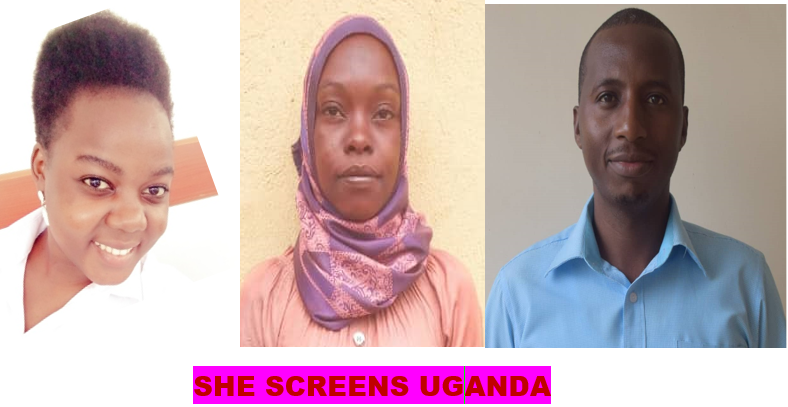
She Screens Uganda was founded by Nabunnya Naimat following the death of her mother to cervical cancer. Naimat's vision was enhanced by her colleagues Nakonge Martha Dearn and Nemeyimana Vicent who developed interest in this field through their working practice in clinical settings.
PILOT AND SCALING GOALS
Direcly reach and screen at least 400 women aged 25-49 years with in three months
Fundraise an additional $15,000 USD from philanthropic organizations
Screen 7,000 women by the end of year 2
FOUNDING TEAM
Nabunnya Naimat - Program Manager
Nakonge Martha Dearn - Nursing Officer
Nemeyimana Vicent - Clinical Officer
GrainAid Agency
GrainAid Agency helps women and youth in Uganda graduate from extreme poverty.
POVERTY GRADUATION; UGANDA

PROVEN INTERVENTION TO BE DISTRIBUTED
Poverty Graduation Program
Learn more about the Poverty Graduation Challenge and why an evidence-based program that combines cash or asset transfers with mentorship and other forms of financial and social support helps graduate the ultra poor from poverty.
DISTRIBUTION MODEL INNOVATION
GrainAid Agency works with members of the local community especially women and youth, and other national and international organizations to overcome extreme poverty and hunger through creating access, improving, and diversifying livelihoods.
The GrainAid Agency model ensures that the extremely poor individuals in the community especially women and youth are empowered/enabled to graduate out of extreme poverty and achieve economic and social advancement through a combination of asset building, technical skills training, dedicated coaching and mentoring, and savings as well as social support. The focus on poverty alleviation for the extremely poor reflects our clarity of purpose and our approach which involves building implementation units within the communities, including recruitment and training of community facilitators among people based in the same community with a thorough understanding of the community makes our model affordable and acceptable by the entire community. The chosen solution (poverty graduation) is already proven to work around the world and our approach minimizes the chance of failure by over 95%.
GrainAid Agency was started by Emmanuel Curuma Obia and Gertrude Basirika who have over 18 years of experience in poverty eradication initiatives within Africa and are both passionate about efforts to address poverty and hunger. Emmanuel works full-time at GrainAid Agency as the Executive Director while Gertrude serves on the board of directors as the Treasurer.
PILOT AND SCALING GOALS
Provide productive livelihood assets to 30 female heads of households thus impacting 120 members of their households, especially children by end of the pilot.
Provide tailored skills training, coaching, and routine mentoring to 30 female heads of households for effective management of their livelihood initiatives by end of the pilot.
Raise additional $50,000 by end of the first year
Scale to serve 600 participants by year 2
FOUNDING TEAM
Emmanuel Curuma Obia - Executive Director
Gertrude Basirika - Board Member
Growth Pathways
Growth Pathways will implement a 12-month poverty graduation program focused on microenterprise development to help the ultra-poor develop sustainable livelihoods.
POVERTY GRADUATION; UGANDA

PROVEN INTERVENTION TO BE DISTRIBUTED
Poverty Graduation Program
Learn more about the Poverty Graduation Challenge and why an evidence-based program that combines cash or asset transfers with mentorship and other forms of financial and social support helps graduate the ultra poor from poverty.
DISTRIBUTION MODEL INNOVATION
Growth Pathways will implement a 12-month poverty graduation program focused on microenterprise development to help the ultra-poor develop sustainable livelihoods.
Growth Pathways uses a micro enterprise development program with six sequenced interventions: Targeting, business skills training, Conditional Cash Transfer, business savings group, mentoring and social integration. The program is implemented through a network of of Business Mentors and local leaders. The pilot is located in Kamuli District.
Growth Pathways is started in 2022 by Ssempebwa Joseph and Adur Joyce. Joseph serves as Growth Pathways program director.
PILOT AND SCALING GOALS
Equip 60 participants with business and group saving training, seed capital and mentorship to increase income and savings
Launch 20 sustainable enterprises within the community
Fundraise an additional $20,000
Scale to serve 345 participants by year 2
FOUNDING TEAM
Ssempebwa Joseph - Program Director
Adur Joyce - Partnership Manager
Ssemugooma Fred - Field Coordinator
Prime Biomedical U Ltd
Prime Biomedical U Ltd’s mission is to increase access to life-saving in remote and peri-urban Health Centres through timely maintenance and repair of oxygen concentrators in Western Uganda.
OXYGEN CHALLENGE; UGANDA

PROVEN INTERVENTION TO BE DISTRIBUTED
Service and repair of oxygen concentrators.
Learn more about the Oxygen Challenge and why repairing and maintaining oxygen concentrators in low-resource hospitals expands access to medical oxygen - a key treatment for pneumonia, malaria, sepsis, meningitis, and Covid-19.
DISTRIBUTION MODEL INNOVATION
Prime Biomedical U Ltd’s mission is to increase access to life-saving in remote and peri-urban Health Centres through timely maintenance and repair of oxygen concentrators in Western Uganda.
Prime’s Distribution model will entail the skilling of biomedical technicians based at a central Oxygen hub to implement a timely maintenance plan for oxygen concentrators at health centers in Western Uganda. Oxygen equipment users will also be trained on how to perform basic maintenance practices which go a long way in reducing user error faults to reduce downtime. Prime Biomedical is also uniquely placed to provide these services thanks to the existing capacity and expertise to manufacture some basic oxygen concentrator spares through 3D printing equipment and access to a fabrication lab.
Prime Biomedical was founded in 2017 by Leslie Turyahikayo.
PILOT AND SCALING GOALS
Directly provide life-saving oxygen to 3,000 patients within three months
Recruit and Train 2 Biomedical Technicians to Repair, Maintain and Service 50 Oxygen Concentrators at 5 Health centers within three months
Directly provide life-saving oxygen to 9,000 patients within one year.
FOUNDING TEAM
Leslie Turyahikayo - Manager
Salama Centre for Global Family Health
Mother Foundation seeks to improve access to family planning services among women in underserved communities in Uganda.
SAYANA PRESS CHALLENGE; UGANDA

PROVEN INTERVENTION TO BE DISTRIBUTED
Sayana Press injectable contraceptive.
Learn more about the Sayana® Press Challenge and why training health providers to administer Sayana® Press can be particularly valuable for women who prefer injectable contraceptives but don’t have regular access.
DISTRIBUTION MODEL INNOVATION
Salama Centre for Global Family Health seeks to improve access to family planning services among women in underserved communities in Uganda.
Their model seeks to scale up distribution, access, and use of Sayana Press contraception through the private health networks in Jinja District. The private health networks will be recruited and trained to administer Sayana Press to women seeking contraception and train women to self-inject at the comfort of their homes.
Violette the team leader is an international development professional and was previously a GHC fellow serving with S.O.U.L Foundation. Alice has a clinical background with several years of experience in reproductive health, Joan has several years of experience in communication and stockholder engagements. Jovia will leverage her previous IT experience in multiple organizations to support the implementation of the venture.
PILOT AND SCALING GOALS
Reach 500 women by the end of the pilot
Distribute 1,000 doses of Sayana Press by the end of three months
Raise an additional $30,000 by the end of three months
FOUNDING TEAM
Violette Hilda Nalutaaya - Team Leader
Jovia Tuhaise - Monitoring and Evaluation Specialist
Joan Alupo - Communication and Knowledge Manager
Alice Nanteza - Technical Lead
Women for Women Uganda
Women for Women Uganda aims to bridge the gap in health services delivery for underserved and disadvantaged communities by establishing and building local partnerships with communities.
PMTCT CHALLENGE; UGANDA

PROVEN INTERVENTION TO BE DISTRIBUTED
Retention in care and adherence to anti-retroviral treatment for people living with HIV.
Learn more about the PMTCT Challenge and how increasing completion of antiretroviral therapy (ART) to prevent mother to child transmission (PMTCT) of HIV can decrease HIV rates and improve lives.
DISTRIBUTION MODEL INNOVATION
Women for Women Uganda aims to bridge the gap in health services delivery for underserved and disadvantaged communities by establishing and building local partnerships with communities.
Women 4 Women Uganda aims to use the Traditional Birth Attendant-mentor mother hybrid model to contribute to the Elimination of Mother to Child Transmission of HIV. The model is a sustainable approach to overcoming the barrier of geographic isolation faced by remote underserved communities of Kalangala district, an archipelago of 84 islands with limited access to health facilities by pregnant women living with HIV. For ease of integration into other government community health structures, the distribution of TBAs and Mentor mothers will be at the village level with an average of two mentor mothers and one TBA per village.
Women for Women Uganda was co-founded by three young women passionate about health equity in July 2021. Rebecca Mulungi a Fundraising and Communications Professional, Jane Frances Nakanwagi a Monitoring, Evaluation, and Learning Expert, and Ruth Mary Kemigisha a Public Health Specialist.
PILOT AND SCALING GOALS
Reach 300 beneficiaries during the pilot phase
Distribute three interventions: Delivery of ART and psychosocial support reaching 300 women living with HIV, HIV counseling and testing reaching 600 women and their spouses, Linkage to safe antenatal and delivery services- 100 women linked to qualified health workers
Raise an additional $5,000 during the pilot
FOUNDING TEAM
Rebecca Annette Mulungi - Team Lead
Jane Frances Nakanwagi - Monitoring, Evaluation, Assessment, and Learning Specialist
Ruth Mary Kemigisha - Public Health Specialist
Rising Roots
Rising Roots empowers last mile marginal households to access resilient and sustainable livelihoods through entrepreneurship.
POVERTY GRADUATION; UGANDA

PROVEN INTERVENTION TO BE DISTRIBUTED
Gender focused poverty graduation program to ultra-poor women with resources to create sustainable businesses and permanently break the poverty cycle.
Learn more about the Poverty Graduation Challenge and why an evidence-based program that combines cash or asset transfers with mentorship and other forms of financial and social support helps graduate the ultra poor from poverty.
DISTRIBUTION MODEL INNOVATION
Rising Roots empowers last mile marginal households to access resilient and sustainable livelihoods through entrepreneurship.
Rising Roots uses a one year gender focused poverty graduation program to ultra-poor women with resources to create sustainable businesses and permanently break the poverty cycle. The program has six sequenced components: Targeting, Technical Business Training, Seed Capital, Business Savings Groups, Mentoring and Social Integration. The pilot program is implemented in Mayuge District.
PILOT AND SCALING GOALS
Enroll 60 ultra poor women into the poverty graduation program
Launch 20 group based businesses within the community
Raise an additional $15,000
FOUNDING TEAM
Nganda Ben - Program Director
Achen Grace - Field Coordinator
Balyebuga Kelvin - Strategic Partnership and Development Manager
SCI Smart City Development Initiative Limited
Smart City Initiatives Uganda is an NGO that develops, promotes and scales-up cost-effective interventions to improve road safety.
ROAD SAFETY CHALLENGE; UGANDA

PROVEN INTERVENTION TO BE DISTRIBUTED
Proven sticker model to reduce reckless driving and road traffic crashes.
Learn more about the Road Safety Challenge and how an evidence-based campaign targeting unsafe driving by public taxis can reduce road deaths.
DISTRIBUTION MODEL INNOVATION
Smart City Initiatives Uganda is an NGO that develops, promotes and scales-up cost-effective interventions to improve road safety.
SCI Smart City Development Initiative Limited is implementing the proven sticker model to reduce Road Traffic Crashes (RTCs) within the Great Kampala Metropolitan Area (GKMA) and other cities in Uganda. The stickers are designed with image-aids, 2d cartoons, and evocative messages in English and local languages, and are placed inside taxis, on boda-bodas, and at the back of the helmets to empower passengers to speak up to their drivers against dangerous driving.
SCI was founded in 2021 by Yusuf Kyambadde as the Director, Sharon Bayiga Natukunda as the Project Officer, Paul Maurice Ggowa as the Strategic Information Adviser, and Tony Otim whose is in charge of Monitoring and Evaluation.
PILOT AND SCALING GOALS
Reach out to approximately 4000 taxi drivers (approx. 1000 drivers per taxi park), 1000 Boda-Boda riders with stickers by the end of three months
Reach out to 10,000 taxis and 2500 boda-bodas, hence reducing the proportion of RTCs by nearly 24% in the Central, Kampala, Kampala Capital City Centre (KCCC) by the end of Year 1
Reach out to 25,000 taxis and 6250 boda-bodas, hence reducing the proportion of RTCs by approximately 48% in GKMA by the end of Year 2
FOUNDING TEAM
Yusuf Kyambadde - Founder and Director
Sharon Bayiga Natukunda - Co-Founder Project Officer
Paul Maurice Ggowa - Strategic Information Officer
Otim Tony - Monitoring and Evaluation Officer
Open Health Network
Open Health Network distributes Sayana Press to underserved women in Uganda.
SAYANA PRESS CHALLENGE; UGANDA

PROVEN INTERVENTION TO BE DISTRIBUTED
Sayana Press injectable contraceptive.
Learn more about the Sayana® Press Challenge and why training health providers to administer Sayana® Press can be particularly valuable for women who prefer injectable contraceptives but don’t have regular access.
DISTRIBUTION MODEL INNOVATION
Open Health Network distributes Sayana Press to underserved women in Uganda.
The distribution model involves Community Health Workers (CHWs) delivering Sayana press (DMPA) to underserved women in Uganda. The pilot phase of the project is being implemented in the rural district of Kisoro, located in southwestern Uganda. Open Health Network trains participating CHWs using a cascade and incentive-based approach. These CHWs then provide comprehensive family planning information, distribute Sayana Press, and teach consenting women how to self-inject. A team of 10 CHWs is supervised and technically supported by a licensed Nursing Officer or Midwife at the public health facility within their catchment.
To ensure women's continuation of contraception, Open Health Network seeks husbands' support, encourage self-injection, and translate user guides into local languages and distribute the same to trained women. The team works with medicines supervisors at targeted health facilities to support projections, quantification, ordering, and transportation of Sayana Press to resolve the challenge of consistent stock-outs. The scale-up strategy is based on the involvement of private clinics and drug shops, village women groups, and early adopters to reach over 200,000 underserved women in the next two years at a minimum cost.
Open Health network was founded in the year 2021 by a team of 4 enthusiastic social entrepreneurs: Mushime Moses, Kakeeto Henry, Mukeshimana Meridah, and Gerald Rukundo. Moses serves as a full-time executive director; Henry as a Grants and fundraising Manager; while Meridah services as the community advocacy Officer. Dr. Gerald serves as the capacity building officer responsible for the capacity building of CHWs and quality assurance.
PILOT AND SCALING GOALS
Provide 1,000 women with access to Sayana Press during the pilot
Raise $400,000 within the first two years
Reach 10,000 beneficiaries by the end of year 1
Reach 20,000 beneficiaries by the end of year 2
FOUNDING TEAM
Mushime Moses - Executive Director
Kakeeto Henry - Grants and Partnerships Manager
Rukundo Gerald - Capacity Building Officer
Mukeshimana Meridah - Advocacy Officer
Elevate Health Uganda
Elevate Health Uganda is a community-based organization that aims to improve uptake of Voluntary Medical Male Circumcision (VMMC) for HIV prevention in hard-to-reach rural areas in Amuru district, Northern Uganda.
VMMC CHALLENGE; UGANDA

PROVEN INTERVENTION TO BE DISTRIBUTED
Voluntary Medical Male Circumcision (VMMC).
Learn more about the VMMC Challenge and why scaling up voluntary medical male circumcision can substantially reduce the rate of HIV acquisition for men, and also reduce the risk of transmission of high-risk human papillomavirus (HPV) to the men’s partners.
DISTRIBUTION MODEL INNOVATION
Elevate Health Uganda (EHU) is a community-based organization that aims to improve uptake of Voluntary Medical Male Circumcision (VMMC) for HIV prevention in hard-to-reach rural areas in Amuru district, Northern Uganda.
EHU uses the DAQs model - Demand creation, Accessibility improvement, and strengthening Quality referrals, linkage, and post-surgery follow-up. The model fuses strategies focusing on community, health facility, and quality improvement which are instrumental for a holistic approach in addressing health challenges and a platform for engaging a multi-sector approach. The lessons learned from this pilot phase will be used to scale up best practices, and cost-efficient strategies to 8 other districts in Northern Uganda.
Elevate Health Uganda was founded in 2021 by a team passionate to contribute to individuals, families, and communities having equitable access to quality health care services. Anna Lawino is the Executive Director, Stephan Kalyesubula is the Strategic Information Director, and Brenda Picho serves as Project Director.
PILOT AND SCALING GOALS
Reach 200 men with the service during the pilot
Raise an additional $10,000 during the pilot
FOUNDING TEAM
Anna Lawino - Managing Director
Stephan Kalyesubula - Strategic Information Director
Brenda Picho - Project Director
Screensavers Initiative
Screensavers Initiative reduces morbidity and mortality due to cervical cancer by increasing access to cervical cancer screening using VIA in Uganda.
PATIENT IDENTIFICATION CHALLENGE; UGANDA

PROVEN INTERVENTION TO BE DISTRIBUTED
Cervical cancer screenings.
Learn more about the Patient Identification Challenge and why identifying individuals in need of medical treatment and finding ways to make that treatment accessible reduces poverty.
DISTRIBUTION MODEL INNOVATION
Screensavers Initiative reduces morbidity and mortality due to cervical cancer by increasing access to cervical cancer screening using VIA among populations with unmet need.
The Screensavers model employs outreach clinical services using satellite clinics and a community participatory client recruitment process characterized by two components: (i) using community health volunteers locally known as village health teams (VHTs) to provide women with education and information hence enabling them to make informed decisions about cervical cancer screening and (ii) ensuring that women who receive screening services are satisfied and encourage other women to attend. The model is deliberately focused on sustainability, which is why the team works to ensure that programs are championed through community and government support structures. The project pilot will launch in Kalungu district before scaling to cover other districts in Uganda and beyond.
PILOT AND SCALING GOALS
Screen 200 women during the pilot and refer any positive cases for treatment and follow-up
Raise an additional $30,000 during the pilot period
Screen 1,000 women by the end of year 1
Screen 10,000 women by the end of year 2
FOUNDING TEAM
NAGIRINYA AIDAH - Team Lead
NALUKWAGO COSTARITAH - Project Coordinator
SSALI DENIS - Monitoring and Evaluation Officer
AGABA COLLINS - Field Coordinator
Are you ready to be the next great social entrepreneur?