OxyMed Global Solution
OxyMed Global Solution improves access to medical oxygen The Gambia by repairing and maintaining existing oxygen concentrators.
OXYGEN CHALLENGE; THE GAMBIA
PROVEN INTERVENTION TO BE DISTRIBUTED
Service and repair of oxygen concentrators.
Learn more about the Oxygen Challenge and why repairing and maintaining oxygen concentrators in low-resource hospitals expands access to medical oxygen - a key treatment for pneumonia, malaria, sepsis, meningitis, and Covid-19.
DISTRIBUTION MODEL INNOVATION
OxyMed Global Solution improves access to medical oxygen The Gambia by repairing and maintaining existing oxygen concentrators. The pilot will be based in two rural health facilities in The Gambia.
The OxyMed model is focused on recruiting and training biomedical technologists while providing them with the necessary tools and resources to carry out commissioning, repairs, and preventive maintenance on oxygen concentrators. In addition, a comprehensive use and user maintenance training will be conducted for nurses to enhance the proper usage and productivity, and an asset management database will be deployed to keep track of all information related to service and maintenance record. This data could eventually be used for future decision making by both health facilities and OxyMed.
A minimum stock of replacement parts will be kept supporting immediate need for replacement parts, thus minimize equipment downtime. OxyMed will also support Health facilities managements in equipment pre-purchase advice and a replacement plan for machine that have reached economic useful life. A dedicated local representative for each facility will be trained to serve as first line support on basic user maintenance.
PILOT AND SCALING GOALS
Increase access to medical oxygen for up to 300 patients in rural health facilities within the three-month pilot
Ensure that 90% of the 20-25 concentrators supported in the pilot are in good working condition
Reduce the cost burden on oxygen cylinders purchased by health facilities by 20%
Reach 6,000 beneficiaries by the end of year 1
FOUNDING TEAM
Ebrima Nyassi - Executive Director
Ismaila A Jallow - Program Director
Health for All Initiative
Health for All Initiative distributes low-cost self-injectable contraceptives to adolescent girls and women in Malawi.
SAYANA PRESS CHALLENGE; MALAWI
PROVEN INTERVENTION TO BE DISTRIBUTED
Sayana Press injectable contraceptive.
Learn more about the Sayana® Press Challenge and why training health providers to administer Sayana® Press can be particularly valuable for women who prefer injectable contraceptives but don’t have regular access.
DISTRIBUTION MODEL INNOVATION
Health for All Initiative (HAI) distributes low-cost self-injectable contraceptives to adolescent girls and women in Malawi.
The Initiative will identify groups of adolescent girls and women and increase awareness about Sayana Press by addressing cultural and religious beliefs that affect family planning uptake. Motivated community health workers (CHWs) in targeted districts and communities will be trained in counseling, storage and handling of Sayana Press, and behavior change activities to decrease stigma and promote knowledge about contraception for women. Coordination with community leaders and healthcare officials will enable widespread awareness campaigns and access to Sayana Press. Regular focus groups and collaboration with other NGOs will improve understanding of successes and drawbacks of our model and feedback will be integrated as we continue to expand our project. Health for All Initiative believes tackling the root cause of low contraceptive uptake will help in scaling up the distribution of Sayanna Press.
Health for all Initiative was founded in 2021 by Jemimah Nyirongo, Albert Kaonga, and Madeleine Dirmaco, Leonard Mndala and Madeline Stark.
PILOT AND SCALING GOALS
Provide 500 women with access to Sayana Press during the three-month pilot
Reach 4,000 beneficiaries by the end of year 1
Reach 10,000 beneficiaries by the end of year 2
FOUNDING TEAM
Jemimah Nyirongo - Executive Director
Madeleine Dimarco - Fundraising & Marketing Director
Leonard Mndala - Implementation Director
Madeline Stark - Monitoring & Evaluation Advisor
Albert Kaonga - Operations & Quality Improvement Director
Open Health Network
Open Health Network distributes Sayana Press to underserved women in Uganda.
SAYANA PRESS CHALLENGE; UGANDA

PROVEN INTERVENTION TO BE DISTRIBUTED
Sayana Press injectable contraceptive.
Learn more about the Sayana® Press Challenge and why training health providers to administer Sayana® Press can be particularly valuable for women who prefer injectable contraceptives but don’t have regular access.
DISTRIBUTION MODEL INNOVATION
Open Health Network distributes Sayana Press to underserved women in Uganda.
The distribution model involves Community Health Workers (CHWs) delivering Sayana press (DMPA) to underserved women in Uganda. The pilot phase of the project is being implemented in the rural district of Kisoro, located in southwestern Uganda. Open Health Network trains participating CHWs using a cascade and incentive-based approach. These CHWs then provide comprehensive family planning information, distribute Sayana Press, and teach consenting women how to self-inject. A team of 10 CHWs is supervised and technically supported by a licensed Nursing Officer or Midwife at the public health facility within their catchment.
To ensure women's continuation of contraception, Open Health Network seeks husbands' support, encourage self-injection, and translate user guides into local languages and distribute the same to trained women. The team works with medicines supervisors at targeted health facilities to support projections, quantification, ordering, and transportation of Sayana Press to resolve the challenge of consistent stock-outs. The scale-up strategy is based on the involvement of private clinics and drug shops, village women groups, and early adopters to reach over 200,000 underserved women in the next two years at a minimum cost.
Open Health network was founded in the year 2021 by a team of 4 enthusiastic social entrepreneurs: Mushime Moses, Kakeeto Henry, Mukeshimana Meridah, and Gerald Rukundo. Moses serves as a full-time executive director; Henry as a Grants and fundraising Manager; while Meridah services as the community advocacy Officer. Dr. Gerald serves as the capacity building officer responsible for the capacity building of CHWs and quality assurance.
PILOT AND SCALING GOALS
Provide 1,000 women with access to Sayana Press during the pilot
Raise $400,000 within the first two years
Reach 10,000 beneficiaries by the end of year 1
Reach 20,000 beneficiaries by the end of year 2
FOUNDING TEAM
Mushime Moses - Executive Director
Kakeeto Henry - Grants and Partnerships Manager
Rukundo Gerald - Capacity Building Officer
Mukeshimana Meridah - Advocacy Officer
GLOMED Technologies
GLOMED Technologies improves the accessibility of medical oxygen through the servicing and maintenance of medical oxygen concentrators in Ghana.
OXYGEN CHALLENGE; GHANA

PROVEN INTERVENTION TO BE DISTRIBUTED
Service and repair of oxygen concentrators.
Learn more about the Oxygen Challenge and why repairing and maintaining oxygen concentrators in low-resource hospitals expands access to medical oxygen - a key treatment for pneumonia, malaria, sepsis, meningitis, and Covid-19.
DISTRIBUTION MODEL INNOVATION
GLOMED Technologies improves the accessibility of medical oxygen through the servicing and maintenance of medical oxygen concentrators in Ghana, beginning in the Ashanti Region.
GLOMED Technologies ensures that each and every concentrator under its technical care is working throughout its lifespan. This will ensure that patients get access to high grade medical oxygen at affordable rates thereby increasing the accessibility of oxygen to all patients irrespective of their economic background.
GLOMED Technologies was founded by Thomas Kwame Duah and David Opoku who are all professional biomedical engineers and supported by Ing. Faustina Adu-Poku and Ing. Tuffour Gyekye Ampem. The team consists of professional clinical engineers with much experience in the maintenance and management of medical equipment.
PILOT AND SCALING GOALS
Service and maintain 20 oxygen concentrators within the three-month pilot
Directly reach 430 patients with medical oxygen within the three-month pilot
Raise an additional $30,00 from new donors and investors within the three-month pilot
Reach 5,000 beneficiaries by the end of year 1
FOUNDING TEAM
Thomas Kwame Duah - Director of Sales and Marketing
David Opoku - Director of Operations
Ing. Tuffour Ampem Gyekye - Technical Supervisor
Ing. Faustina Adu-Poku - Finance Manager
Girls Hub
Girls Hub is a youth-led feminist NGO addressing the unmet need for family planning for underserved populations in rural Nigeria.
SAYANA PRESS CHALLENGE; NIGERIA

PROVEN INTERVENTION TO BE DISTRIBUTED
Sayana Press injectable contraceptive.
Learn more about the Sayana® Press Challenge and why training health providers to administer Sayana® Press can be particularly valuable for women who prefer injectable contraceptives but don’t have regular access.
DISTRIBUTION MODEL INNOVATION
Girls Hub is a youth-led feminist NGO addressing the unmet need for family planning for underserved populations in rural Nigeria.
Contraception is a powerful tool in combating poverty and with a tremendous range of health benefits, including maternal and infant survival, nutrition, and educational attainment. To increase women's access to contraceptive services in Nigeria, Girls Hub will empower Community Health Workers (CHWs) to deliver Sayana Press, an injectable contraception to women and girls in remote areas. To achieve scale and cover more marginalized women and girls across communities, Girls Hub will also consider the training of community–based distributors or clients themselves in addition to strengthening supply chain for Sayana Press in rural communities.
Girls Hub was founded in 2020 by Isaac Ejakhegbe and Osemudiame Ejakhegbe. Other team members include Dr. Mary Ama Blankson and Mr. Okhea Kelly Relobhegbe.
PILOT AND SCALING GOALS
Provide 1,500 women with access to Sayana Press during the pilot
Train 50 Community Health Workers during the pilot
Reach 5,000 beneficiaries by the end of year 1
Reach 10,000 beneficiaries by the end of year 2
FOUNDING TEAM
Isaac Ejakhegbe - Founder
Osemudiame Ejakhegbe - Co-founder
Dr. Mary Ama Blankson - Program Officer
Okhea Kelly Relobhegbe - MEL Officer
YeneHealth
YeneHealth's mission is to reach, educate, and enhance women’s confidence in the use of contraceptives with the goal of addressing the unmet need for family planning in Ethiopia.
SAYANA PRESS CHALLENGE; ETHIOPIA

PROVEN INTERVENTION TO BE DISTRIBUTED
Sayana Press injectable contraceptive.
Learn more about the Sayana® Press Challenge and why training health providers to administer Sayana® Press can be particularly valuable for women who prefer injectable contraceptives but don’t have regular access.
DISTRIBUTION MODEL INNOVATION
YeneHealth's mission is to reach, educate, and enhance women’s confidence in the use of contraceptives with the goal of addressing the unmet need for family planning in Ethiopia. YeneHealth’s pilot and first two years of operations focuses on reaching women living in the Addis Ketema region.
The YeneHealth model is based on three core elements which will be delivered through digital technology and trusted Urban Health Extension Workers.
Education and Awareness: Content we will disseminate on a web-based/mobile platform
Access to Contraceptive(s) (Sayana Press): Partnership-based distribution channel with Urban Health Extension Workers
R&D: Data collection system and analytics to inform our distribution operations and support resource allocation in alignment with Ethiopia’s Family Planning 2030 (data-informed policy advocacy)
The YeneHealth model strives to engage women directly, learn rapidly, iterate to improve, and fast-track to reach economies of scale.
YeneHealth is founded by Kidist Tesfaye who is a young social-entrepreneur with a demonstrated history of working in the healthcare, education, and start-up ecosystem for over a decade. She holds a Masters degree in Education/Entrepreneurship from Harvard University and a Bachelors degree in Public Health, Global Studies and Strategic Communications from the University of Minnesota.
PILOT AND SCALING GOALS
Provide 200 women with access to Sayana Press and enroll them in the digital platform during the pilot
Fundraise a minimum of $100,000 from new donors or investors in the first year of operations
Reach 3,750 beneficiaries by the end of year 1
Reach 62,000 beneficiaries by the end of year 2
FOUNDING TEAM
Kidist Tesfaye - Founder
Elevate Health Uganda
Elevate Health Uganda is a community-based organization that aims to improve uptake of Voluntary Medical Male Circumcision (VMMC) for HIV prevention in hard-to-reach rural areas in Amuru district, Northern Uganda.
VMMC CHALLENGE; UGANDA

PROVEN INTERVENTION TO BE DISTRIBUTED
Voluntary Medical Male Circumcision (VMMC).
Learn more about the VMMC Challenge and why scaling up voluntary medical male circumcision can substantially reduce the rate of HIV acquisition for men, and also reduce the risk of transmission of high-risk human papillomavirus (HPV) to the men’s partners.
DISTRIBUTION MODEL INNOVATION
Elevate Health Uganda (EHU) is a community-based organization that aims to improve uptake of Voluntary Medical Male Circumcision (VMMC) for HIV prevention in hard-to-reach rural areas in Amuru district, Northern Uganda.
EHU uses the DAQs model - Demand creation, Accessibility improvement, and strengthening Quality referrals, linkage, and post-surgery follow-up. The model fuses strategies focusing on community, health facility, and quality improvement which are instrumental for a holistic approach in addressing health challenges and a platform for engaging a multi-sector approach. The lessons learned from this pilot phase will be used to scale up best practices, and cost-efficient strategies to 8 other districts in Northern Uganda.
Elevate Health Uganda was founded in 2021 by a team passionate to contribute to individuals, families, and communities having equitable access to quality health care services. Anna Lawino is the Executive Director, Stephan Kalyesubula is the Strategic Information Director, and Brenda Picho serves as Project Director.
PILOT AND SCALING GOALS
Reach 200 men with the service during the pilot
Raise an additional $10,000 during the pilot
FOUNDING TEAM
Anna Lawino - Managing Director
Stephan Kalyesubula - Strategic Information Director
Brenda Picho - Project Director
Water4Life
Water4Life increases access to clean and safe water through the promotion of chlorine dispensers to prevent waterborne diseases in the most vulnerable communities in Benin.
CHLORINE DISPENSER CHALLENGE; BENIN

PROVEN INTERVENTION TO BE DISTRIBUTED
Point-of-use chlorine dispensers
Learn more about the Chlorine Challenge and other D-Prize Distribution Challenges.
DISTRIBUTION MODEL INNOVATION
Water for Life (Water4Life) increases access to clean and safe water through the promotion of chlorine dispensers to prevent waterborne diseases in the most vulnerable communities in Benin.
The dispenser system consists of three components: (i) A dispenser hardware installed next to a communal water source; (ii) community education done by a local promoter; (iii) ongoing supply of chlorine refills. The Water4Life distribution model is innovative, unique, cost-effective and suitable for the local context. The venture plans to install 15 dispensers and reach 4,500 beneficiaries in the commune of Natitingou in Atacora department during the 3-month pilot, scaling to at least 540 dispensers and 194,355 beneficiaries (spread throughout all the departments of Northern Benin and three other departments in Southern Benin) in the next five years. The venture aims to reduce diarrhea rates by at least 40% among target communities over the next five years. In the next 10 year, Water4Life will reach all the departments of Benin and extend to other countries in West Africa such as Togo, Mali and Burkina-Faso.
Water4Life’s team is composed of highly motivated fellows who have successfully implemented several other community development projects in Benin and Uganda. The team is led by Melas Cayrol Adoko, an African Union Youth Volunteer who serves as the Executive Director and Co-founder. He is assisted by Younoussa Abossouka who is the Supply Chain Manager.
PILOT AND SCALING GOALS
Install 15 chlorine dispensers reaching 4,500 beneficiaries during the three-month pilot
Raise an additional $112,000 during the three-month pilot
Reach 22,000 beneficiaries by the end of year 1
FOUNDING TEAM
Melas Cayrol Adoko - Executive Director & Co-founder
Younoussa Abbosouka - Supply Chain Manager
Cultiba
Cultiba empowers Colombian smallholder farmers to engage in sustainable micro-forestry.
CUSTOM AGRICULTURE CHALLENGE; COLOMBIA

PROVEN INTERVENTION TO BE DISTRIBUTED
Micro-forestry market bundle.
Learn more about the Custom Agriculture Challenge and why distributing proven agricultural interventions can greatly improve the livelihoods of smallholder farmers.
DISTRIBUTION MODEL INNOVATION
Cultiba empowers Colombian smallholder farmers to engage in sustainable micro-forestry.
The average Colombian farmer is unable to engage in sustainable commercial forestry because they lack capital, quality inputs, technical expertise, and direct linkages to market. Cultiba empowers Colombian smallholder farmers to make use of their unproductive land to produce balsa wood for sale in industrial markets and increase their income. They deliver a proven micro-forestry partnership model where smallholder farmers provide land, labor, and security, and we deliver inputs, training, and access to fair market prices.
Cultibas’s CEO, Diego Hakspiel, has over 8 years of experience in the development sector working with the private sector, social enterprises, UN agencies, and INGOs in East Africa and Latin America.
PILOT AND SCALING GOALS
Reach 500 smallholder farmers within 6 months
16,000 balsa seedlings planted within 6 months
Secure offtake agreement for initial plantation (value of $400,000) within 6 months
Reach 1,000 smallholder farmers by the end of year 1
Reach 5,000 smallholder farmers by the end of year 2
FOUNDING TEAM
Diego Hakspiel - CEO
ChildACT
ChildACT increases routine childhood immunizations in Nigeria through SMS reminders to caregivers and supportive community engagement.
IMMUNIZATION CHALLENGE; NIGERIA

PROVEN INTERVENTION TO BE DISTRIBUTED
Routine childhood immunizations.
Learn more about the Immunization Challenge and how increasing routine childhood immunization rates in low-coverage areas could prevent millions of childhood deaths.
DISTRIBUTION MODEL INNOVATION
ChildACT increases routine childhood immunizations through SMS reminders to caregivers and supportive community engagement. The team envisions reaching two-thirds of Nigerian children to secure vaccinations by their first birthday.
ChildACT invests in communities through social mobilization and provides SMS reminders towards immunization of children and purposeful development. The team is motivated to realize this vision with experience in private sector efficiency, public health, and community relations. The team will mobilize stakeholders to improve and support immunization demand, while empowering caregivers through a reminder system to access immunization for children in their care.
PILOT AND SCALING GOALS
1,200 children immunized in the pilot who otherwise would not be
5,000 SMS reminders sent during the pilot period
Reach 20,000 beneficiaries by the end of year 1
FOUNDING TEAM
Joan Alaboson - Project Lead
EnergyFirst
EnergyFirst will distribute solar lanterns on a pay-as-you-go basis starting in the rural, off-grid communities of Ngabwe District in central Zambia.
SOLAR LAMP CHALLENGE; ZAMBIA
PROVEN INTERVENTION TO BE DISTRIBUTED
Solar lamps.
Learn more about the Solar Lamp Challenge and how these lamps create enormous benefits for developing world families.
DISTRIBUTION MODEL INNOVATION
EnergyFirst will distribute solar lanterns on a pay-as-you-go basis starting in the rural, off-grid communities of Ngabwe District in central Zambia.
EnergyFirst will set up solar lantern energy mobile teams by recruiting agents, training them in solar products, and establishing local energy booths. This will enable customers to chose the solar lantern product
they want to purchase. After due diligence and a small downpayment, customers will be given the solar lamps and will repay over time based on what they would typically pay for kerosene/candles until completing full payment.
EnergyFirst was founder by Joseph Bwalya Lubuto an experienced professional in development work in rural communities and cofounded by Kaputo Kapungu an experienced customer management and finance professional.
PILOT AND SCALING GOALS
Distribute 1,200 solar lamps during the pilot, reaching 9,600 beneficiaries
Raise an additional $16,000 during the pilot
Reach 22,000 beneficiaries by the end of year 1
Reach 135,000 beneficiaries by the end of year 2
FOUNDING TEAM
Joseph Bwalya Lubuto - Project Lead
Kaputo Kapungu - Operations Lead
Sunlight
Sunlight helps remote off-grid communities in Burkina Faso access high quality and affordable solar lamps on a sustainable basis.
SOLAR LAMP CHALLENGE; BURKINA FASO

PROVEN INTERVENTION TO BE DISTRIBUTED
Solar lamps.
Learn more about the Solar Lamp Challenge and how these lamps create enormous benefits for developing world families.
DISTRIBUTION MODEL INNOVATION
Sunlight helps remote off-grid communities in Burkina Faso access high quality and affordable solar lamps on a sustainable basis. The venture distributes solar lamps through agricultural cooperatives, savings groups and faith-based organizations in target off-grid communities.
Sunlight was started in 2021 by Maxwell Kubeini and Aissatou Diallo who both have immense experience in poverty alleviation, particularly in the renewable energy space.
PILOT AND SCALING GOALS
Reach 2,000 beneficiaries with solar lamps during the pilot period
Raise an additional $35,000 during the pilot
Reach 9,000 beneficiaries by the end of year 1
Reach 50,000 beneficiaries by the end of year 2
FOUNDING TEAM
Maxwell Kubeini - Co-founder
Aissatou Diallo - Co-founder
Screensavers Initiative
Screensavers Initiative reduces morbidity and mortality due to cervical cancer by increasing access to cervical cancer screening using VIA in Uganda.
PATIENT IDENTIFICATION CHALLENGE; UGANDA

PROVEN INTERVENTION TO BE DISTRIBUTED
Cervical cancer screenings.
Learn more about the Patient Identification Challenge and why identifying individuals in need of medical treatment and finding ways to make that treatment accessible reduces poverty.
DISTRIBUTION MODEL INNOVATION
Screensavers Initiative reduces morbidity and mortality due to cervical cancer by increasing access to cervical cancer screening using VIA among populations with unmet need.
The Screensavers model employs outreach clinical services using satellite clinics and a community participatory client recruitment process characterized by two components: (i) using community health volunteers locally known as village health teams (VHTs) to provide women with education and information hence enabling them to make informed decisions about cervical cancer screening and (ii) ensuring that women who receive screening services are satisfied and encourage other women to attend. The model is deliberately focused on sustainability, which is why the team works to ensure that programs are championed through community and government support structures. The project pilot will launch in Kalungu district before scaling to cover other districts in Uganda and beyond.
PILOT AND SCALING GOALS
Screen 200 women during the pilot and refer any positive cases for treatment and follow-up
Raise an additional $30,000 during the pilot period
Screen 1,000 women by the end of year 1
Screen 10,000 women by the end of year 2
FOUNDING TEAM
NAGIRINYA AIDAH - Team Lead
NALUKWAGO COSTARITAH - Project Coordinator
SSALI DENIS - Monitoring and Evaluation Officer
AGABA COLLINS - Field Coordinator
LafiaCare
LafiaCare expands access to cervical cancer education, screening and treatment in Bukina Faso.
PATIENT IDENTIFICATION CHALLENGE; BURKINA FASO

PROVEN INTERVENTION TO BE DISTRIBUTED
Cervical cancer screenings.
Learn more about the Patient Identification Challenge and why identifying individuals in need of medical treatment and finding ways to make that treatment accessible reduces poverty.
DISTRIBUTION MODEL INNOVATION
LafiaCare expands access to cervical cancer education, screening and treatment in Burkina Faso.
LafiaCare manages a mobile cervical cancer clinic that travels to rural and urban areas in Burkina Faso to offer education and screening services. This mobile clinic establishes an electronic health record and cervical cancer registry as LafiaCare expand to different areas to ensure regular screening to women. LafiaCare is the only large scale health services distribution model in the country which travels directly to patients wherever they are, allowing the early identification of cervical cancer patients who otherwise only get diagnosed at later and deadly stages of the disease.
PILOT AND SCALING GOALS
Screen 5,000 women during the pilot and reach 2,000 people via the call center during the pilot period
Fundraise an additional $15,000 during the pilot period
Screen 20,000 women by the end of year 1
Screen 50,000 women by the end of year 2
FOUNDING TEAM
Rassidatou Konate - Executive Director
Florence Compaore - Executive Assistant
Seybatou Compaore - Communication and Outreach
Stephane Sawadogo - Screening and Monitoring
Charlemagne Bazie - Screening and Monitoring
William Tapsoba - Communication and Outreach
Family Empowerment Media
Family Empowerment Media is an evidence-based non-profit that enables informed family planning decisions through clear, compelling, and accurate radio-based communication.
CUSTOM CHALLENGE; NIGERIA

PROVEN INTERVENTION TO BE DISTRIBUTED
Family planning information through radio-based communication
Learn more about the Custom Challenge and why we only fund ideas that focus on distributing proven poverty interventions.
DISTRIBUTION MODEL INNOVATION
Family Empowerment Media (FEM) is an evidence-based non-profit that enables informed family planning decisions through clear, compelling, and accurate radio-based communication.
The FEM model is simple and transferable to many regions in Nigeria and, eventually, other countries. FEM works with local partners to produce and broadcast radio programming that shifts knowledge, attitudes, and behavior around family planning in Nigeria. The FEM solution is cost-effective because (1) radio programming is cheap in West Africa, and (2) the full-time team is lean - but complemented by part-time surge support when needed.
Accomplishments
Reached ~35 million listeners through short and long campaigns in first three years
Externally evaluated to be as much as 20-60x as cost effective as cash transfers
An external evaluator found FEM’s pilot correlated with a 75% increase in contraceptive uptake in the region.
SCALING GOALS
Reach 50 million listeners in Nigeria by 2030
Conduct one pilot in a new country and one pilot on a new health topic
Conduct a randomized controlled trial of their evaluation in 8 states in Nigeria
FOUNDING TEAM
Anna Christina Thorsheim - Director
Kenneth Scheffler - Director
OSMER SARL
OSMER SARL expands access to affordable and sustainable solar lighting systems in rural Togo.
SOLAR LAMP CHALLENGE; TOGO

PROVEN INTERVENTION TO BE DISTRIBUTED
Solar lamps.
Learn more about the Solar Lamp Challenge and how these lamps create enormous benefits for developing world families.
DISTRIBUTION MODEL INNOVATION
OSMER SARL expands access to affordable and sustainable solar lighting systems in rural Togo. Its distribution model recruits local leaders, 70% of them women, to handle sales and installation with a credit component to help make products affordable.
The founding team is made up of passionate professionals with proven and complementary skills that have been involved in expanding energy access in rural Togo since 2020.
PILOT AND SCALING GOALS
Distribute 675 solar lamps during the pilot, reaching 2,700 beneficiaries
Raise an additional $5,000 during the pilot
Reach 12,000 beneficiaries by the end of year 2
FOUNDING TEAM
Salma Bougoune - Project Manager
Anani Finouh - Technical Sales Manager
Mawunyo Aziave - Financial, Administrative, and Communication Manager
Ending Maternal Mortality
Ending Maternal Mortality reduces maternal mortality through training birth attendants and distributing life-saving medical treatments.
MATERNAL HEALTH CHALLENGE; NIGERIA
PROVEN INTERVENTION TO BE DISTRIBUTED
Misoprostol.
Learn more about the Maternal Health Challenge and how the distribution of Misoprostol, a $3 drug that can prevent maternal deaths from postpartum hemorrhage, could save thousands of lives.
DISTRIBUTION MODEL INNOVATION
Ending Maternal Mortality (EMM) reduces maternal mortality through training birth attendants and distributing life-saving medical treatments.
The EMM model begins with upskilling informal health workers (e.g. traditional birth attendants) and connecting them with upskilled formal healthcare workers (e.g. community health workers) to promote the use of misoprostol in rural Nigeria. Health workers pre-register women via a simple prescription process and user registration form. This registration gives women access to misoprostol should they give birth at a healthcare facility or with an upskilled birth attendant.
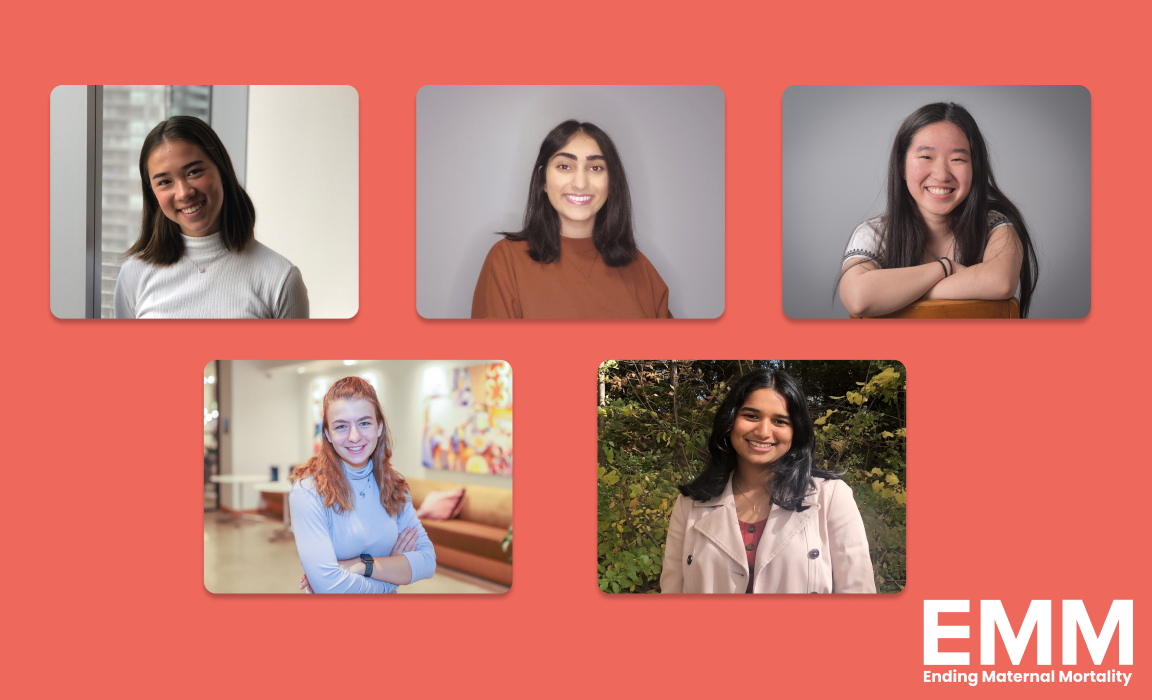
EMM was founded by a team of ambitious 17-year-old young women in 2020. Ruhani Walia and Isabella Grandic serve as EMM's project directors. Navya Riju, Sophie Lukashenkova Pellar and Christina Wang are EMM's training upskilling directors.
PILOT AND SCALING GOALS
Directly register 1,400 women during the pilot phase
Using 100 trained TBAs, distribute 1400 doses of misoprostol during the pilot phase (1 dose = 3-4 pills)
Secure $10,000 USD in further funding within first three months
Reach 7,000 women by the end of year 1
Reach 18,000 women by the end of year 2
FOUNDING TEAM
Isabella Grandic - Project Director
Ruhani Walia - Project Director
Navya Riju - Medical Training Director
Sophie Lukashenkova Pellar - Medical Training Director
Christina Wang - Pictorial Training Director
NAGO Farmers Support Group Limited
NAGO Farmers Support Group Limited distributes quality farm inputs to smallholder farmers in rural Uganda.
QUALITY INPUTS CHALLENGE CHALLENGE; UGANDA

PROVEN INTERVENTION TO BE DISTRIBUTED
Quality seeds and fertilizer as well as transportation of farm produce to market.
Learn more about the Improved Farm Practices Challenge and why increasing the effective use of fertilizer has the potential to unlock significant crop yield for smallholder farmers in sub-Saharan Africa.
DISTRIBUTION MODEL INNOVATION
NAGO Farmers Support Group Limited distributes quality farm inputs to smallholder farmers in rural Uganda.
NAGO will identify groups of smallholder farmers, then train and empower their members to use improved farm inputs. The venture will avail improved farm inputs to trained group members and will carry out farmer screening, especially of those buying on credit to determine credit readiness, and then determine repayment method. NAGO will also conduct field visits to farmers to assess their experience with the farm inputs, gather impact stories, and issue repayment reminders. The venture will launch in Jinja district in Eastern Uganda with plan to scale to the neighboring communities.
NAGO co-founders all have experience in working with smallholder farmers. Godfrey Nanzigwa, the Managing Director, worked as Capacity Development Specialist at Grameen Foundation on initiatives that support smallholder farmers and he recently conducted a research project on the role of Agricultural financing, Farmer training and the Performance of smallholder farmers. Elizaphani Nkuutu, the Technical Director, is an Agriculturalist by profession and he previously managed maize projects at Volunteers Efforts for Development Concerns (VEDCO), and National Agricultural Advisory Services (NAADS). Jolly Josephine Nakityo, our Field Manager, previously worked as Field Manager and later as Assistant Field Director with One Acre Fund, a farmer support organization using a model similar to that of NAGO.
PILOT AND SCALING GOALS
70 Smallholder farmers enrolled over the first three months, reaching 420 people
Raise additional $10,000 within first three months
Reach 1,800 beneficiaries by the end of year 1
Reach 7,200 beneficiaries by the end of year 2
FOUNDING TEAM
Godfrey Nanzigwa - Co-founder and Managing Director
Nkuutu Elizaphani - Co-founder and Technical Director
Jolly Josephine Nakityo - Co-founder and Field Manager
OBF Recruit
OBF Recruit's mission is to help reduce the obstetric fistula burden in Ghana and beyond through active case identification.
PATIENT IDENTIFICATION CHALLENGE; GHANA

PROVEN INTERVENTION TO BE DISTRIBUTED
Cervical cancer screenings.
Learn more about the Patient Identification Challenge and why identifying individuals in need of medical treatment and finding ways to make that treatment accessible reduces poverty.
DISTRIBUTION MODEL INNOVATION
OBF Recruit's Mission is to help reduce the obstetric fistula burden in Ghana and beyond through active case identification.
OBF Recruit's model operates on the four key trajectories of creating awareness, recruitment through active case search using trained volunteers, transportation of eligible clients to care centers and evaluation of model impact.
The model is critical as eligible fistula patients are recruited in the Central Region of Ghana at the household level through trained volunteers in a one-to-one interactive section.
OBF Recruit was founded by Dr. Justice Osei, Solomon Kwadwo Achinah, Esinam Agbemafle and Rose Mantey in 2019 to who wanted to bridge the gap between obstetric fistula patients and the treatment centers.
PILOT AND SCALING GOALS
Screen 130 women during the pilot and refer any positive cases for treatment and follow-up
Raise an additional $5,000 during the pilot period
Screen 1,380 women by the end of year 1
Screen 2,644 women by the end of year 2
FOUNDING TEAM
Solomon Kwadwo Achinah - Financial Controller
Dr. Justice Osei - Director of Operations
Ernestina Agbemafle - Recruitment/Outreach Supervisor
Rose Mantey - Recruitment/Outreach Supervisor
Teaching at the Right Level Namibia
TaRL Namibia rapidly increases literacy and numeracy among primary school children by increasing access to the proven “Teaching at the Right Level” education program.
TEACHING AT THE RIGHT LEVEL CHALLENGE; NAMIBIA

PROVEN INTERVENTION TO BE DISTRIBUTED
Teaching at the Right Level (TaRL) is an education program that tailors instruction to the learning level of the child, rather than their age. The result is that basic literacy and numeracy are achieved by students before they finish primary school.
Learn more about the Teaching at the Right Level Challenge and other D-Prize Distribution Challenges.
DISTRIBUTION MODEL INNOVATION
Teaching at the Right Level Namibia rapidly increases literacy and numeracy skills for primary school children by increasing access to the “Teaching at the Right Level” education program.
The TaRL Namibia model focuses on partnering with local and national government, the top public university and passionate young people across the country who are passionate about quality education. The program engages unemployed youth and students at teacher training institutions to serve as volunteer TaRL facilitators in public schools. With this unique mix of stakeholders, TaRL Namibia aims to integrate into existing government and school programs. TaRL Namibia is a high leverage way to build the systems and capacity for ending illiteracy and innumeracy in primary schools nationally.
TaRL Namibia is a non-profit program founded by one American named Angelica Towne, and three Namibians named Ricella Mburuu, Atjihe Kambindu and Star Katjariwa.
PILOT AND SCALING GOALS
Reach 300 students during the pilot period
Secure one local funder within the first three months or secure government/school cost recovery of 80% of costs
Reach 15,000 students by the end of year 1
Reach 40,000 students by the end of year 2
FOUNDING TEAM
Angelica Towne - Chair
Ricella Mburuu - Program Leader
Atjihe Kambindu - Secretary
Star Katjariwa - School Coordinator
Are you ready to be the next great social entrepreneur?