Kuisi
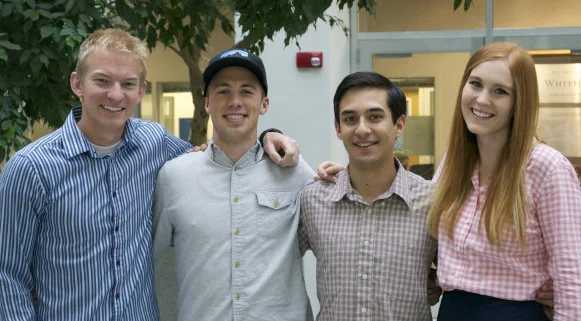
BYU students Dane, Bronwen, Ryan, and Spencer are working with Uganda's Minister of Health to improve praziquantel distribution, a deworming medicine.
PRAZIQUANTEL CHALLENGE; UGANDA
PROVEN INTERVENTION TO BE DISTRIBUTED
Praziquantel, a de-worming drug.
Learn more about our current distribution challenges and why we focus on interventions that are proven to impact lives.
DISTRIBUTION MODEL INNOVATION
Kuisi will use mandatory teacher training meetings to train on, inform about, and mass distribute praziquantel, a deworming medicine, to high-risk areas in rural Uganda. Their strategy expands on the tried and tested school distribution model in several ways. First, they plan to distribute praziquantel through district wide, multi-purpose, teacher conferences. In addition to training the teachers on schistosomiasis and the distribution of praziquantel, they want to train the teachers on additional health and sanitation issues, as well as improved teaching methodologies. Kuisi has communicated with four additional institutions (UNESCO, Cherish Uganda, Africa Teacher Foundation, and TASO) that are already conducting teacher trainings and who are eager to provide additional information regarding their initiatives.
Kuisi addresses cost-effectiveness through incorporating overhead costs into school fees. These fees would go to pay for overhead costs and future scaling of the project. Currently the average school expenditures for primary and secondary schools respectively is $11.04 and $93.49 per student per year. If unable to work through public schools, they plan to increase the fees for private schools to make up the difference. Uganda has one of the highest percentages of students attending private schools. The initial pilot will gauge exactly how feasible school fees are, how much money we can receive, and how long-term they can last.
PILOT AND SCALING GOALS
Deworm 50,000 children in the first month and a half
Treat over 5 million people by the end of year 2
FOUNDING TEAM
Bronwen Dromey
Dane Andersen
Ryan Thomas
Spencer Anderson
LiTe Africa
Alyse and Hashim are distributing energy efficient technologies to improve the health, income, and education of Africa’s low-income households. LiTeAfrica
COOK STOVE CHALLENGE; UGANDA

PROVEN INTERVENTION TO BE DISTRIBUTED
Energy efficient cook stoves.
Learn more about the Cook Stove Challenge and how clean cook stoves reduce health and safety risks, lower fuel expenses, and help reduce poverty.
DISTRIBUTION MODEL INNOVATION
LiTe Africa overcomes obstacles preventing wide distribution of energy efficient products by putting solar lanterns and energy efficient cook stoves in the hands of rural end users by utilizing the existing small retail and mobile money shop network not commonly used for these products. Rural, family-run shops draw low income consumers with basic essentials and mobile airtime. Customers visit these shops every day, creating a trust-based relationship with the retailer. Rural retailers currently do not know about, have access to, or know how to provide adequate service for energy efficient technologies.
In Uganda there are currently over 40,000 mobile money shops. Tapping into both the mobile and retail shop networks will help LiTe Africa reash the broadest consumer audience. LiTe Africa will sell cook stoves at a low cost and utilize Angaza's pay-as-you-go service for solar lamps. Payment in small increments has been proven to be not only popular and affordable among low-income households but drives up sales significantly. LiTe Africa will purchase products at wholesale through Ugastove, Angaza, and Greenlight Planet's distribution partners in Uganda, Small Solutions. The sales team will demonstrate products to retail and mobile money shop owners, training them on marketing techniques. The products are sold to shop owners at a price slightly above wholesale. Retailers will also be trained on pay-as-you-go operations and will explain the method to consumers and help them conduct monthly installments.
PILOT AND SCALING GOALS
Partner with 36 retailers during the pilot phase
Sell 380 solar lamps and 500 cook stoves during the pilot phase
Partner with up to 170 retailers by the end of year 1
Expand to 10 more surrounding villages and semi-urban locations by the end of year 2
Sell 20,000 cook stoves and 17,000 solar lamps by the end of year 2
FOUNDING TEAM
Alyse Daunis - Co-Founder
Hashim Mutanje - Co-Founder
SoLight
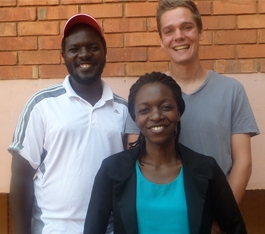
SoLight is drastically increasing the use of solar lamps in Uganda. Customers are served via a shopkeeper network, and services include a Daily Rental Program where customers can
SOLAR LAMP CHALLENGE; UGANDA
PROVEN INTERVENTION TO BE DISTRIBUTED
Solar Lamps.
Learn more about the Solar Lamp Challenge and how these lamps create enormous benefits for developing world families.
DISTRIBUTION MODEL INNOVATION
SoLight partners with rural shopkeepers to drastically increase the use of solar lamps in Uganda through three usage programs: the Daily Rental Program, the Financing Program, and the Direct Sales Program.
The Daily Rental Program serves as the foundation for all of SoLight's partnerships. Through this program, shopkeepers in a shopkeeper network rent out SunKing Eco Model solar lamps for just seven cents per day. This program is popular as it closely mirrors the current reality of most kerosene and candle usage: small daily purchases. It allows families to test, use, and trust a superior lighting source risk-free with zero financial or lifestyle change requirements.
Local demand is stimulated by the Daily Rental Program while risk is reduced for SoLight by providing a period to train, test, and build trust with partners before larger transactions and larger systems are implemented through the Financing Program and Direct Sales Program. When a SoLight representative is completing bi-weekly shopkeeper visits, users will have the option of purchasing solar products outright. This reduces the inventory SoLight needs to hold and drastically reduces risk by preventing solar products from going missing. Shopkeepers will receive a commission for any of their customers who purchase a solar product directly during one of SoLight's "rolling promotions".
PILOT AND SCALING GOALS
- Engage 10 shopkeepers and sell 75 lamps during a three month period of refining the model
- Engage 100 shopkeepers and sell 1,100 lamps during the pilot phase
- Engage 350 shopkeepers and sell 4,000 lamps by year 1
- Engage 2,150 shopkeepers and sell 28,000 lamps by year 2
FOUNDING TEAM
Adam Cameron - Co-Founder, Managing Director
Dorothy Lsoto - Co-Founder, Operations Director
Steffen Wassler - Co-Founder, Advisor
Vianney Tumwesige - Co-Founder, Advisor
Solar Army Project
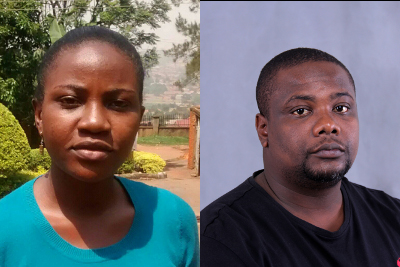
The Solar Army Project: Tusingwire Patrick and Hamidah Naishur Nakimuli: Meridian Holdings , a start-up renewable energy service company is creating an army of foot soldiers to
SOLAR LAMP CHALLENGE; UGANDA
PROVEN INTERVENTION TO BE DISTRIBUTED
Solar lamps and other solar products will be distributed by an army youth sales agents to last mile markets.
Learn more about the Solar Lamp Challenge and how these lamps create enormous benefits for developing world families.
DISTRIBUTION MODEL INNOVATION
To begin, the organization will carefully select 20 youth (1/2 of which will be women) from rural areas in Eastern Uganda through collaboration with local authorities and other development partners in the energy space. Those selected will be trained and mentored through a three month process after which they will graduate with varying ranks depending on performance in the areas of sales, leadership, teamwork, reporting, and business acumen. The training program will retain the youth and supply them with products to retail in selected communities. Youth will be held to a sales quota of 2 sales per person per day; they will be expected to target making sales in open markets as well as through various organized groups common in rural areas. There will be weekly evaluations of performance and monthly mentoring and team building meetings. The setup will encourage competitiveness and cooperation to increase sales. Monthly one-on-one meetings will be held with supervisors and the solar army members as part of performance evaluation.
The Solar Army will reach last mile clients by setting up distribution bases closer to the communities. These bases will provide logistical support, stock, strategic marketing support where bulk sales are possible, and after sales support.
PILOT AND SCALING GOALS
- Sell 1,200 solar units in quarter 1
- Employ 20 youths in quarter 1
- Reach 6,000 people who will benefit from solar energy in quarter 1
- Sell 12,000 solar units by the end of year 1
- Employ 60 youths by the end of year 2
- Establish three community based sales and service centers by the end of year 2
FOUNDING TEAM
Hamidah Naishur - Head of Operations
Berabira Shamillah - Part time Book Keeper
Adikini Gloria - Sales Agent and Team Leader
Ivan Wanzala - Sales Agent, Eastern Uganda
Okori Ignatius - ales Agent, Eastern Uganda
REACH
REACH, founded by David Kafambe, Angelina Micha Djaja, Clara Bicalho and Eduardo Campillo, is a non-profit organization whose mission is to empower teachers and promote creative
FLIPPED CLASSROOM CHALLENGE; UGANDA

PROVEN INTERVENTION TO BE DISTRIBUTED
Flip the classroom intervention, providing schools with low-cost and sustainable learning materials and innovative instruction methods.
Learn more about the Flipped Classroom Challenge and why new education models, like flipping the classroom or deskilling a class curriculum, offer a solution to the vast teacher shortages in the developing world.
DISTRIBUTION MODEL INNOVATION
1. Provide students with government-approved textbooks with which they learn the lesson materials before coming to class each day.
2. Train teachers on how to facilitate engaging activities that use low-cost and easily accessible materials in order to further students' understanding of the topics studied at home. These materials are drawn from Bridge International's hands-on primary education tools.
For the pilot, the team identified Grade 6 as a critical year for intervening in the classroom and maintaining students' interest in school with the potential to significantly improve their learning outcomes and increase primary school completion rates. By focusing on Mathematics, they aim to enable all students to develop the quantitative skills required for them to succeed at Primary Leaving Examinations (Grade 7) and complete primary school. REACH will work in collaboration with education officers and schools in Uganda to create strategic partnerships to expand and strengthen the model.
Books donated during the implementation will be kept by each school and can be used by new student cohorts the following years. The team will build on the expertise of current teachers - who remain in one school for an average of 10 years - to ensure the quality and continuity of the project. The team will work closely with education officers and Center Coordinating Tutors to help supervise and scale the program. Teachers who have gone through the training and program will be able to join the REACH Fellowship Network.
PILOT AND SCALING GOALS
- Target 30 out of 256 public primary schools in Wakiso, the largest district in Uganda based on population.
- Benefit 15 teachers
- Reach between 1,500 and 1,800 students
- 2017: train an additional 120 teachers
- 2018: train an additional 300 teachers, reach 56,550 students
FOUNDING TEAM
Clara Bicalho- Operations Manager
David Kafambe- Training and External Relations Manager
Eduardo Campillo - M&E Manager
Angelina Micha Djaja- Finance and Logistics Manager
Are you ready to be the next great social entrepreneur?