Girls Hub
Girls Hub is a youth-led feminist NGO addressing the unmet need for family planning for underserved populations in rural Nigeria.
SAYANA PRESS CHALLENGE; NIGERIA

PROVEN INTERVENTION TO BE DISTRIBUTED
Sayana Press injectable contraceptive.
Learn more about the Sayana® Press Challenge and why training health providers to administer Sayana® Press can be particularly valuable for women who prefer injectable contraceptives but don’t have regular access.
DISTRIBUTION MODEL INNOVATION
Girls Hub is a youth-led feminist NGO addressing the unmet need for family planning for underserved populations in rural Nigeria.
Contraception is a powerful tool in combating poverty and with a tremendous range of health benefits, including maternal and infant survival, nutrition, and educational attainment. To increase women's access to contraceptive services in Nigeria, Girls Hub will empower Community Health Workers (CHWs) to deliver Sayana Press, an injectable contraception to women and girls in remote areas. To achieve scale and cover more marginalized women and girls across communities, Girls Hub will also consider the training of community–based distributors or clients themselves in addition to strengthening supply chain for Sayana Press in rural communities.
Girls Hub was founded in 2020 by Isaac Ejakhegbe and Osemudiame Ejakhegbe. Other team members include Dr. Mary Ama Blankson and Mr. Okhea Kelly Relobhegbe.
PILOT AND SCALING GOALS
Provide 1,500 women with access to Sayana Press during the pilot
Train 50 Community Health Workers during the pilot
Reach 5,000 beneficiaries by the end of year 1
Reach 10,000 beneficiaries by the end of year 2
FOUNDING TEAM
Isaac Ejakhegbe - Founder
Osemudiame Ejakhegbe - Co-founder
Dr. Mary Ama Blankson - Program Officer
Okhea Kelly Relobhegbe - MEL Officer
ChildACT
ChildACT increases routine childhood immunizations in Nigeria through SMS reminders to caregivers and supportive community engagement.
IMMUNIZATION CHALLENGE; NIGERIA

PROVEN INTERVENTION TO BE DISTRIBUTED
Routine childhood immunizations.
Learn more about the Immunization Challenge and how increasing routine childhood immunization rates in low-coverage areas could prevent millions of childhood deaths.
DISTRIBUTION MODEL INNOVATION
ChildACT increases routine childhood immunizations through SMS reminders to caregivers and supportive community engagement. The team envisions reaching two-thirds of Nigerian children to secure vaccinations by their first birthday.
ChildACT invests in communities through social mobilization and provides SMS reminders towards immunization of children and purposeful development. The team is motivated to realize this vision with experience in private sector efficiency, public health, and community relations. The team will mobilize stakeholders to improve and support immunization demand, while empowering caregivers through a reminder system to access immunization for children in their care.
PILOT AND SCALING GOALS
1,200 children immunized in the pilot who otherwise would not be
5,000 SMS reminders sent during the pilot period
Reach 20,000 beneficiaries by the end of year 1
FOUNDING TEAM
Joan Alaboson - Project Lead
Family Empowerment Media
Family Empowerment Media is an evidence-based non-profit that enables informed family planning decisions through clear, compelling, and accurate radio-based communication.
CUSTOM CHALLENGE; NIGERIA

PROVEN INTERVENTION TO BE DISTRIBUTED
Family planning information through radio-based communication
Learn more about the Custom Challenge and why we only fund ideas that focus on distributing proven poverty interventions.
DISTRIBUTION MODEL INNOVATION
Family Empowerment Media (FEM) is an evidence-based non-profit that enables informed family planning decisions through clear, compelling, and accurate radio-based communication.
The FEM model is simple and transferable to many regions in Nigeria and, eventually, other countries. FEM works with local partners to produce and broadcast radio programming that shifts knowledge, attitudes, and behavior around family planning in Nigeria. The FEM solution is cost-effective because (1) radio programming is cheap in West Africa, and (2) the full-time team is lean - but complemented by part-time surge support when needed.
Accomplishments
Reached ~35 million listeners through short and long campaigns in first three years
Externally evaluated to be as much as 20-60x as cost effective as cash transfers
An external evaluator found FEM’s pilot correlated with a 75% increase in contraceptive uptake in the region.
SCALING GOALS
Reach 50 million listeners in Nigeria by 2030
Conduct one pilot in a new country and one pilot on a new health topic
Conduct a randomized controlled trial of their evaluation in 8 states in Nigeria
FOUNDING TEAM
Anna Christina Thorsheim - Director
Kenneth Scheffler - Director
Ending Maternal Mortality
Ending Maternal Mortality reduces maternal mortality through training birth attendants and distributing life-saving medical treatments.
MATERNAL HEALTH CHALLENGE; NIGERIA
PROVEN INTERVENTION TO BE DISTRIBUTED
Misoprostol.
Learn more about the Maternal Health Challenge and how the distribution of Misoprostol, a $3 drug that can prevent maternal deaths from postpartum hemorrhage, could save thousands of lives.
DISTRIBUTION MODEL INNOVATION
Ending Maternal Mortality (EMM) reduces maternal mortality through training birth attendants and distributing life-saving medical treatments.
The EMM model begins with upskilling informal health workers (e.g. traditional birth attendants) and connecting them with upskilled formal healthcare workers (e.g. community health workers) to promote the use of misoprostol in rural Nigeria. Health workers pre-register women via a simple prescription process and user registration form. This registration gives women access to misoprostol should they give birth at a healthcare facility or with an upskilled birth attendant.
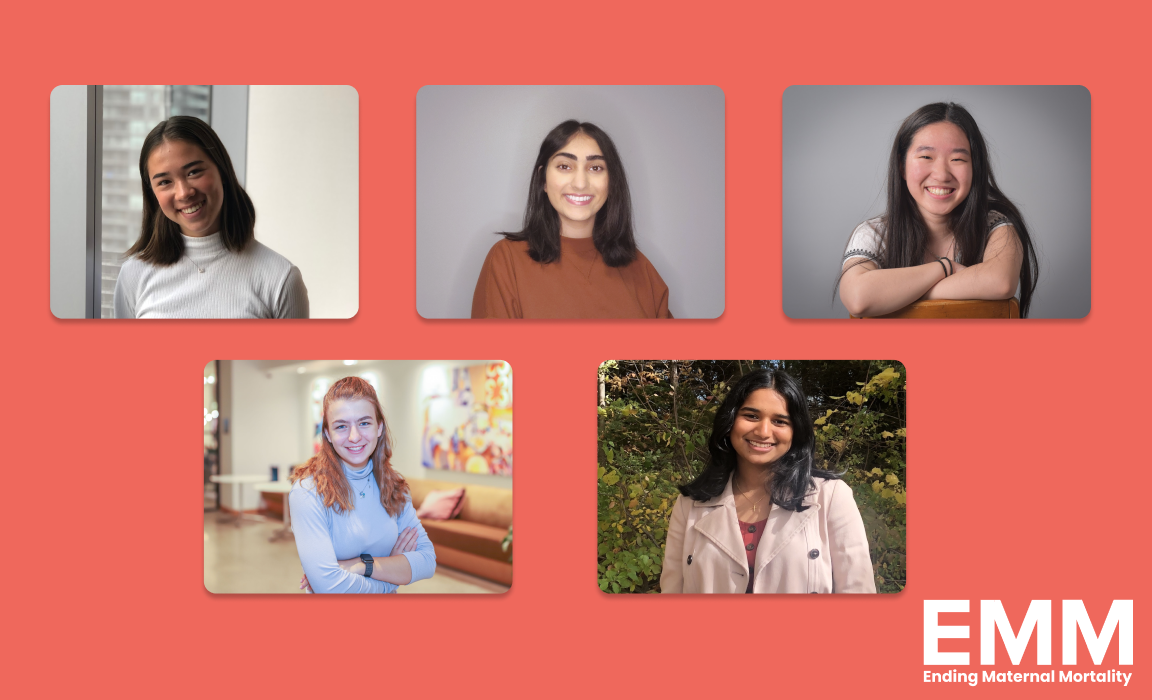
EMM was founded by a team of ambitious 17-year-old young women in 2020. Ruhani Walia and Isabella Grandic serve as EMM's project directors. Navya Riju, Sophie Lukashenkova Pellar and Christina Wang are EMM's training upskilling directors.
PILOT AND SCALING GOALS
Directly register 1,400 women during the pilot phase
Using 100 trained TBAs, distribute 1400 doses of misoprostol during the pilot phase (1 dose = 3-4 pills)
Secure $10,000 USD in further funding within first three months
Reach 7,000 women by the end of year 1
Reach 18,000 women by the end of year 2
FOUNDING TEAM
Isabella Grandic - Project Director
Ruhani Walia - Project Director
Navya Riju - Medical Training Director
Sophie Lukashenkova Pellar - Medical Training Director
Christina Wang - Pictorial Training Director
The Taimaka Project
The Taimaka Project’s mission to tackle food insecurity in Northeastern Nigeria began with the implementation of a post-harvest loans (PHL) program that delivered crop storage bags and a small loan to rural farmers to help them save their crops and sell when prices were up to 50% higher.
CUSTOM AGRICULTURE CHALLENGE; NIGERIA

PROVEN INTERVENTION TO BE DISTRIBUTED
Taimaka was awarded D-Prize pilot funding for the distribution of post-harvest credit and storage to help farmers save and avoid lean season poverty and hunger.
Learn more about the Custom Agriculture Challenge and why distributing proven agricultural interventions can greatly improve the livelihoods of smallholder farmers.
DISTRIBUTION MODEL INNOVATION
The Taimaka Project’s mission to tackle food insecurity in Northeastern Nigeria began with the implementation of a post-harvest loans (PHL) program that delivered crop storage bags and a small loan to rural farmers to help them save their crops and sell when prices were up to 50% higher.
After a large-scale RCT with UC-Berkeley and Stanford showed that PHLs was cost-effective but lower than the bar Taimaka sets for its own work, Taimaka made the hard decision to transition away from the PHLs program in favor of another way we had begun to tackle food insecurity in the same communities – treating children with malnutrition.
Taimaka currently runs a treatment program that 1) delivers life-saving treatment to children in Nigeria and 2) serves as an incubator for cost-effective innovations that can either improve the quality, decrease the costs, or simplify the delivery of malnutrition treatment so that the 45.4 million children who need it can get it (only 20-30% currently get treatment). Because malnutrition is the leading cause of childhood deaths globally, and because millions are already spent on treatment every year, even marginal improvements can yield high impact. A reduction in the cost of treatment by just 1% would free up over $3.4 million currently spent globally on treatment to treat an additional 50,000 children.
PILOT AND SCALING GOALS
Post-Harvest Loans Pilot:
Distributed PHLs to 1,000 smallholder farmers in Nigeria
Generated an additional $25,000 in post-harvest income for farmers
Malnutrition Scaling Goals:
Test 3-4 candidate innovations in annual portfolios
Push at least 1 innovation to scale to reach 20% of treated children by Year 5
Reduce the cost-per-life saved of malnutrition treatment by 10% by Year 5
FOUNDING TEAM
Justin Graham - Co-founder
Abubakar Umar - Co-founder
Muhammad Uba - Co-founder
Parth Ahya - Co-founder
Justin Graham is Taimaka’s Executive Director and an Oxford graduate with a background in evidence-based development and quantitative economics. Abubakar Umar is Taimaka’s Medical Director and a former pediatrician with the Nigerian government. Muhammad Uba and Parth Ahya now serve on the board.
REFAN Multiple Concepts
Renewable Energy for All Nigerian (REFAN) provides solar powered lamps to off-grid communities in Nigeria.
SOLAR LAMP CHALLENGE; NIGERIA

PROVEN INTERVENTION TO BE DISTRIBUTED
Solar lamps.
Learn more about the Solar Lamp Challenge and how these lamps create enormous benefits for developing world families.
DISTRIBUTION MODEL INNOVATION
Imagine a world where light transforms lives. At REFAN Multiple concepts, Nigeria supported by D-Prize, we're making this vision a reality by distributing over 16,000 standalone solar lamps in the last 3 years to rural communities in Northeast Nigeria. Our mission is simple yet powerful: to illuminate the darkest corners and empower individuals, families, and entire communities. With each lamp, we're not just providing light, but opening doors to education, safety, and economic opportunity. Join us in brightening the future for over 60,000 indirect beneficiaries and counting.
REFAN’s model is based on distribution of solar lamps to households using a network of Microfinance Banks (MFBs), Microfinance Institutions (MFI) and Smallholder farmers’ cooperatives. To increase access, solar lanterns will be available on both a cash and credit basis.
REFAN was set up in August 2020 by Asongo Abraham, a Microfinance Expert, based in Yola, Nigeria. Fardeen Dodo of American University of Nigeria works with REFAN as Director of Strategy, Monitoring and Evaluation. Mrs. Grace Pius, a qualified Accountant, works with REFAN as Director of Finance.
PILOT AND SCALING GOALS
Distribute 350 solar lamps reaching 1,050 beneficiaries during the pilot
Reach 2,100 beneficiaries by the end of year 1
Reach 3,000 beneficiaries by the end of year 2
FOUNDING TEAM
Asongo Abraham - Founder
Fardeen Dodo - Director of Strategy, Monitoring and Evaluation
Grace Pius - Director of Finance
Free2Plan
Free2Plan is a feminist, youth-led non profit working to meet the unmet need for family planning by distributing Sayana Press, an injectable contraceptive.
SAYANA PRESS CHALLENGE; NIGERIA


PROVEN INTERVENTION TO BE DISTRIBUTED
Sayana Press injectable contraceptive.
Learn more about the Sayana® Press Challenge and why training health providers to administer Sayana® Press can be particularly valuable for women who prefer injectable contraceptives but don’t have regular access.
DISTRIBUTION MODEL INNOVATION
Free2Plan is a feminist, youth-led nonprofit working to meet the unmet need for family planning by distributing Sayana Press, an injectable contraceptive.
Free2Plan will empower owner-operated drug retail outlets known as Patent and Proprietary Medicine Vendors (PPMVs) to deliver Sayana Press to women and girls in hard to reach areas. They will train these PPMVs on communications to drive demand and create behavior change around self-injectable contraceptives.
PILOT AND SCALING GOALS
Provide 1,000 women with access to Sayana Press during the pilot
Train 100 PPMVs on Sayana Press communications and distribution during the pilot
Reach 5,000 beneficiaries by the end of year 1
Reach 12,000 beneficiaries by the end of year 2
FOUNDING TEAM
Offor Hope Jeremiah - Co-Founder
Melanie Tejiri Idehen - Co-Founder
Brenda Effiom - SBCC Specialist
Ibukun Babarinde - Supply Chain Manager
Nwabuma Omola Daniel - MEL Manager
CORD's Positive Escort Project
CORD’s Positive Escort Project aims to prevent mother-to-child transmission of HIV by training and engaging experienced women living with HIV to follow up and ensure 150 HIV+ pregnant women complete Antiretroviral Therapy.
PMTCT CHALLENGE; NIGERIA

PROVEN INTERVENTION TO BE DISTRIBUTED
Retention in care and adherence to anti-retroviral treatment for people living with HIV.
Learn more about the PMTCT Challenge and how increasing completion of antiretroviral therapy (ART) to prevent mother to child transmission (PMTCT) of HIV can decrease HIV rates and improve lives.
DISTRIBUTION MODEL INNOVATION
CORD’s Positive Escort Project aims to prevent mother-to-child transmission (PMTCT) of HIV by training and engaging experienced women living with HIV to follow up and ensure 150 HIV+ pregnant women complete Antiretroviral Therapy (ART).
HIV+ positive women who have experienced PMTCT services and maintain close links with the community will be trained and engaged as Positive Escorts to facilitate community-facility continuum of care for PMTCT activities. They will provide pre-test group education sessions, one-on-one and couples counseling, individualized education, psychosocial support, appointment reminders and follow-up services to ensure women adhere to treatment. They will also be role models whose support and presence will reassure the newly diagnosed that HIV related challenges can be successfully overcome.
PILOT AND SCALING GOALS
Reach 150 expectant mothers during the pilot phase
Train 50 HIV+ women to serve as Positive Escorts during the pilot phase
FOUNDING TEAM
Adebanjo Adetosoye Moses - Executive Director/Project Lead
Safe Passage Initiative
The Safe Passage team will train 100 Traditional Birth Attendants (TBAs) during the initial pilot phase in Nigeria, on the practical use of Misoprostol during child delivery.
MATERNAL HEALTH CHALLENGE; NIGERIA

PROVEN INTERVENTION TO BE DISTRIBUTED
Misoprostol tablets.
Learn more about the Maternal Health Challenge and how the distribution of Misoprostol, a $3 drug that can prevent maternal deaths from postpartum hemorrhage, could save thousands of lives.
DISTRIBUTION MODEL INNOVATION
The mission of Safe Passage is to improve the quality of life and the life expectancy of women of child bearing age and pregnant women in particular by significantly lowering the incidence of Postpartum hemorrhage (PPH). The organization will work to curtail the rate of maternal mortality in Nigeria through the increased distribution of Misoprostol.
The Safe Passage team will train 100 Traditional Birth Attendants (TBAs) in the initial pilot phase, on the practical use of Misoprostol during child delivery. The Pilot will run in 3 communities, one in each of the 3 geopolitical zones of Nigeria's Imo state: Umuguma, Orlu, and Okigwe.
The model is unique as TBAs will be reaching and training other TBAs in the use of Misoprostol, encouraging acceptability, accessibility and increased impact. This strategy will have a multiplier effect as scaling progresses. The Safe Passage management team includes well respected and experienced TBAs which will improve their ability to train larger numbers and in turn, safe more lives.
PILOT AND SCALING GOALS
- Train 100 Traditional Birth Attendants during the pilot
- Distribute 600 Misoprostol tablets during the pilot
- Train 2,500 Traditional Birth Attendants by the end of year 1
- Distribute 7,500 Misoprostol tablets by the end of year 1
FOUNDING TEAM
Dr. Patrick Nwachi - Team Lead
Dr Precious Eteike - Assistant Team Lead
Maryann Anugwara - Head Traditional Birth Attendant
Power in Her Hand Initiative
In collaboration with the Federal and State Ministries of Health in Nigeria, Power in Her Hand Initiative will train community health extension workers to create demand for Sayana Press as well as counsel patients on using the injectable contraceptive.
SAYANA PRESS CHALLENGE; NIGERIA

PROVEN INTERVENTION TO BE DISTRIBUTED
Sayana Press injectable contraceptive.
Learn more about the Sayana® Press Challenge and why training health providers to administer Sayana® Press can be particularly valuable for women who prefer injectable contraceptives but don’t have regular access.
DISTRIBUTION MODEL INNOVATION
The proportion of women who die in pregnancy or during birth remains high in Nigeria. Some of the factors contributing to the problem and frequent births and limited access to desired methods of contraception, most notably in rural areas. Despite strong evidence that spacing births contributes to a reduction of maternal and child mortality, only 10% of the 40 million women of reproductive age are using modern contraceptive methods in Nigeria. The unmet need for family planning remains high.
To change this narrative and increase women's access to contraceptive services in Nigeria, Power in Her Hand Initiative will pilot the training of Community Health Extension Workers (CHEWs) to introduce and distribute an innovative and easy-to-use injectable contraceptive, Sayana Press, in rural areas of Sokoto in Northern Nigeria. To reach even more girls and women in need of these services, Power in Her Hand Initiative will consider the training of community-based distributors in door-to-door distribution, proprietary and patent medical vendors, or clients themselves to achieve scale.
PILOT AND SCALING GOALS
- Distribute Sayana Press to 500 women during the pilot
- Train 100 community health workers during the pilot
- Distribute Sayana Press to 25,000 women by the end of year 2
- Train 5,000 community health workers by the end of year 2
FOUNDING TEAM
Mu'azu Muhammad - Team Leader
True Care Support Group
The True Care Support Group will tackle the problem of non-completion of ART by providing a support network that offers peer counseling, training, encouragement, and emotional support to women living with HIV, with a focus on pregnant women living with HIV.
PMTCT CHALLENGE; NIGERIA


PROVEN INTERVENTION TO BE DISTRIBUTED
Peer support groups to increase the completion of Antiretroviral Therapy (ART) in pregnant women.
Learn more about the PMTCT Challenge and how increasing completion of antiretroviral therapy (ART) to prevent mother to child transmission (PMTCT) of HIV can decrease HIV rates and improve lives.
DISTRIBUTION MODEL INNOVATION
The True Care Support Group will tackle the problem of non-completion of ART by providing a support network that offers peer counseling, training, encouragement, and emotional support to women living with HIV, with a focus on pregnant women living with HIV.
True Care Support Group will operate as both an online and offline network of women living with HIV. Counselors are women who have completed their ART regimen. Upon receiving referrals from hospitals, counselors invite women to join their groups. Counselors receive incentives to help the women in their group, who are divided into pairs for extra support, complete their own ART regimens through in-person meetings, social media conversations, and SMS reminders. Graduates of the group will have the option to become counselors themselves.
PILOT AND SCALING GOALS
- Enroll 200 pregnant women living with HIV into support groups during the pilot
- Enroll 5,000 women living with HIV by the end of year 2
FOUNDING TEAM
Esther Bamidele - Co-Founder
Olugbenga Akinpeloye - Co-Founder
Strong Girl Network
The Strong Girl Network is piloting a proven intervention to combat cross-generational sexual relationship in Nigeria with a goal to reach 57,600 girls in 3 months and 500,000 girls in two years.
SUGAR DADDY AWARENESS CHALLENGE; NIGERIA

PROVEN INTERVENTION TO BE DISTRIBUTED
Sugar Daddy Awareness classes.
Learn more about the Sugar Daddy Awareness Challenge and how a simple, one-hour “sugar daddy awareness” training could help countless girls avoid pregnancy while still in school, which can lead to entrenched poverty, and build a better life.
DISTRIBUTION MODEL INNOVATION
The Strong Girl Network is piloting a proven intervention to combat cross-generational
sexual relationship in Nigeria with a goal to reach 57,600 girls in 3 months and 500,000 girls in two years. The team will deliver this evidence-based intervention by teaching anti sugar daddy awareness classes across schools providing young girls with critical information on the relative risk of sugar daddies. Strong Girl Network has successfully secured approval from the Oyo State Ministry of Education to introduce our Sugar Daddy classes in 285 state-controlled public schools.
Strong Girl Network will be testing the impact of teaching Sugar Daddy Awareness to 200 students in one hall, at one time. This approach presents its own risks but will be thoroughly monitored by the team to ensure its efficacy before it is scaled up.
PILOT AND SCALING GOALS
- Reach 57,600 students during the pilot
- Reach 500,000 students by the end of year 2
FOUNDING TEAM
Aderoju Okunsamni - Team Lead
Macduff Nnodim - Project Coordinator
Bernard Magaji - Research and Data Analysis Lead
Chisom Olukoya Olufemi - Project Coordinator
Adeoye Adejare - Curriculum Development and Training
Chubi Agro
Chubi Agro will work on scaling up the distribution of high quality maize seeds by scaling up production of quality seeds in order to meet the anticipated growth in demand for improved seeds.
QUALITY SEED CHALLENGE; NIGERIA


PROVEN INTERVENTION TO BE DISTRIBUTED
Quality seeds.
Learn more about the Quality Seed Challenge and why an evidence-based model that distributes high-quality seeds could reliably boost the standard of living for smallholder farmers.
DISTRIBUTION MODEL INNOVATION
One proven strategy to combat low farm yields is through the use of improved seed varieties. These seeds which have higher yields and are locally adapted, have improved resistance to diseases and pests, mature earlier, and have a higher fertilizer response.
Chubi Agro will work on scaling up the distribution of high quality maize seeds by scaling up production of quality seeds in order to meet the anticipated growth in demand for improved seeds, increasing the number of distribution outlets by liaising with existing retail shops in rural communities to enhance the reach to smallholder farmers, continuing to expand an outgrower scheme in which quality seeds are distributed to farmers within the network as a loan to be repaid at the end of the harvest season, and conducting sensitization programs to increase awareness of the benefits of improved seeds as well as organize visits to demonstration farms.
PILOT AND SCALING GOALS
- Distribute 7,500kg of seeds during the pilot
- Reach 200 farmers during the pilot
- Distribute 75,000kg of seeds at the end of year 2
- Reach 3,000 farmers by the end of year 2
- Work with 100 distribution agents by the end of year 2
FOUNDING TEAM
James Ogwu - Managing Director
Bemsibom Toh - Strategy Director
Adesola Ajayi - Business Development Director
Setieye Solar Services
Seteiye Solar Services is committed to replacing kerosene lamps with solar-powered LED lanterns. They will introduce an everyday consumer product, integrating this technology in the lives of with those who need it in 136 villages in the Essien Udim local government area of Akwa Ibom state, Nigeria.
SOLAR LAMP CHALLENGE; NIGERIA
PROVEN INTERVENTION TO BE DISTRIBUTED
Solar Lamps.
Learn more about the Solar Lamp Challenge and how these lamps create enormous benefits for developing world families.
DISTRIBUTION MODEL INNOVATION
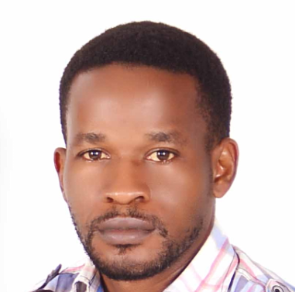
Seteiye Solar Services is committed to replacing kerosene lamps with solar-powered LED lanterns. They will introduce an everyday consumer product, integrating this technology in the lives of with those who need it in 136 villages in the Essien Udim local government area of Akwa Ibom state, Nigeria.
Their model establishes Village Solar Groups (VSGs), village-run self-help micro-enterprises as the nucleus of the project. These will distribute solar-powered LED lanters at prices comparable to or less than the cost of powering a kerosene lamp in rural villages.
Leveraging the vast network and influence of community based organizations as well as traditional and religious institutions, Seteiye Solar Services set up a multi-stakeholder approach to deliver solar products and education across various target groups and enlighten consumers on the key features of solar lighting products. The team will also engage in massive market activation through road shows and product presentations in churches and village hall meetings.
PILOT AND SCALING GOALS
Reach 34 villages during the pilot
Distribute 340 solar lanterns during the pilot
Reach 1360 beneficiaries during the pilot
Distribute 4,080 lamps at the end of year 1
Distribute 5,440 lamps by the end of year 2
Reach 22,000 direct beneficiaries by the end of year 2
FOUNDING TEAM
Idopise Essien - Founder
GasforAll Ventures
Gas4All's mission is to effectively distribute 3kg LPG clean cook stoves to urban slum households in the city of Kaduna, Nigeria in order to drastically reduce mortality from smoke inhalation, especially among women and children.
COOK STOVE CHALLENGE; NIGERIA

PROVEN INTERVENTION TO BE DISTRIBUTED
3kg LPG clean cook stoves.
Learn more about the Cook Stove Challenge and how clean cook stoves reduce health and safety risks, lower fuel expenses, and help reduce poverty.
DISTRIBUTION MODEL INNOVATION
Gas4All's mission is to effectively distribute 3kg LPG clean cook stoves to urban slum households in the city of Kaduna, Nigeria in order to drastically reduce mortality from smoke inhalation, especially among women and children.
Over 22 million households in Nigeria depend on solid fuel for cooking which leads to 80,000 deaths annually. Their intervention of focus is a 3kg LPG stove. However, LPG has significant barriers to adoption, including affordability and distance between homes and LPG refill plants. Gas4All's solution is to create a constant, easily accessible supply of LPG by hiring LPG vendors that will station themselves in communities, and distribute the LPG canisters to their sales agents with a van. The cook stoves will be made affordable through consumer financing, with customers paying in installments for four to six months. By opening up three offices (one in the main market and two around the pilot location of an urban slum), Gas4All will have ample space to use for conducing awareness raising activities and trainings, stock inventory for sales agents, receive installment payments, and conduct after sales services.
PILOT AND SCALING GOALS
Provide 21,000 kg of LPG to communities by the end of year 1
Distribute 10,200 cook stoves by the end of year 1
Increase number of sales agents by 8 by the end of year 1
FOUNDING TEAM
Emeka Umechukwu - Founder
Chidi Umeh - Co-Founder and Sales Director
Farm on Wheels
Farm on Wheels is a direct distribution line that will bring quality seeds and fertilizers to farmers, then transport farm produce to urban areas via large trucks at harvest time.
IMPROVED FARM PRACTICES CHALLENGE; NIGERIA

PROVEN INTERVENTION TO BE DISTRIBUTED
Quality seeds and fertilizer as well as transportation of farm produce to market.
Learn more about the Improved Farm Practices Challenge and why increasing the effective use of fertilizer has the potential to unlock significant crop yield for smallholder farmers in sub-Saharan Africa.
DISTRIBUTION MODEL INNOVATION
Major distribution problems for smallholder farmers in Nigeria include: the high cost of transportation due to bad roads, limited farm resources, low yield even with increased fertilizer application and quality seeds due to improper application, low profit margin due to increased fertilizer use which discourages farmers from investing.
Farm on Wheels is a direct distribution line that will bring quality seeds and fertilizers to farmers, then transport farm produce to urban areas via large trucks at harvest time. Short seminars will be facilitated with small holder farmers on utilizing quality seeds, microdosing technique, and how to purchase these quality inputs on credit with Farm on Wheels. To do this, Farm on Wheels will partner with small holder rural farmers cooperatives. Farm produce will be transported to urban areas and sold to Farm on Wheels partners. Farmers can use produce to cover costs of quality inputs taken on credit.
PILOT AND SCALING GOALS
Teach microdosing technique with 5 farmer cooperatives during the pilot
Increase the effective use of fertilizer and scale up distribution of quality seeds with 75 small holder farmers during the pilot
Teach microdosing technique with 20 farmer cooperatives by the end of year 1
Increase the effective use of fertilizer and scale up distribution of quality seeds with 300 smallholder farmers by the end of year 1
FOUNDING TEAM
Jocelyne Agbo - Founder and Chief Executive Officer
Stanley Arinze - Finance and Distribution Lead
Community Based Participatory Immunization (CBPI)
Our mission is to combat vaccine preventable diseases through distribution of vaccination reminder bracelets and awareness creation on importance of childhood immunization in Nigeria.
CUSTOM CHALLENGE; NIGERIA
PROVEN INTERVENTION TO BE DISTRIBUTED
The distribution of vaccine reminder bracelets and awareness creation on the importance of childhood immunization in Nigeria.
Learn more about the Custom Challenge and why we only fund ideas that focus on distributing proven poverty interventions.
DISTRIBUTION MODEL INNOVATION
CBPI will pilot their initiative in Abuja and Niger state of Nigeria. From an initial needs assessment, the team found that health facilities in both locations lacked the means to remind mothers of their child's vaccination appointments aside from child health cards issued to mothers.
The CBPI model has two components: vaccination bracelets (clean plastic bracelet put on the baby's wrist for nine months with holes punched in the plastic for each vaccination a child receives to enable health workers to monitor mothers' compliance with immunization schedule) and CareAlert (a bulk SMS reminder service to remind caregivers of vaccination appointments).
The team will raise awareness of vaccinations and the importance of the bracelets via antenatal and postnatal sessions at healthcare facilities with 10,000 mothers in one year.
PILOT AND SCALING GOALS
- 30 healthcare service providers reached with awareness raising during the pilot
- 1,500 bracelets distributed during the pilot phase
- 3,000 SMS messages sent during the pilot
- 14,400 mothers reached with awareness raising at the end of 1 year
- 240 healthcare providers reached by the end of year 2
- 36,000 vaccination bracelets distributed by the end of year 2
FOUNDING TEAM
Dr. Emmanuel Egbroko - Co-Founder
Paul Ogboji - Co-Founder
Chika Ozoemena - Co-Founder and Consultant
Ikechukwu Oguomah - Co-Founder
Farmwise
Farmwise offers smallholder farmers everything they need to succeed in the field and ensure that they increase their crop harvest by up to 70% per cycle, reduce post-harvest losses and finally improve their livelihood.
CUSTOM AGRICULTURE CHALLENGE; NIGERIA

PROVEN INTERVENTION TO BE DISTRIBUTED
An asset-based loan that includes seeds and fertilizer, financing for farm inputs, training on agricultural techniques, and market facilitation to maximize profits.
Learn more about the Custom Agriculture Challenge and why distributing proven agricultural interventions can greatly improve the livelihoods of smallholder farmers.
DISTRIBUTION MODEL INNOVATION
Farmwise will assist smallholder farmers by providing the resources they need to succeed. They will provide farmers with farm in put on credit, deliver products to their door, train farmers, and help them sell the harvest. These services must be provided together because without credit, farm inputs are not affordable, without training, farmers do not maximize resources, without delivery, services are not accessible. By delivering all of these services together, Farmwise will enable farmers to significantly increase their farm income and build a path out of poverty. Farmwise's vision is to reach 1 million farm families by 2020 (which is less than 2% of registered smallholder farmers in Nigeria), while expanding the Farmwise model quickly and sustainably.
Farmwise loan packages range in value from $62.5 to $100 and includes crop insurance to mitigate the risks of drought and disease for new farmers. Packages valued at $200 will be available for returning farmers in the second year. Farmers may enroll as little as a quarter of an acre of land or a full acre of farmland. Farmwise will provide a maximum of one loan package per household. To quality for the Farmewise program, farmers are required to form local groups, attend agricultural training, and pay a materials and training fee. Farmwise will accommodate clients with a flexible repayment system in which they may repay their loans in any amount and at any time as long s they complete repayment by July of the same year. To receive the loan and training, farmers must join a village group that is supported by a local Farmwise field officer. The field officers will meet regularly with the farmer groups to coordinate delivery of farm inputs, administer training, and collect repayments. During the pilot, Farmwise plans for one acre per farmer and each farmer is expected to achieve $900 in their first year and $1,600 in their second year.
PILOT AND SCALING GOALS
- Serve 680 farm families during the pilot phase
- Hire 180 staff members during the pilot phase
- Serve 80,000 farm families at the end of year 1
- Grow the staff to include 1,070 employees by the end of year 1
- Reach 319 communities by the end of year 2
- Serve 486,000 farm families by the end of year 2
FOUNDING TEAM
Ugwunwa Nkasiobi Nwamara - Co-Founder
Iheanyi Esse - Co-Founder
Chidochiri Ononuju - Co-Founder
Qantab Light Cube
Qantab Light Cube is a renewable energy company based in Nigeria with focus on the deployment of stand–alone portable and rooftop solar units to rural and urban homes, and
SOLAR LAMP CHALLENGE; NIGERIA
PROVEN INTERVENTION TO BE DISTRIBUTED
Solar units and grid systems.
Learn more about the Solar Lamp Challenge and how these lamps create enormous benefits for developing world families.
DISTRIBUTION MODEL INNOVATION
Qantab Light Cube is a renewable energy company based in Nigeria with focus on the deployment of stand–alone portable and rooftop solar units to rural and urban homes, and solar PV micro grids systems to rural communities. The company’s primary objective is to join a growing ensemble of solution providers who proactively engage vision, expertise and action in becoming an indispensable energy provider. The team will also provide before and after sales service to customers as well information regarding their electricity consumption.
PILOT AND SCALING GOALS
600 solar lamps distributed during the pilot phase
2 states in Northern Nigeria reached during the pilot
FOUNDING TEAM
Samuel Olufemi Sofela - Founder
Trinity Health
Trinity Health is a non-profit organization that aims to reduce maternal mortality in Nigeria by training traditional birth attendants on how to adequately respond to
MATERNAL HEALTH CHALLENGE; NIGERIA

PROVEN INTERVENTION TO BE DISTRIBUTED
Misoprostol tablets.
Learn more about the Maternal Health Challenge and how the distribution of Misoprostol, a $3 drug that can prevent maternal deaths from postpartum hemorrhage, could save thousands of lives.
DISTRIBUTION MODEL INNOVATION
Trinity Health is a non-profit organization that aims to reduce maternal mortality in Nigeria by training traditional birth attendants on how to adequately respond to postpartum hemorrhage through the use of simulation-based medical education.
Once trained, field officers link traditional birth attendants to needed supplies such as Misoprostol and Birth Delivery Kits to ensure safe and sterile deliveries. The team’s distribution strategy centers around a system involving local drivers plying rural routes. The community-based distribution model is aimed at ensuring safe deliveries for every mother and child.
PILOT AND SCALING GOALS
100 Traditional Birth Attendants trained during the pilot phase
3,000 Misoprostol tablets distributed during the pilot phase
FOUNDING TEAM
Priscilla Colon - Founder
Joel Akachukwu Igu - Founder
Obieze Nwunna-Nzwenna - Founder
Are you ready to be the next great social entrepreneur?