Sauti East Africa
Sauti was founded by Julia Lipowiecka, Lance Hadley and Diego Hakspiel. Sauti is an SMS-based platform for simplifying trade procedures for small cross-border traders and using
TRANSPARENCY CHALLENGE; UGANDA, KENYA

PROVEN INTERVENTION TO BE DISTRIBUTED
An SMS-based platform for reporting corruption and harassment at East African border crossings.
Learn more about the Transparency Challenge and how citizen reporting platforms can be used to hold government officials accountable and reduce corruption.
DISTRIBUTION MODEL INNOVATION
Informal cross-border trade is a major feature of African economies: it creates jobs, contributes to food and energy security, and alleviates poverty. Notably, women make up 70-80% of cross border traders and reinvest up to 90% of their income in their families and communities, making the income earned through these activities critical to their household, including the education and health of their children. Yet, small traders are particularly vulnerable to higher levels of harassment from border officials (customs, police, and immigration), including excessive charges, bribe extortion, impounding of goods, difficulties in obtaining passports and visas, sexual harassment, and gender-based violence. They are often unaware of their rights as traders, customs procedures and the required documentation - further exacerbated by an information asymmetry that prevents them from holding corrupt officials to account.
Sauti means voice in Swahili. It is an sms-based advocacy, prevention, and response tool that uses crowd-sourced data to map incidents of harassment and bribery at border crossings across East Africa. Traders will be able to access a toll-free number that will send out both automated and tailored information on documentation, taxes and tariffs applicable to their products, as well as regular updates on any changes to border procedures. Sauti East Africa intends that all advocacy campaigns that utilize data gathered through the platform to be owned by the beneficiaries and organizations -- including the East African Sub Regional Support initiative for the Advancement of Women (EASSI) and the network of Cross-Border Trader Associations -- representing them. Rather than engaging directly in advocacy, Sauti East Africa wants to provide these partners with the right tools and data so they can drive these efforts themselves.
The operational model for Sauti East Africa’s online platform is divided into three sections: Data Reporting which outlines how incidence reports will be collected, Presenting which describes how incidence reports will be aggregated and delivered, and Engaging which describes what services will be made available to users. After being revised following participatory feedback, the platform will be launched with an initial set of training workshops at each of the pilot border crossings. At each border crossing, EASSI will help to identify 50 champion traders who will participate in the training and educate other son how to use the platform.
PILOT AND SCALING GOALS
3 borders targeted during the pilot
1,500 traders utilizing the SMS system during the pilot
4 national and regional advocacy campaigns implemented using Sauti reports during pilot
9 Borders targeted by year 2
5,000 traders utilizing the SMS system by year 2
10,000 people viewing Sauti's data per month by year 2
8 national and regional advocacy campaigns implemented using Sauti reports by year 2
FOUNDING TEAM
Julia Lipowiecka - Manager of partnership and advocacy
Lance Hadley - Platform designer, web developmer
Diego Hakspiel - Manager of monitoring and evaluation
TextDirect
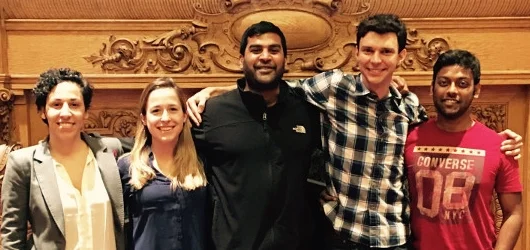
TextDirect was founded by Shashank Iyer, Anudeep Yegireddi, Tiago Sanfelice, Nitsan Shakked and Stephanie Leutert. TextDirect leverages mobile technology to increase adherence to malaria
PATIENT IDENTIFICATION CHALLENGE; UGANDA
PROVEN INTERVENTION TO BE DISTRIBUTED
TextDirect will introduce an automated system that sends mobile phone text messages reminders to patients.
Learn more about the Patient Identification Challenge and why identifying individuals in need of treatment suffering from health conditions such as obstetric fistula, cervical cancer, club foot, and cataracts which can be corrected with cost-effective interventions, could save lives.
DISTRIBUTION MODEL INNOVATION
Low adherence to antimalarial therapy jeopardizes the efficacy of treatment, leading to loss of productivity, higher mortality, and spread of the disease. By creating a mobile phone system through which health workers can register their patients for free reminders, we can scale this technology to clinics around the country.
The project will operate in Uganda, the country with the third-highest malaria morality rate in the world, and will target patients receiving Artemisinin-based Combination Therapy (ACT) which the World Health Organization recommends as the most effective treatment for malaria in Sub-Saharan Africa. Although the course of medication is fairly straightforward (typically three to four pills for three days), many patients fail to follow through due to perceived cure after the first dose. Inadequate use of ACT means that patients remain infected, increasing the risk of transmission to others while contributing to the appearance of drug resistant strains.
Setting up the project will consist of two main phases: establishing the text message system and operationalizing the program. TextDirect will activate a toll-free number, set up a database with two primary tables (health workers and patients), collect contact and medical information of malaria patients, and disseminate short text reminders to patients at the time when they are supposed to take their ACT dosage. Health workers will be incentivized with phone credit to sign up patients.
PILOT AND SCALING GOALS
- Grow from 15 to 45 participating health workers during the 3 months of the pilot
- Increase the number of patients receiving text massages from 150 to 1,150 during the pilot
- By year 1, over 84,000 patients will receive text messages and 324 health workers will sign up new patients
FOUNDING TEAM
Shashank Iyer - Executive Director
Nitsan Shakked - Chief Operating Officer
Anudeep Yegireddi - Chief Technology Officer
Siago Sanfelice - Chief Financial Officer
Sage
Sage is a data-driven distribution and finance company that makes solar energy, light, and life changing appliances attainable through long term payment plans. The Sage platform combines
SOLAR LAMP CHALLENGE; SENEGAL

PROVEN INTERVENTION TO BE DISTRIBUTED
Solar lamps and solar energy systems.
Learn more about the Solar Lamp Challenge and how these lamps create enormous benefits for developing world families.
DISTRIBUTION MODEL INNOVATION
Sage will use a scalable 12V solar energy system that delivers electricity via a PV panel, lithium ion battery, and USB connectors. The system has a 3-room light array and embedded pay-as-you-go technology allowing affordable monthly payments via mobile money. These systems meet the Lighting Global Quality Standards. Sage's intuitive pay-as-you-go platform allows customers to pay via mobile money, receive a numeric unlock code via SMS, and then enter that into a keypad on the system. Such innovation allows for efficient, secured payments in affordable increments.
Sage will leverage solar hardware and user payment data to build data driven customer relationships and profiles that capture what people have, want, and can afford. Sage CRM will aggregate payment and usage data, sales agent survey data, and responses from SMS communication. Continuously tuned analytics will create credit scores, improve sales operations, and personalize promotions.
PILOT AND SCALING GOALS
- Build out of branding / distribution in Senegal
- Onboarding and training of team of field agents
- Installation of approximately 400 solar home systems in rural Senegalese homes, generating monthly recurrent revenue of > $4,000
- Development of customer Relationship Management (CRM) and payment automation software.
- At 6 months, deploy 400 energy systems, 300 lighting packages, 100 TV packages
- At 6 months, reach 2,000 direct beneficiaries
FOUNDING TEAM
Dan Murphy- Co-founder and CEO
Matt Evans - Co-founder and President
Kat Harrison - Director of Field Research and Operations
Zero Violencia
Zero Violencia will prevent violence in Paraguay by distributing life skills development, a strategy recommended by the WHO as proven to reduce aggressive behavior in youth. They
CUSTOM CHALLENGE; PARAGUAY

PROVEN INTERVENTION TO BE DISTRIBUTED
Life skills programming for children.
Learn more about the Custom Challenge and why we only fund ideas that focus on distributing proven poverty interventions.
DISTRIBUTION MODEL INNOVATION
Statistics on violence in Paraguay are alarming. Studies have shown that 60% of children experience abuse at home, 20% of women are victims of domestic violence, and 70% of victims do not report the issue. Teachers report concerning levels of bullying and physical aggression even at elementary schools and one study has reported that 42% of violent episodes reported were related to sexual violence. These numbers do not capture long-term consequences of violent incidents like post-traumatic stress disorder, substance abuse, depression, or violent behavior.
Zero Violencia will develop a curriculum designed to foster WHO's 10 essential life skills: problem solving, critical thinking, effective communication, decision-making, creative thinking, interpersonal relationship skills, self-awareness building, empathy, and comping with stress and emotions. They will incorporate lessons that have successfully engaged youth in Paraguay in the past.
Distribution will begin in Coronel Oviedo, a city of 110,000 people that has been ignored by NGOs despite extremely high poverty levels. Their distribution plan includes four steps: build local partnerships, recruit and train facilitators, launch programs, and conduct evaluation.
PILOT and scaling GOALS
Reach 800+ children during the pilot
Reach 1140 children by the end of year 1
Reach 2880 children by the end of year 2
Reach another 4320 younger children by the end of year 2 through associated tutoring and games for a total of 7200 students.
FOUNDING TEAM
Estee Katcoff - Founder and CEO
Maria Martinez - Program Manager
Genaro Cardozo - Community Organizer
Laura Lopez - Youth Organizer
Kumwe Logistics
Kumwe Logistics is a tech-enabled brokerage that lowers the cost of transporting goods in East Africa. Freight transportation costs 60% more than in developed countries, which has a
CUSTOM CHALLENGE; RWANDA

PROVEN INTERVENTION TO BE DISTRIBUTED
Technologies and services used for logistics services and freight. Kumwe will stimulate the transporter network by building a platform to easily connect the organizations and individuals in need of transport with transporters.
Learn more about the Custom Challenge and why we only fund ideas that focus on distributing proven poverty interventions.
DISTRIBUTION MODEL INNOVATION
Freight transportation costs 60% more than in developed countries, which has a crippling effect on economic development. Kumwe is lowering these costs by connecting shippers and truck owners via an online marketplace. By working with Kumwe, shippers gain access to a larger network of price-competitive transporters, and these transporters gain access to more jobs. Kumwe started operation in Rwanda in August 2016 with 23 completed transports in the first month, and is expanding its operations into Uganda in early 2017.
Kumwe will establish a mobile-based freight brokerage system, Kumwe. Instead of searching for trucks through countless channels, you send one request to a freight broker, either through an online portal or directly through a person. You specify the load details - time, pick-up, drop-off, size, cargo type, etc. - and immediately receive quotes from several carriers. You then select one carrier, considering both the price and past service levels which the broker carefully tracks. Any issues with the transporter are reported back to the broker.
On the back end, the broker is primarily a digital platform. Drivers and their trucks are kept in a database; when a request for transport comes in, it is forwarded via mobile phone to carriers that meet the order needs. Drivers then use their mobile phones to bid on or ignore the request. Once you select a driver, the deal is confirmed and payment held by the broker. Upon completion of the job, drivers are rated by the customer based on metrics like on-time pickup, on-time delivery, cargo damage or shrinkage. After confirming there are no major issues, funds are released to the driver.
PILOT AND SCALING GOALS
Register 20 independent truck driers and freight companies
Establish 1-2 main partners to build volume backbone
Offer free trial period to get sticky with user base
Register 100 drivers and freight companies by the end of year 1
150+ transactions per day by year 2
FOUNDING TEAM
Cyril Khamsi
Chris Creyts
Nora Weisskopf
Charles Dokmo
Emily Gooding
REACH
REACH, founded by David Kafambe, Angelina Micha Djaja, Clara Bicalho and Eduardo Campillo, is a non-profit organization whose mission is to empower teachers and promote creative
FLIPPED CLASSROOM CHALLENGE; UGANDA

PROVEN INTERVENTION TO BE DISTRIBUTED
Flip the classroom intervention, providing schools with low-cost and sustainable learning materials and innovative instruction methods.
Learn more about the Flipped Classroom Challenge and why new education models, like flipping the classroom or deskilling a class curriculum, offer a solution to the vast teacher shortages in the developing world.
DISTRIBUTION MODEL INNOVATION
1. Provide students with government-approved textbooks with which they learn the lesson materials before coming to class each day.
2. Train teachers on how to facilitate engaging activities that use low-cost and easily accessible materials in order to further students' understanding of the topics studied at home. These materials are drawn from Bridge International's hands-on primary education tools.
For the pilot, the team identified Grade 6 as a critical year for intervening in the classroom and maintaining students' interest in school with the potential to significantly improve their learning outcomes and increase primary school completion rates. By focusing on Mathematics, they aim to enable all students to develop the quantitative skills required for them to succeed at Primary Leaving Examinations (Grade 7) and complete primary school. REACH will work in collaboration with education officers and schools in Uganda to create strategic partnerships to expand and strengthen the model.
Books donated during the implementation will be kept by each school and can be used by new student cohorts the following years. The team will build on the expertise of current teachers - who remain in one school for an average of 10 years - to ensure the quality and continuity of the project. The team will work closely with education officers and Center Coordinating Tutors to help supervise and scale the program. Teachers who have gone through the training and program will be able to join the REACH Fellowship Network.
PILOT AND SCALING GOALS
- Target 30 out of 256 public primary schools in Wakiso, the largest district in Uganda based on population.
- Benefit 15 teachers
- Reach between 1,500 and 1,800 students
- 2017: train an additional 120 teachers
- 2018: train an additional 300 teachers, reach 56,550 students
FOUNDING TEAM
Clara Bicalho- Operations Manager
David Kafambe- Training and External Relations Manager
Eduardo Campillo - M&E Manager
Angelina Micha Djaja- Finance and Logistics Manager
sharEd
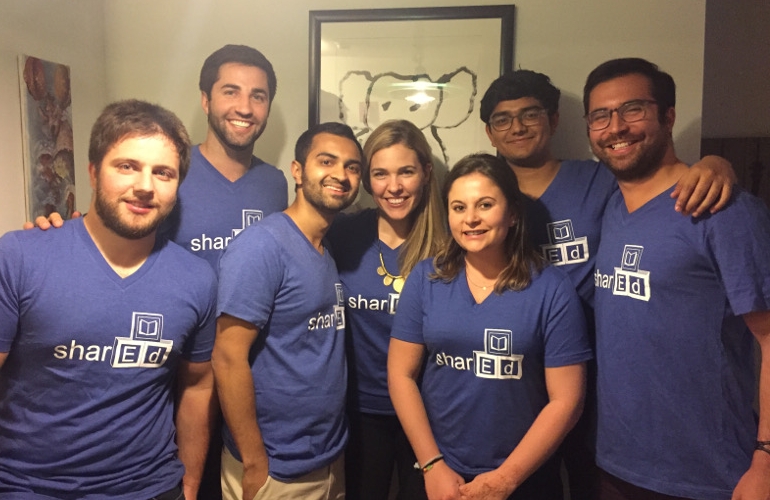
sharEd is improving early education in low-income communities in India by making high-quality educational curricula and resources accessible through an innovative new sharing model.
FLIPPED CLASSROOM CHALLENGE; INDIA
PROVEN INTERVENTION TO BE DISTRIBUTED
High-quality educational curricula and resources.
Learn more about the Flipped Classroom Challenge and why new education models, like flipping the classroom or deskilling a class curriculum, offer a solution to the vast teacher shortages in the developing world.
DISTRIBUTION MODEL INNOVATION
In low-income preschools across the globe, teachers stand in front of classrooms of 3 and 4-year-olds without any training in early childhood education (ECE) and without any materials to aid in play-based learning. Furthermore, low-income schools in countries like India and Bangladesh can't afford expensive, privately published curricula or the games and toys needed for age-appropriate instruction, so teachers make up lessons as they go. By lowering the cost of these materials through a subscription-based sharing model, sharEd operates as a solution provider to the affordable preschool market in India, helping schools to deliver quality education at a fraction of the cost.
Research has shown that quality preschool curricula, like Creative Curriculum, with structured step-by-step instructions can be an effective intervention even when run by an untrained teacher or facilitator. However, these products are too expensive for most schools. We realized that preschools using these products only use a fraction of their physical materials at any given time, while the rest sit on the shelf. With sharEd, instead of paying thousands of dollars to buy materials, schools can access quality resources immediately by renting one new learning unit each month for as low as $10. When schools subscribe, they get access to monthly themed lesson plans with structured activities, quality story books, and all the play materials they need for that unit.
Schools that subscribe to sharEd become part of a community of local teachers who meet every month. At monthly meetings, sharEd teachers return their materials, get a new themed lesson plan, and receive training in early education best practices and classroom management.
In order to reach customers, sharEd will leverage a two-pronged approach.
1. A top-down approach, targeting large groups of schools which are run through a public-private partnership with other non-profits and NGOs and the Indian government. These schools will pay no fee.
2. A bottom-up approach, targeting the fragmented private school market through a grassroots movement. The strategy will leverage sharEd's local teacher trainers to identify and sign up schools for a minimal monthly fee.
sharEd will operate in local markets by contracting experienced, trained teachers to rent out the materials and run monthly training sessions. These employees will be recruited by the Regional Program Director and paid a competitive rate to run training sessions.
PILOT AND SCALING GOALS
Onboard 20 preschools and reach approximately 600 children
2016-2017 school year will collect valuable feedback from pilot schools to improve the product and onboard 60 additional schools for the next school year
In 2017, scale to 80 classrooms and provide quality early education to another 2,400 children
In two years, provide quality early education to over 12,000 children and empower teachers wtih 3,300 total hours of training
In 2018, scale to 300 schools
FOUNDING TEAM
Bobby Powers - Chief Executive Officer
Nihar Shah - Chief Financial Officer
Kate Geremia - Chief Marketing Officer and Chief Procurement Officer
Derrick Wolbert - Chief Information Officer
Are you ready to be the next great social entrepreneur?