Union des Jeunes Filles pour le Développement
Union des Jeunes Filles pour le Développement (UJFD) leverages existing youth education programming in DR Congo to deliver and timely scale proven and cost-effective solutions that contribute to the reduction of risky of sex among adolescent girls, reduce teenage pregnancy and HIV infection rates.
SUGAR DADDY AWARENESS CHALLENGE; DEMOCRATIC REPUBLIC OF THE CONGO

PROVEN INTERVENTION TO BE DISTRIBUTED
Sugar Daddy Awareness classes.
Learn more about the Sugar Daddy Awareness Challenge and how a simple, one-hour “sugar daddy awareness” training could help countless girls avoid pregnancy while still in school, which can lead to entrenched poverty, and build a better life.
DISTRIBUTION MODEL INNOVATION
Union des Jeunes Filles pour le Développement (UJFD) leverages existing youth education programming in DR Congo to deliver and timely scale proven and cost-effective solutions that contribute to the reduction of risky of sex among adolescent girls, reduce teenage pregnancy and HIV infection rates.
UJFD will organize 1-hour anti-sugar daddy module to be delivered by experienced women/youth facilitators. This module will highlight the higher HIV risk of cross-generational relationships to limit risky sex and teenage pregnancies among adolescent girls. This module will be delivered through trained facilitators. UJFD will reach 50 schools during the pilot and reach over 5000 teenage girls in the South-Kivu Province.
Union des Jeunes Filles pour le Développement was started in 2020 by Elizabeth Pelele and Ahongo Zakaria Opulent.
PILOT AND SCALING GOALS
Reach 5,000 students during the three-month pilot
Organize 100 Sugar Daddy classes
Number of schools reached (50)
Reach 25,000 students by the end of year 1
FOUNDING TEAM
Elizabeth Pelele - Co-Founder and Coordinator
Ahongo Zakaria Opulent - Co-Founder and Program Manager
YeneHealth
YeneHealth's mission is to reach, educate, and enhance women’s confidence in the use of contraceptives with the goal of addressing the unmet need for family planning in Ethiopia.
SAYANA PRESS CHALLENGE; ETHIOPIA

PROVEN INTERVENTION TO BE DISTRIBUTED
Sayana Press injectable contraceptive.
Learn more about the Sayana® Press Challenge and why training health providers to administer Sayana® Press can be particularly valuable for women who prefer injectable contraceptives but don’t have regular access.
DISTRIBUTION MODEL INNOVATION
YeneHealth's mission is to reach, educate, and enhance women’s confidence in the use of contraceptives with the goal of addressing the unmet need for family planning in Ethiopia. YeneHealth’s pilot and first two years of operations focuses on reaching women living in the Addis Ketema region.
The YeneHealth model is based on three core elements which will be delivered through digital technology and trusted Urban Health Extension Workers.
Education and Awareness: Content we will disseminate on a web-based/mobile platform
Access to Contraceptive(s) (Sayana Press): Partnership-based distribution channel with Urban Health Extension Workers
R&D: Data collection system and analytics to inform our distribution operations and support resource allocation in alignment with Ethiopia’s Family Planning 2030 (data-informed policy advocacy)
The YeneHealth model strives to engage women directly, learn rapidly, iterate to improve, and fast-track to reach economies of scale.
YeneHealth is founded by Kidist Tesfaye who is a young social-entrepreneur with a demonstrated history of working in the healthcare, education, and start-up ecosystem for over a decade. She holds a Masters degree in Education/Entrepreneurship from Harvard University and a Bachelors degree in Public Health, Global Studies and Strategic Communications from the University of Minnesota.
PILOT AND SCALING GOALS
Provide 200 women with access to Sayana Press and enroll them in the digital platform during the pilot
Fundraise a minimum of $100,000 from new donors or investors in the first year of operations
Reach 3,750 beneficiaries by the end of year 1
Reach 62,000 beneficiaries by the end of year 2
FOUNDING TEAM
Kidist Tesfaye - Founder
ChildACT
ChildACT increases routine childhood immunizations in Nigeria through SMS reminders to caregivers and supportive community engagement.
IMMUNIZATION CHALLENGE; NIGERIA

PROVEN INTERVENTION TO BE DISTRIBUTED
Routine childhood immunizations.
Learn more about the Immunization Challenge and how increasing routine childhood immunization rates in low-coverage areas could prevent millions of childhood deaths.
DISTRIBUTION MODEL INNOVATION
ChildACT increases routine childhood immunizations through SMS reminders to caregivers and supportive community engagement. The team envisions reaching two-thirds of Nigerian children to secure vaccinations by their first birthday.
ChildACT invests in communities through social mobilization and provides SMS reminders towards immunization of children and purposeful development. The team is motivated to realize this vision with experience in private sector efficiency, public health, and community relations. The team will mobilize stakeholders to improve and support immunization demand, while empowering caregivers through a reminder system to access immunization for children in their care.
PILOT AND SCALING GOALS
1,200 children immunized in the pilot who otherwise would not be
5,000 SMS reminders sent during the pilot period
Reach 20,000 beneficiaries by the end of year 1
FOUNDING TEAM
Joan Alaboson - Project Lead
Screensavers Initiative
Screensavers Initiative reduces morbidity and mortality due to cervical cancer by increasing access to cervical cancer screening using VIA in Uganda.
PATIENT IDENTIFICATION CHALLENGE; UGANDA

PROVEN INTERVENTION TO BE DISTRIBUTED
Cervical cancer screenings.
Learn more about the Patient Identification Challenge and why identifying individuals in need of medical treatment and finding ways to make that treatment accessible reduces poverty.
DISTRIBUTION MODEL INNOVATION
Screensavers Initiative reduces morbidity and mortality due to cervical cancer by increasing access to cervical cancer screening using VIA among populations with unmet need.
The Screensavers model employs outreach clinical services using satellite clinics and a community participatory client recruitment process characterized by two components: (i) using community health volunteers locally known as village health teams (VHTs) to provide women with education and information hence enabling them to make informed decisions about cervical cancer screening and (ii) ensuring that women who receive screening services are satisfied and encourage other women to attend. The model is deliberately focused on sustainability, which is why the team works to ensure that programs are championed through community and government support structures. The project pilot will launch in Kalungu district before scaling to cover other districts in Uganda and beyond.
PILOT AND SCALING GOALS
Screen 200 women during the pilot and refer any positive cases for treatment and follow-up
Raise an additional $30,000 during the pilot period
Screen 1,000 women by the end of year 1
Screen 10,000 women by the end of year 2
FOUNDING TEAM
NAGIRINYA AIDAH - Team Lead
NALUKWAGO COSTARITAH - Project Coordinator
SSALI DENIS - Monitoring and Evaluation Officer
AGABA COLLINS - Field Coordinator
OSMER SARL
OSMER SARL expands access to affordable and sustainable solar lighting systems in rural Togo.
SOLAR LAMP CHALLENGE; TOGO

PROVEN INTERVENTION TO BE DISTRIBUTED
Solar lamps.
Learn more about the Solar Lamp Challenge and how these lamps create enormous benefits for developing world families.
DISTRIBUTION MODEL INNOVATION
OSMER SARL expands access to affordable and sustainable solar lighting systems in rural Togo. Its distribution model recruits local leaders, 70% of them women, to handle sales and installation with a credit component to help make products affordable.
The founding team is made up of passionate professionals with proven and complementary skills that have been involved in expanding energy access in rural Togo since 2020.
PILOT AND SCALING GOALS
Distribute 675 solar lamps during the pilot, reaching 2,700 beneficiaries
Raise an additional $5,000 during the pilot
Reach 12,000 beneficiaries by the end of year 2
FOUNDING TEAM
Salma Bougoune - Project Manager
Anani Finouh - Technical Sales Manager
Mawunyo Aziave - Financial, Administrative, and Communication Manager
Briaze Health Initiative
Community Health Initiative distributes the self-injectable contraceptive Sayana Press through a network of private practitioners in Uganda.
SAYANA PRESS CHALLENGE; UGANDA

PROVEN INTERVENTION TO BE DISTRIBUTED
Sayana Press injectable contraceptive.
Learn more about the Sayana® Press Challenge and why training health providers to administer Sayana® Press can be particularly valuable for women who prefer injectable contraceptives but don’t have regular access.
DISTRIBUTION MODEL INNOVATION
Briaze Health Initiative utilizes a ‘Private Practitioner Model’ to increase access and utilization of Sayana Press among women in Mukono District. The distribution model is unique because it seeks to train private practitioners on how to teach women to self-inject Sayana Press at their comfort.
BHI intends to reach 500 women in 3 months and 100,000 women in 5 years. Women seeking Sayana Press at private practitioners will pay a modest service fee to keep private practitioners motivated to give women transparent information and education.
PILOT AND SCALING GOALS
Through 20 private practioners, train 500 women to self-inject 1000 doses Sayana Press
Raise an additional $25,000 during the pilot period
Reach 2,500 beneficiaries by the end of year 1
Reach 20,000 beneficiaries by the end of year 2
FOUNDING TEAM
Bridget Kyobutungi - Team Lead
Esther Nakyaze - Project Coordinator
Catherine Nakiganda - Business Development Manager
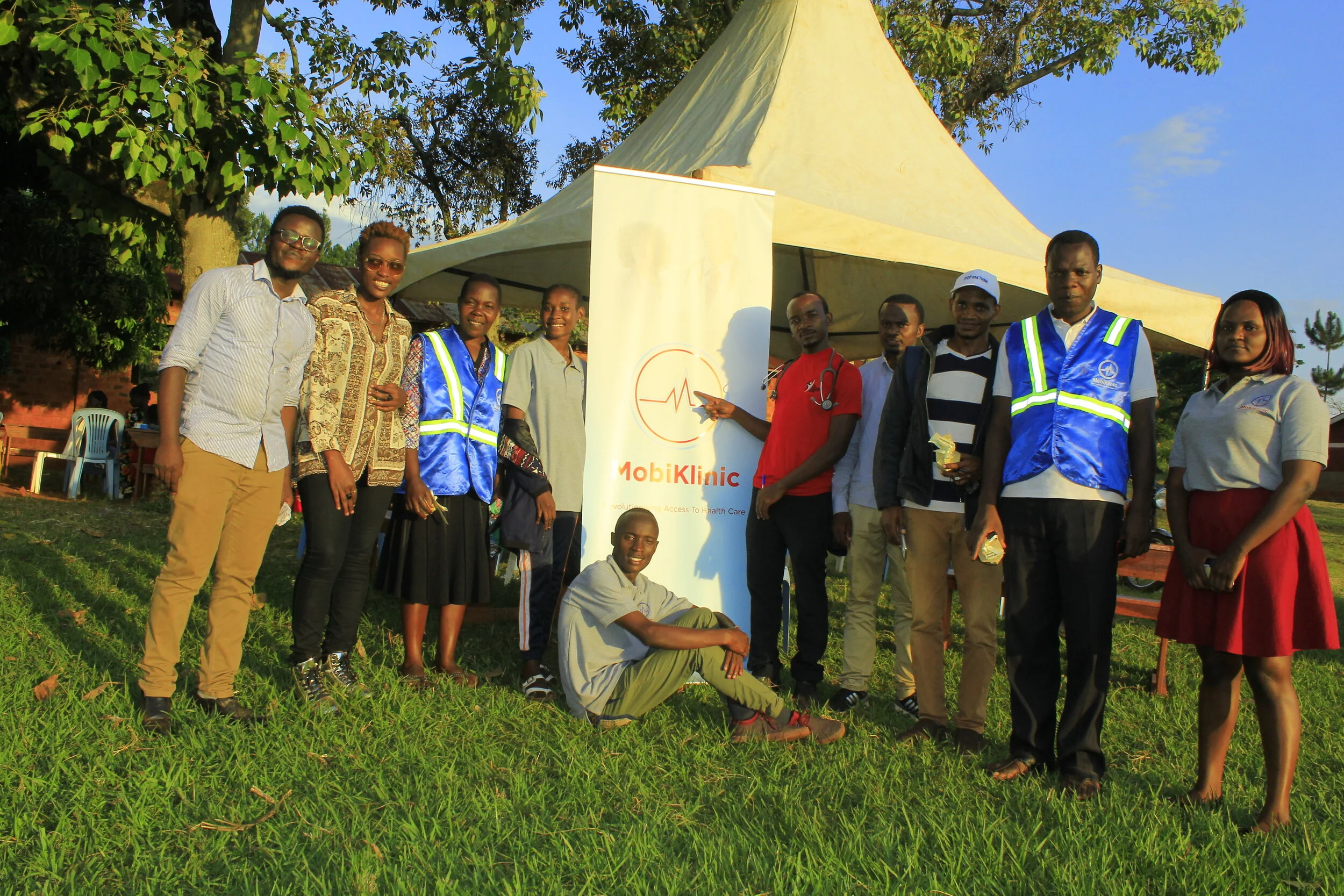
Mobiklinic
Mobiklinic distributes the self-injectable contraceptive Sayana Press to last mile areas of Uganda.
SAYANA PRESS CHALLENGE; UGANDA
PROVEN INTERVENTION TO BE DISTRIBUTED
Sayana Press injectable contraceptive.
Learn more about the Sayana® Press Challenge and why training health providers to administer Sayana® Press can be particularly valuable for women who prefer injectable contraceptives but don’t have regular access.
DISTRIBUTION MODEL INNOVATION
Mobiklinic distributes the self-injectable contraceptive Sayana Press to last mile areas of Uganda, beginning in Buikwe District, Eastern Uganda.
Mobiklinic trains and deploys Community Health Providers who will distribute Sayana Press and training to women. A custom digital platform allows Community Health Providers to send feedback and data to a central point, easing communication with the founding team.
Mobiklinic was started by Andrew Ddembe and Barbara Nabigambo. Andrew is a paralegal, innovator, social entrepreneur and health equity activist, and serves as the CEO of Mobiklinic. Barbara is an accountant and women’s health activist.
PILOT AND SCALING GOALS
Provide 1,000 women with access to Sayana Press and raise an additional $10,000 during the pilot
Reach 15,000 beneficiaries by the end of year 1
Reach 30,000 beneficiaries by the end of year 2
FOUNDING TEAM
Andrew Ddembe - Founder
Barbara Nabigambo - Co-Founder
Wezesha
Wezesha is a digital communication platform for the primary healthcare sector, which uses accessible technology to enhance two-way communication between patients, service providers and government institutions.
TRANSPARENCY CHALLENGE


PROVEN INTERVENTION TO BE DISTRIBUTED
A digital platform that enhances two-way communication in the healthcare sector between patients, service providers, and government institutions.
Learn more about the Transparency Challenge and how citizen reporting platforms can be used to hold government officials accountable and reduce corruption.
DISTRIBUTION MODEL INNOVATION
Wezesha is a digital communication platform for the primary healthcare sector, which uses accessible technology to enhance two-way communication between patients, service providers and government institutions. As a patient arrives at the clinic they are prompted to register on Wezesha through their mobile phone using USSD technology. After receiving services at the clinic, the patient will be prompted by Wezesha to respond to <5 questions relating to their experience. For example, a patient seeking antenatal care may be asked to rate the quality of the service provided by responding to specific questions about their interaction with the care provider.
Wezesha aggregates this digital data over time and across geographic areas to analyse how patient experience differs. Data is shared with partners in government and service providers, who can then make decisions on how to adjust service provision. This becomes a major lever for improving service quality and patient experience. Once this digital communication channel is established between Wezesha and patients, government and service providers can use this as an outbound channel to directly reach patients. For example, a patient with a chronic condition who needs to return to the facility regularly, can receive a digital prompt via SMS.
This solution is based on evidence provided from research which indicates that improving data, communication and strengthening systems of accountability within primary healthcare leads to enhanced citizen experience and healthcare outcomes.
PILOT AND SCALING GOALS
Partner with 3-5 primary healthcare facilities in the first three months
1,000 citizen engagements in the first three months
Operate within 100 primary healthcare facilities by end of year 2
500,000 citizen engagements by end of year 2
Expand into two additional countries and/or sectors by end of year 5
FOUNDING TEAM
Simon DeBere - Co-founder
Robert Smith - Co-founder
The Taimaka Project
The Taimaka Project’s mission to tackle food insecurity in Northeastern Nigeria began with the implementation of a post-harvest loans (PHL) program that delivered crop storage bags and a small loan to rural farmers to help them save their crops and sell when prices were up to 50% higher.
CUSTOM AGRICULTURE CHALLENGE; NIGERIA

PROVEN INTERVENTION TO BE DISTRIBUTED
Taimaka was awarded D-Prize pilot funding for the distribution of post-harvest credit and storage to help farmers save and avoid lean season poverty and hunger.
Learn more about the Custom Agriculture Challenge and why distributing proven agricultural interventions can greatly improve the livelihoods of smallholder farmers.
DISTRIBUTION MODEL INNOVATION
The Taimaka Project’s mission to tackle food insecurity in Northeastern Nigeria began with the implementation of a post-harvest loans (PHL) program that delivered crop storage bags and a small loan to rural farmers to help them save their crops and sell when prices were up to 50% higher.
After a large-scale RCT with UC-Berkeley and Stanford showed that PHLs was cost-effective but lower than the bar Taimaka sets for its own work, Taimaka made the hard decision to transition away from the PHLs program in favor of another way we had begun to tackle food insecurity in the same communities – treating children with malnutrition.
Taimaka currently runs a treatment program that 1) delivers life-saving treatment to children in Nigeria and 2) serves as an incubator for cost-effective innovations that can either improve the quality, decrease the costs, or simplify the delivery of malnutrition treatment so that the 45.4 million children who need it can get it (only 20-30% currently get treatment). Because malnutrition is the leading cause of childhood deaths globally, and because millions are already spent on treatment every year, even marginal improvements can yield high impact. A reduction in the cost of treatment by just 1% would free up over $3.4 million currently spent globally on treatment to treat an additional 50,000 children.
PILOT AND SCALING GOALS
Post-Harvest Loans Pilot:
Distributed PHLs to 1,000 smallholder farmers in Nigeria
Generated an additional $25,000 in post-harvest income for farmers
Malnutrition Scaling Goals:
Test 3-4 candidate innovations in annual portfolios
Push at least 1 innovation to scale to reach 20% of treated children by Year 5
Reduce the cost-per-life saved of malnutrition treatment by 10% by Year 5
FOUNDING TEAM
Justin Graham - Co-founder
Abubakar Umar - Co-founder
Muhammad Uba - Co-founder
Parth Ahya - Co-founder
Justin Graham is Taimaka’s Executive Director and an Oxford graduate with a background in evidence-based development and quantitative economics. Abubakar Umar is Taimaka’s Medical Director and a former pediatrician with the Nigerian government. Muhammad Uba and Parth Ahya now serve on the board.
Koi Koi Stories Uganda Limited
Through empowering traditional birth attendants, Koi Koi Stories increases community access to the lifesaving misoprostol drug to reduce post partum haemorrhage, the leading cause of maternal mortality among the rural underserved women of Moroto District, Uganda.
MATERNAL HEALTH CHALLENGE; UGANDA

PROVEN INTERVENTION TO BE DISTRIBUTED
Misoprostol.
Learn more about the Maternal Health Challenge and how the distribution of Misoprostol, a $3 drug that can prevent maternal deaths from postpartum hemorrhage, could save thousands of lives.
DISTRIBUTION MODEL INNOVATION
Through empowering traditional birth attendants, Koi Koi Stories increases community access to the lifesaving misoprostol drug to reduce post partum haemorrhage, the leading cause of maternal mortality among the rural underserved women of Moroto District, Uganda.
Moroto District has a very high maternal mortality rate at 420 deaths per 100,000 live births. Due to long distances to health facilities, most women die from postpartum hemorrhage in the communities as they try to deliver under the care of unskilled traditional birth attendants. Our model seeks to train traditional birth attendants on the appropriate use of misoprostol (an approved low cost uterotonic drug), and create linkages for them with the health facilities to allow them access the drug supplies and appropriately and timely administer these drugs at community level to save the lives of mothers and their newborns.
PILOT AND SCALING GOALS
Reach 1,680 women during the pilot phase
Raise $10,000 of funding during the pilot phase
Train 5,000 Traditional Birth Attendants by the end of year 2
Reach 50,000 women by the end of year 2
FOUNDING TEAM
Bryan Innocent Tumusiime - Team Lead
Mary Ajwang - Project Coordinator
Precious Mutoru Kerunga - M&E Officer
Dinnah Odonya - Field Trainer
Abigail Antwi - Founding Member
Civis
Civis encourages and empowers accountability and active citizenship in the development of laws and policies in India.
TRANSPARENCY CHALLENGE; INDIA

PROVEN INTERVENTION TO BE DISTRIBUTED
A mobile platform that enables citizens to understand legislation and share their feedback on laws and policy decisions in local languages while providing an avenue for the government to understand citizens’ priorities and gather feedback on policies in real time.
Learn more about the Transparency Challenge and how citizen reporting platforms can be used to hold government officials accountable and reduce corruption.
DISTRIBUTION MODEL INNOVATION
At Civis we are building a scalable, multi sided platform, to ensure that the process of public consultations can be effectively used by citizens and governments alike, to co-create laws together. We do this by:
Aggregating all open Consultations seeking feedback.
Simplifying them in accessible language.
Reaching out to individuals and gathering inputs on these laws.
Analysing and sharing citizen’s feedback with the Government - thereby building Government capacity to run effective Consultations, and gather actionable insights.
PILOT AND SCALING GOALS
10,000 users by the end of pilot phase
100,000 users by the end of year 1
1,000,000 users by the end of year 2
FOUNDING TEAM
Antaraa Vasudev - Founder
Men's Behavior Change Toward VMMC
The team will collaborate with local health centers to provide VMMC services and improve access to the procedure in hard to reach areas of Rwanda.
VMMC CHALLENGE; RWANDA

PROVEN INTERVENTION TO BE DISTRIBUTED
Voluntary Medical Male Circumcision (VMMC).
Learn more about the VMMC Challenge and why scaling up voluntary medical male circumcision can substantially reduce the rate of HIV acquisition for men, and also reduce the risk of transmission of high-risk human papillomavirus (HPV) to the men’s partners.
DISTRIBUTION MODEL INNOVATION
In rural areas, many Rwandans don’t have access to Voluntary Medical Male Circumcision. Other barriers to the service are cultural norms and a lack of information about VMMC. What’s more, there are often insufficient medical clinics and trained health professionals available to perform the procedure.
The 3 month pilot will highlight the high risk of HIV transmission in uncircumcised men in remote areas of Rutsiro district through grassroots mobilization campaigns for VMMC awareness. Their team will collaborate with local health centers to provide VMMC services and improve access to the procedure in hard to reach areas. Through performances by local artists, the project team will conduct 20 mobilization campaigns (4 campaigns per sector, covering 5 rural sectors, reaching at least 8000 people) about VMMC for HIV prevention.
PILOT AND SCALING GOALS
Reach 800 men with the service during the pilot phase
Reach 12,000 men with the service by the end of year 2
FOUNDING TEAM
Jean Pierre Imanishimwe - Founding Member
Fidele Murava - Founding Member
Janviere Mugoragoze - Founding Member
ThinkZone
While 97% of Indian children enrol in schools, over 40% dropout before by age 12. The high dropout rates and poor learning outcomes eventually contribute to a huge deficit in the
FLIPPED CLASSROOM CHALLENGE


PROVEN INTERVENTION TO BE DISTRIBUTED
‘School-in-a-box’.
Learn more about the Flipped Classroom Challenge and why new education models, like flipping the classroom or deskilling a class curriculum, offer a solution to the vast teacher shortages in the developing world.
DISTRIBUTION MODEL INNOVATION
ThinkZone empowers parents and educators to develop foundational skills of children by leveraging accessible tech solutions and community-led interventions. We enable community educators, childcare workers, and school teachers to deliver quality early-grade education programs via data-driven mobile and voice/SMS based technology, low-cost learning resources, and class management tools.
PILOT AND SCALING GOALS
15 women entrepreneurs onboarded during the pilot phase
450 students enrolled during the pilot phase
FOUNDING TEAM
Binayak Acharya - Founder
Are you ready to be the next great social entrepreneur?