Nena Foundation
NENA foundation's mission is to identify women suffering from obstetric Fistula and connect them to hospitals offering free treatment and corrective surgeries.
PATIENT IDENTIFICATION CHALLENGE; KENYA

PROVEN INTERVENTION TO BE DISTRIBUTED
Using radio and SMS to identify obstetric fistula and transport patients to hospitals offering free services.
Learn more about the Patient Identification Challenge and why identifying individuals in need of medical treatment and finding ways to make that treatment accessible reduces poverty.
DISTRIBUTION MODEL INNOVATION
In Kenya, it is estimated that obstetric fistula (OF) occurrence stands at 3 to 4 women for every 1,000 deliveries. Most available literature states that each year, an estimated 3,000 new cases of OF are reported in Kenya with only 7.5% of these women able to access medical care for the condition. These statistics are problematic as they are mostly hospital based and not fully indicative of the magnitude of the problem. With a majority of births in Kenya taking place at home, there is less data for OF outside hospitals and in the rural areas where the problem is most rife.
The operational model consists of four major phases: awareness raising of the intervention via radio broadcasts and bulk SMS and identification of OF patients within Kericho County; connecting with beneficiaries in need of treatment and transporting them to a healthcare facility providing free treatment; treatment, rehabilitation and counseling of the women; and monitoring and evaluation of the pilot intervention to ensure achievement of objectives and responsiveness to ensure ristsks are addressed
The preferred method through which potential beneficiaries will contact Nena Foundation will be through sending an SMS to a number that would have been shared via radio and bulk SMS outreach. Once a person is identified via SMS or call, Nena Foundation will schedule a time to call the woman with OF to ascertain the exact extent of the condition. The Patient Transport Service represents a significant part of operations and will involve the transportation of patients to the healthcare facility offering free treatment: the Gynocare Fistula Women's Hospital in Eldoret. The woman will be contacted after the screening and informed of when her appointment is with sufficient time to communicate if the appointment date fits their schedule.
PILOT AND SCALING GOALS
120 people reached by the end of the pilot phase
1,000 people reached by the end of year 1
2,500 people reached by the end of year 2
FOUNDING TEAM
Faith Sigei - Co-Founder, Medical Manager
Godwin Bett - Co-Founder, Operations and Finance Manager
Shalom Ndiku - Co-Founder
Mobilized Construction
Mobilized Construction has developed a smart IoT device to measure and assess road conditions in real-time. Utilizing geospatial data from accelerometers, we calculate International Roughness Index...
CUSTOM CHALLENGE; KENYA

PROVEN INTERVENTION TO BE DISTRIBUTED
A proprietary software platform that enables coordinated, micro-contracted local labor to rehabilitate dirt roads.
Learn more about the Custom Challenge and why we only fund ideas that focus on distributing proven poverty interventions.
DISTRIBUTION MODEL INNOVATION
Infrastructure, like roads, have been identified as the largest enabler of economic development. Transportation accounts for 50% of the cost of a product in rural areas. Mobilized Construction has developed a proprietary software to complement existing road repair processes to build ease of use for local project planners. Data-collectors and civil engineers currently document road conditions by hand or use expensive vehicles equipped with sensors.
The second part of Mobilized Construction's platform is the Desktop Road Assessment Management tool for transportation planners and program managers to prioritize and assign repair work to manual laborers. Currently managers decide on road repair priorities based on intuition, community requests, or public pressure. This tool will equip individuals with data to make more equitable and inclusive decisions. The system will formalize informal and unskilled labor as well as create jobs for women and youth.
The third part of the platform is the Field Supervisor mobile application for supervisors and field laborers to receive micro road repair contracts. After tracking daily progress and completing repairs, data collectors certified complete by measuring road conditions again and wages to laborers are transferred via mobile payments like M-Pesa.
PILOT AND SCALING GOALS
At the 6 month mark, 30-50 kilometers of road will be repaired
30,000 lives will be impacted by the end of 6 months
100-150 kilometers of road will be repaired by the end of year 1
250,000 lives will be impacted by the end of year 1
FOUNDING TEAM
Kevin Lee - CEO
Gregory Islas - Data Scientist
Jens Egholm - CTO
Livelyhoods / iSmart
Maria co-founded Livelyhoods in 2011, and will launch the iSmart network to distribute clean-burning cook stoves as replacements for dangerous
COOK STOVE CHALLENGE; KENYA

PROVEN INTERVENTION TO BE DISTRIBUTED
Efficient cook stoves.
Learn more about the Cook Stove Challenge and how clean cook stoves reduce health and safety risks, lower fuel expenses, and help reduce poverty.
DISTRIBUTION MODEL INNOVATION
LivelyHoods operates a distribution network for clean-burning cook stoves. Their branded retail network consists of customer service centers and uniformed sales representatives, reaching the most hard-to-reach households in urban slum and peri-urban communities.
The mission is to create livelihoods opportunities for youth in urban slums so they can work their way out of poverty and actualize their potential. LivelyHoods employs youth from slums to sell life-changing products in their communities. The model includes a strong retail brand, increasing professional sales talent of youth form slums, and financing inventory through a third party partner, Kiva.
The curated product line is sold through a retail network which consists of customer service centers and uniformed sales representatives. While the best selling products are clean-burning cook stoves, they also offer a wide range of other high-impact products, ranging from water filters to solar lamps to reusable sanitary pads.
PILOT AND SCALING GOALS
- Sell 5,156 clean burning cook stoves in 2014
- Train 500 youth and create 100 jobs in 2014
- Sell 89,959 cook stoves in 2015 and 2016
- Train 6,250 youth and create 1250 jobs, impacting the lives of 449,795 people in 2015 and 2016
FOUNDING TEAM
Tania Laden - Co-Founder, Executive Director
Watch Me Go
Katie launched Watch Me Go, a crowd-sourced funding platform to provide education scholarships for girls in Kenya. Watch Me Go will allow donors to build a virtual classroom of
SCHOLARSHIP CHALLENGE; KENYA
PROVEN INTERVENTION TO BE DISTRIBUTED
Scholarships to help send girls to school.
Learn more about our current distribution challenges and why we focus on interventions that are proven to impact lives.
DISTRIBUTION MODEL INNOVATION
Watch Me Go is a crowd-sourced funding platform to provide education scholarships for girls in Kenya. Watch Me Go will allow donors to build a virtual classroom of smart girls in need of secondary school scholarships, track progress online and send more girls to school.
PILOT AND SCALING GOALS
- Raise funds to send 100 girls to attend school during the pilot phase
FOUNDING TEAM
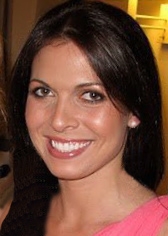
Katie Wood - Founder and Director
Maisha Meds
Stanford and UC Berkeley students founded Miti Health. The venture is building an Android-based platform to help health care providers in East Africa streamline sales,
PATIENT IDENTIFICATION CHALLENGE; KENYA

PROVEN INTERVENTION TO BE DISTRIBUTED
Technology that provides high-quality, affordable, and consistent treatment for patients in the form of an android-based system that tracks sales, manages inventory, and automates reordering of pharmaceuticals.
Learn more about the Patient Identification Challenge and why identifying individuals in need of treatment suffering from health conditions such as obstetric fistula, cervical cancer, clubfoot, and cataracts which can be corrected with cost-effective interventions, could save lives.
DISTRIBUTION MODEL INNOVATION
Maisha Meds improves distribution of pharmaceutical medication in Kenya by developing and implementing a technology platform that supports pharmacists (called chemists in Kenya), nurses, and other healthcare providers to manage their business and make better choices as they reorder medication. Supply of pharmaceutical drugs can be difficult in Kenya, as distance to suppliers and intermittent communication pose challenges for the distribution of medication. With an estimated 1/3 of medication in East Africa being sub-standard or counterfeit, uncertainty about quality of medication supply chain creates additional complexity for providers hoping to stock high-quality medication.
In the first year of operation, with funding from Stanford University, Maisha Meds built a team of strategists, technologists, and implementers focused on building systems for scale; and the team has conducted extensive market research on the technology needs of the health sector in East Africa. Using the information from this research, the team has developed an Android-based application and we have begun testing it in chemist shops. The system includes the following components:
Android-based system that tracks sales, manages inventory, and automates reordering to streamline supply chains and optimize business practices
Technology systems and random spot-checks to monitor and provide information on quality of medication throughout the supply chain
Maisha Meds intends to pilot the cost-recovery sales model that they will use at scale, as well as test and refine the quality-control component in partnership with 3-5 small scale distributors of medication in Kenya. This model will include a monthly subscription service to pay for the tablet, application, stand, data plan, and warranty, as well as ad sales integrated into the application to partially fund management and overhead cost for the organization. For more, please see this fact sheet.
PILOT AND SCALING GOALS
Sell or lease the android system to 20 providers during the pilot phase
Sell or lease the android system to 200 providers at the end of year 1
Work in partnership with 10 distributors by the end of year 1
Randomly test 5% of medication available by the end of year 2
Operate in 15,000 chemist shops and clinics as well as serve over 200 suppliers in five countries in five years
FOUNDING TEAM
Jessica Vernon - Team Lead
Benjamin Jenson - Business Development
Tammu Guo - Product Development
Nick Singer - Operations
Margaret Mumbi - Special Projects
Michael Jurka - Technology
1Room
RARE Education is developing a radically affordable model of delivering high-quality secondary education. RAREwill support students through an
FLIPPED CLASSROOM CHALLENGE; KENYA

PROVEN INTERVENTION TO BE DISTRIBUTED
A self-directed, digital learning program.
Learn more about the Flipped Classroom Challenge and why new education models, like flipping the classroom or deskilling a class curriculum, offer a solution to the vast teacher shortages in the developing world.
DISTRIBUTION MODEL INNOVATION
1Room will operate modular learning pods where students pursue individual study plans using tablet PCs and other media, under the guidance of a pod leader. 1Room's pods will be albe to operate in rural and remote environments with limited infrastructur and at half the cost of regular high schools.
1Room's approach is guided by departures from traditional education: 1. students will study at a content level and pace that is right for them; 2. student activities and responses to questions will be recorded digitally and inform educational decision-making at an individual and institutional level through cutting-edge data analytics; 3. staff decisions on scheduling access to study resources, scheduling one-on-one time, and assigning study content will be supported by data-rich models and optimization methods accessible with a few clicks on a smart phone; 4. staff compensation will be linked to objective measures of effort and effectiveness.
We will curate our content library and eventually develop original content in close partnership with two research labs in India which are pioneering table and phone-based education for students in developing countries. Pod Leaders will help students set goals, form study plans, offer remedial teaching when students hit difficulties, and deliver certain content not covered sufficiently by othe rresources. Geographically proximate clusters of 8-12 pods or classrooms with students using our tech enabled education at various levels, will be supervised by a cluster manager.
PILOT AND SCALING GOALS
- Reach 400 students during pilot phase
- Scale to more than 450 students after year 1
- Reach 50,000 students by year 4
FOUNDING TEAM
Michael Beeler - Founder and Director
Julius Tapper - Strategy and Business Design
Sadia Rafiquddin - Resource Development
Deevabits Green Energy
Deevabits Green Energy (DGE) was founded by David Wanjau. This new social enterprise will distribute solar lamps to improve the livelihoods and prosperity of the rural poor. DGE uses
SOLAR LAMP CHALLENGE; KENYA


PROVEN INNOVATION TO BE DISTRIBUTED
Solar Lamps.
Learn more about the Solar Lamp Challenge and how these lamps create enormous benefits for developing world families.
DISTRIBUTION MODEL INNOVATION
Kenya has a population of 44.4 million and 75% of Kenyan homes use kerosene lamps as a source of light. In rural areas, only 7% of the population has access to electricity, and these families spend 30% of annual income on inefficient sources of light like kerosene. Deevabits Green Energy will solve these problems by distributing solar lamps that are cost effective, provide up to 15 times more illumination than kerosene lamps, and pay for themselves in less than a year for most households. Solar lamps will be distributed through a group of Village Solar Entrepreneurs, group composed of youth and women.
Village Solar Entrepreneurs are empowered and supported by Deevabits Green Energy to establish micro-enterprises distributing solar lamps in villages. If a group cannot afford the solar lamps, Deevabits will provide them with a start pack of 10 solar lamps on credit, re-stocking the entrepreneurs upon full payment of the previous solar lamps.
PILOT AND SCALING GOALS
- Support 10 Village Solar Entrepreneurs during the pilot
- Sell or distribute 600 solar lamps during the pilot
- Reach 600 households during the pilot
- Support 70 Village Solar Entrepreneurs by year 1
- Sell or distribute 15,900 solar lamps by year 1
- Reach 15900 households by year 1
FOUNDING TEAMS
David Wanjau - Founder
PayGo Energy
PayGo Energy solves the root causes for reliance on inefficient fuels by removing key cost and supply barriers to modern energy. The PayGo smart meter technology enables micro-asset
CUSTOM CHALLENGE; KENYA
PROVEN INTERVENTION TO BE DISTRIBUTED
A PayGo Energy device which couples onto any cylinder in the Liquefied Petroleum Gas (LPG) ecosystem and leverages mobile money and machine to machine technology to deliver LPG on a pay-as-you-go basis.
Learn more about the Custom Challenge and why we only fund ideas that focus on distributing proven poverty interventions.
DISTRIBUTION MODEL INNOVATION
Liquefied Petroleum Gas (LPG) is the de facto cooking fuel for developed nations because it is clean (50 times less polluting than charcoal) and affordable. However, BOP customers are traditionally financially excluded from LPG due to the high upfront cost and rigid payment system. The LPG supply chain and retailer hub infrastructure is already in place in Kenya and other countries to reach BOP customers but marketers and retailers need a smarter distribution model and product to reach urban and rural BOP customers and fit within their daily budget.
The PayGo Energy device delivers payment, location, and LPG usage data at the unit level through GSM technology. Partners receive critical insights into customer usage that helps them deploy their fleet more effectively. In urban areas, they are able to maintain their cylinder fleet within informal settlements through orchestrated refilling runs, combating illegal refilling and increasing customer retention. Within rural settings, where BOP customers do not have the benefit of a robust LPG retailer network, location and consumption data will provide the insights necessary for a paradigm shift in distribution.
PayGo Energy will partner with LPG marketers and overlay onto the existing LPG infrastructure. Due to the fragmented nature of the retailer and gas station LPG ecosystem, prioritizing marketer partnerships over retailer partnerships is a fundamental component of our strategy. The PayGo smart meter technology enables micro-asset financing and pay-as-you-go functionality that critically align with BoP customers’ variable income streams. The business model will be a service fee per transaction.
PILOT AND SCALING GOALS
- Fabricate 10 units during the pilot
- Install in 10 households during the pilot
- Post 100 household PoM, team will seek Series A funding to build network capacity, reduce unit cost, and build full operations to handle up to >100,000 households with one or more marketer partners
FOUNDING TEAM
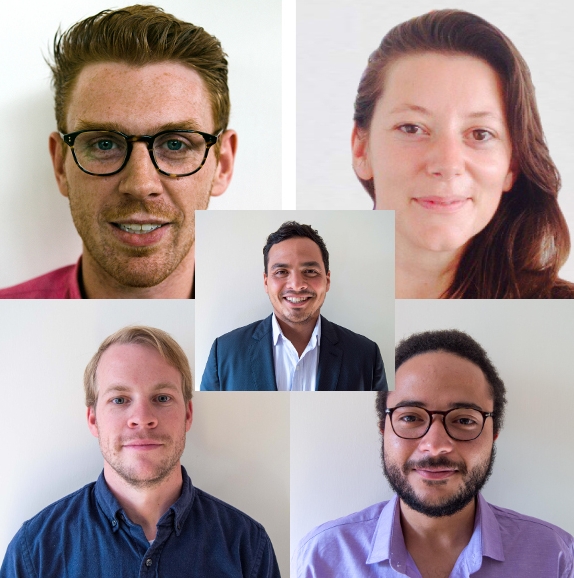
Nick Quintong - Co-Founder
Fausto Marcigot - Co-Founder
Laura Talsma - Co-Founder
M-Lesson
M-Lesson aims to improve educational opportunities for children across Kenya through a low-cost mobile performance assessment platform. By testing and measuring ongoing student learning
STUDENT TESTING CHALLENGE; KENYA

PROVEN INTERVENTION TO BE DISTRIBUTED
A low-cost mobile tuition platform that measures and shares child, school, and regional current and projected academic performance.
Learn more about the Student Testing Challenge and why student testing and public scorecards increase accountability in poor education systems.
DISTRIBUTION MODEL INNOVATION
The Kenyan market has a present, distinct need for increased transparency and information around primary educational quality and performance.
The key operational elements that will inform M-Lesson's success are technology, content generation, and management. The primary experience of M-Lesson's subscription-based product will take place entirely through SMS. A parent may subscribe to M-Lesson by sending a specific keyword to a registered shortcode. Following subscription, the parent will automatically receive one class subject multiple-choice question via SMS 6 times a week. They will be prompted to read the question to their child and ask them to select the letter representing the child's best answer. Once the response is received, an answer SMS is sent with the correct answer and an indicator if the child answered correctly or incorrectly. At the end of each week, the parent will receive an SMS informing them about their child's performance, ranks as compared to other students in the class and subject, and projected marks. They will receive another update at the end of each month. School managers, government and community leaders will be provided access to this information both through a web portal and through SMS.
During the start-up phase, heavy in-person interaction with participating parents, schools, and education officials will be necessary to set up M-Lesson for local customer acquisition. The team will manually create school codes, collect student names and demographic information, and collect other information while building a customer base. If the pilot is successful, they will have enough information to invest in technological infrastructure development and build a more sophisticated web application and USSD user interface.
PILOT AND SCALING GOALS
Partner with 25 schools across Nairobi during the pilot
Reach 2,000 unique customers during the pilot
Send 96,000 SMS questions sent by end of the pilot with a 75% response rate
Send 720,000 SMS questions by end of year one with an 85% response rate
FOUNDING TEAM
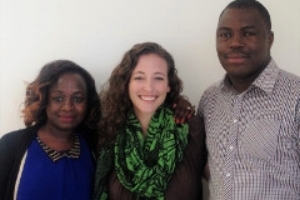
Claire Mongeau - Chief Executive Officer
Johannes Oula - Chief Operations Officer
Vivian Awuor - Chief Experience Officer
Sauti East Africa
Sauti was founded by Julia Lipowiecka, Lance Hadley and Diego Hakspiel. Sauti is an SMS-based platform for simplifying trade procedures for small cross-border traders and using
TRANSPARENCY CHALLENGE; UGANDA, KENYA

PROVEN INTERVENTION TO BE DISTRIBUTED
An SMS-based platform for reporting corruption and harassment at East African border crossings.
Learn more about the Transparency Challenge and how citizen reporting platforms can be used to hold government officials accountable and reduce corruption.
DISTRIBUTION MODEL INNOVATION
Informal cross-border trade is a major feature of African economies: it creates jobs, contributes to food and energy security, and alleviates poverty. Notably, women make up 70-80% of cross border traders and reinvest up to 90% of their income in their families and communities, making the income earned through these activities critical to their household, including the education and health of their children. Yet, small traders are particularly vulnerable to higher levels of harassment from border officials (customs, police, and immigration), including excessive charges, bribe extortion, impounding of goods, difficulties in obtaining passports and visas, sexual harassment, and gender-based violence. They are often unaware of their rights as traders, customs procedures and the required documentation - further exacerbated by an information asymmetry that prevents them from holding corrupt officials to account.
Sauti means voice in Swahili. It is an sms-based advocacy, prevention, and response tool that uses crowd-sourced data to map incidents of harassment and bribery at border crossings across East Africa. Traders will be able to access a toll-free number that will send out both automated and tailored information on documentation, taxes and tariffs applicable to their products, as well as regular updates on any changes to border procedures. Sauti East Africa intends that all advocacy campaigns that utilize data gathered through the platform to be owned by the beneficiaries and organizations -- including the East African Sub Regional Support initiative for the Advancement of Women (EASSI) and the network of Cross-Border Trader Associations -- representing them. Rather than engaging directly in advocacy, Sauti East Africa wants to provide these partners with the right tools and data so they can drive these efforts themselves.
The operational model for Sauti East Africa’s online platform is divided into three sections: Data Reporting which outlines how incidence reports will be collected, Presenting which describes how incidence reports will be aggregated and delivered, and Engaging which describes what services will be made available to users. After being revised following participatory feedback, the platform will be launched with an initial set of training workshops at each of the pilot border crossings. At each border crossing, EASSI will help to identify 50 champion traders who will participate in the training and educate other son how to use the platform.
PILOT AND SCALING GOALS
3 borders targeted during the pilot
1,500 traders utilizing the SMS system during the pilot
4 national and regional advocacy campaigns implemented using Sauti reports during pilot
9 Borders targeted by year 2
5,000 traders utilizing the SMS system by year 2
10,000 people viewing Sauti's data per month by year 2
8 national and regional advocacy campaigns implemented using Sauti reports by year 2
FOUNDING TEAM
Julia Lipowiecka - Manager of partnership and advocacy
Lance Hadley - Platform designer, web developmer
Diego Hakspiel - Manager of monitoring and evaluation
Are you ready to be the next great social entrepreneur?