Lights For Everyone
Lights For Everyone will launch their pilot program in the district of Lawra, Ghana where almost 90% of the population lives in rural areas. In this region, only 30% of the population is estimated to have access to electricity.
SOLAR LAMP CHALLENGE; GHANA

PROVEN INTERVENTION TO BE DISTRIBUTED
Solar lamps.
Learn more about the Solar Lamp Challenge and how these lamps create enormous benefits for developing world families.
DISTRIBUTION MODEL INNOVATION
Lights For Everyone will launch their pilot program in the district of Lawra, Ghana where almost 90% of the population lives in rural areas. In this region, only 30% of the population is estimated to have access to electricity. Lights For Everyone will purchase solar lamps and other inventory from Greenlight Planet in South Africa. The inventory will be transported to Lawra and once it has arrived, Lights For Everyone sales agents will pick up their weekly inventory of lamps with bike carts. Each sales agent will be work in a different area of the district, based on their background. When all of their lamps have been sold, they will pick up more inventory with bike carts from the main storage facility. All sales agents will engage in after-sales services by following up with clients to gather feedback and resolve doubts.
During the pilot, Lights For Everyone will maximize profits by working with a minimum number of sales agents. This will be an important step in validating the model before scaling. During the first three weeks of the pilot, the initial sales team will undergo training and the Lights For Everyone team will craft and implement a marketing campaign via radio advertisements, the sales agents themselves, and through a referral system.
PILOT AND SCALING GOALS
- Hire and train 5 sales agents during the pilot
- Distribute 16,800 solar lamps by the end of year 1
- Hire and train 35 sales agents by the end of year 1
- Distribute 28,800 lamps by the end of year 2
- Hire and train 50 sales agents by the end of year 2
FOUNDING TEAM
Ana Jerolamon - Executive Director
Community Health Movement Uganda
Community Health Movement Uganda will take a two-pronged approach. First, they will raise awareness about VMMC in rural communities with local populations and among front line health workers who can refer patients to health facilities. Next, they will train both front line health workers and health workers in health facilities to support VMMC uptake.
VMMC CHALLENGE; UGANDA
PROVEN INTERVENTION TO BE DISTRIBUTED
Voluntary Medical Male Circumcision.
Learn more about the VMMC Challenge and why scaling up voluntary medical male circumcision can substantially reduce the rate of HIV acquisition for men, and also reduce the risk of transmission of high-risk human papillomavirus (HPV) to the men’s partners.
DISTRIBUTION MODEL INNOVATION
Uganda remains a priority country for VMMC with low circumcision prevalence. Between 2011 and 2015, the percentage of circumcised men aged 15 - 49 years increased from 26% to 43%. However, in the northern districts of Uganda, the prevalence remains at 14%. The HIV rate in the same region is 7.2%.
The lower numbers of men accessing VMMC services is attributed to the weak links between newly identified clients and facilities, inadequate staff and capacities resulting in missed opportunities, and inadequate counseling. There is a need to further create demand for VMMC services to reach the target communities.
Community Health Movement Uganda will take a two-pronged approach. First, they will raise awareness about VMMC in rural communities with local populations and among front line health workers who can refer patients to health facilities. Next, they will train both front line health workers and health workers in health facilities to support VMMC uptake. The project will employ the approach of utilizing female health promoters who are well-respected within their communities to create demand for VMMC services with tailored messaging.
In the pilot phase, Community Health Movement reached 200 men with VMMC services. Leveraging on the key lessons learned Community Health Movemement has been able to scale up VMMC interventions in 10 health facilities out of the 25 facilities in the intervention districts.
PILOT AND SCALING GOALS
Increase access to VMMC services to 200 men during the pilot
Train 40 health workers to administer VMMC services
Reach 10,000 men with VMMC services by the end of year 2
FOUNDING TEAM
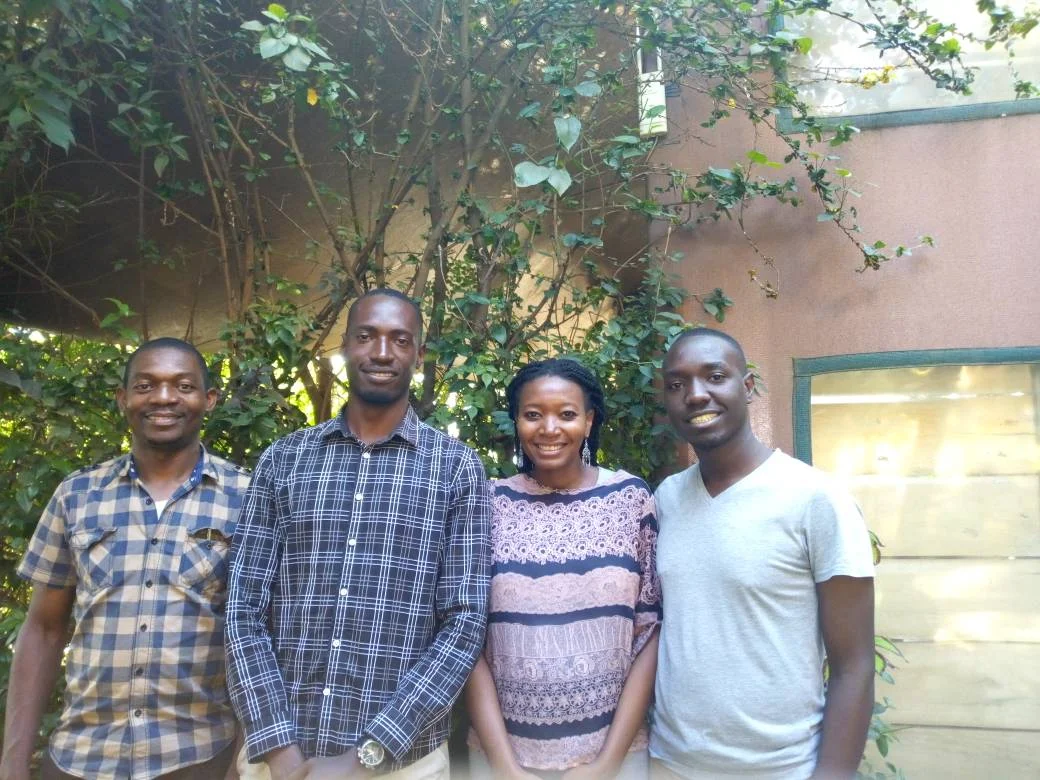
Ronald Tibiita - Executive Director
Richard Kagimu - Project Manager
James Kaggwa - Monitoring and Evaluation Officer
Tracy Kobukindo - Finance Officer
Sehak
Sehak has created creating a free, call-based service that provides an accessible diagnosis for the 4 easily correctable health conditions targeted, connects users to vetted health facilities that can treat the diagnosed condition, and regularly engages with the users.
PATIENT IDENTIFICATION CHALLENGE; INDIA

PROVEN INTERVENTION TO BE DISTRIBUTED
Free, SMS service that provides accessible diagnosis for for easily correctable health conditions and connects users to vetted health facilities.
Learn more about the Patient Identification Challenge and why identifying individuals in need of medical treatment and finding ways to make that treatment accessible reduces poverty.
DISTRIBUTION MODEL INNOVATION
In Mumbai, a dynamic metropolis and the entertainment and financial capital of India, 41.3% of the population of 19 million reside in slums. The largest of these slums is Dharavi, a locality in the heart of Mumbai, with a staggering 2000 people residing per acre. Many of the public hospitals in the area are overcrowded and unreliable in their services , leading residents of the slums to face a lack of access to affordable, quality healthcare, despite their proximity to world-renowned health infrastructure - echoing a theme seen in many urban slums across India. This leads to residents contracting diseases that are left undiagnosed and untreated in spite the fact that some of these conditions are easily-correctable, easily-identifiable and cheap to treat.
88% of Indian households now have mobile phones, including 77% of households in the bottom quintile. Due to the widespread presence of mobile phones, India is predicted to have the highest adoption rate for mobile health or “mHealth” technologies
Sehak has created creating a free, call-based service that provides an accessible
diagnosis for the 4 easily correctable health conditions targeted, connects users to vetted health facilities that can treat the diagnosed condition, and regularly engages with the users.
The service will target 4 pecific easily-correctable, identifiable and cheap-to-treat health conditions: obstetric fistula, cataracts, clubfoot and cervical cancer.
Users will sign up for our service by placing an initial missed call to our number. They will then receive an immediate automatic call back, and the automated response system (IVR) will prompt the first-time caller to provide their basic demographic information, including their gender, age, location, and preferred language, as well as whether they are married and/or have young children. We will then store this information in our subscriber database and the subscriber will start receiving our regular text messages via SMS to dispense essential and timely health information.
PILOT AND SCALING GOALS
Reach 5,000 users during the pilot
Reach 50,000 users by the end of year 1
Send 1,500 diagnostic calls during the pilot
Send 15,000 diagnostic calls by the end of year 1
FOUNDING TEAM
Sanya Sareen - Partnerships and Finance Lead
Nishchala Bhandari - Strategy and Human Capital Lead
Arushi Gupta - Technology and Research Lead
Are you ready to be the next great social entrepreneur?